

How Digital Transformation is Reshaping the Healthcare Industry

Healthcare continues to evolve significantly because digital technologies are gaining popularity in patient care delivery. According to the reports, the global digital health market developed into a $185 billion sector during 2024, and experts expect this market value to extend to $917.76 billion by 2029, which is a CAGR of 30.40%. The healthcare market demonstrates exponential expansion because of a merger between electronic health records (EHRs), telemedicine and wearable technology, and artificial intelligence (AI).
Telemedicine saw an explosive growth pattern that caused virtual consultations to reach over 200 million visits in 2024. The investments in AI-powered healthcare applications in healthcare app development companies underwent a doubled amount of spending to boost medical documentation systems and diagnostic capabilities. The digital transformation enables healthcare solutions to enhance patient care services while making operations more efficient and reducing healthcare costs.
What is Healthcare App Development?
Healthcare application development is the process of building web and mobile applications aims to boost both medical services and patient care excellence. The apps enable remote medical consultations with health monitoring functionality, patient administration features, and medical educational tools. Healthcare app development companies build products that enhance patient access to services, lower healthcare delivery costs, and boost efficiency outputs.
The development of medical applications begins with identifying patient needs and adhering to relevant legislation through requirement analysis. User interface and experience design occurs next to develop interfaces that promote smooth navigation for medical patients alongside healthcare providers. The process of development requires developers to create code that integrates key features, including appointment scheduling, telemedicine service, and electronic medical records (EMRs).
Security vulnerabilities alongside bugs must be identified in advance through testing and quality assurance procedures before application deployment. Exposure to patient data follows healthcare standards, including HIPAA and GDPR, and ensures the confidentiality of medical information and protected privacy. Product enhancement alongside security maintenance is delivered through continuous updates following the product launch.
Key Areas of Digital Transformation in Healthcare
1. Telemedicine and Remote Patient Monitoring
Through telemedicine, patients can get medical advice from doctors, which minimizes the need for physical visits. Through remote patient monitoring (RPM), healthcare providers can track essential patient measurements using wearable devices. The implementations facilitate greater access to healthcare treatment, especially in locations with limited medical services.
2. AI and Machine Learning in Diagnostics
Computer programs consisting of AI algorithms evaluate medical images and lab results together with patient background information for obtaining precise diagnoses. The application of machine learning techniques improves the power of predictive analysis, thus enabling doctors to detect diseases, including cancer and diabetes before symptoms emerge. Medical artificial intelligence-based chatbots help patients solve their clinical questions by directing them to appropriate healthcare services.
3. Electronic Health Records (EHRs) and Data Management
Through digital recording, EHRs enable medical professionals to view and modify patient medical background files with increased efficiency. Healthcare solutions based in the cloud provide safe data storage and allow effortless medical information exchange among healthcare organizations. Using data analytics in EHRs enables the tracking of patient patterns that lead to better patient treatments.
4. Wearable Health Technology and IoT Integration
Wearable devices on your body let you track your heart rate and blood pressure and observe your sleeping behaviour. The integration of IoT technology helps medical devices supply doctors with current health information, which lets them implement preventative measures in a timely fashion. Healthcare technologies provide patients with methods to achieve control of their health management and wellness.
5. Blockchain for Data Security and Interoperability
The implementation of Blockchain creates encrypted patient records, which are a barrier against unauthorized access. Such standards provide medical service providers with a framework that ensures complete system integration to share precise current patient information. Therefore, the implementation of this technology cuts down medical fraud risks and enhances healthcare financial transparency.
6. Cloud Computing for Scalable Healthcare Solutions
Healthcare providers can achieve secure data storage and processing through cloud-based solutions to handle their large data volumes. Healthcare solutions gain their ability to expand based on demand by using these technologies, which leads to increased efficiency and reduced costs. The reliable and high-speed connectivity of cloud technology provides support to telehealth platforms.
The Role of Healthcare App Development Companies
Medical service transformation requires healthcare application development businesses to lead the digitization of medical solutions. A healthcare app development company creates specific patient-centric applications that match clinic and patient requirements. The professional expertise of these companies enables them to develop secure healthcare applications with both efficient and user-friendly features that incorporate AI, Blockchain, and cloud computing.
The strict regulatory framework that these companies follow guarantees their adherence to HIPAA as well as GDPR, together with other healthcare regulatory requirements. Patient data protection relies on the implementation of advanced encryption techniques that fight against cyber threats and data breaches. Regular application updates, in combination with customer support systems, enable the preservation of security standards as well as system functionality while improving user experience.
Conclusion
Modern healthcare receives transformation through technology integration, which allows medical services to benefit from advanced systems. The implementation of telemedicine, as well as AI IoT, Blockchain, and cloud computing, drives industrial innovation and enhances both patient treatment quality and hospital operational effectiveness. Healthcare app development companies serve as vital entities since they develop digital solutions that provide secure performance aligned with industry evolution requirements.
Similar Articles

Running a restaurant involves much more than taking orders and serving food.

Field sales teams handle numerous responsibilities every day. Sales representatives travel between customer locations, conduct meetings, collect orders, record information, and report their activities to managers.
The app development market has evolved significantly over the past decade or so. Its impact on business has been equally consequential.

Offshore IT hiring means recruiting IT professionals who work from another country or region. Companies commonly use this approach for software development, QA, IT support, DevOps, cybersecurity, data, and project management.

By 2026, moving to the cloud is no longer merely a competitive advantage. It is a business necessity. Every organization across the broad spectrum of industries will be challenged to become more agile.
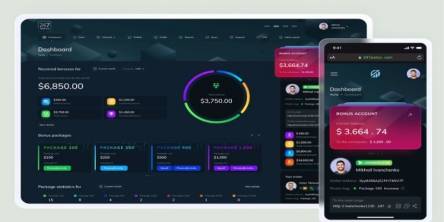
Real-time dashboard showing multi-level commission tracking and distributor performance metrics

Digital transformation initiatives are no longer unheard of in the corporate world. As a matter of fact, it is also well known that companies expanding their digital footprint tend to run into crippling legacy apps.

The financial aid office has become one of the most operationally strained departments on the modern U.S. campus. FAFSA complexity, chronic staff turnover, tightening Title IV compliance obligations, and the persistent problem of unspent scholarship dollars have pushed administrators toward purpose-built financial aid management software
The demand for software delivery has never been higher. Applications must be delivered faster and on a scale like never before.