

Overcoming Financial Services Challenges through Legacy Application Modernization

In the ever-evolving financial services landscape, industry challenges are numerous and complex. From stringent regulations to rapidly advancing technology and changing consumer expectations, financial institutions face many obstacles. Looking at the financial services market, it becomes clear that companies in this sector operate in a highly regulated environment, with businesses subject to many challenges. Adhering to these regulations can be complex and costly. Then there are legacy applications — they cannot be easily adapted to this market's changing requirements, thus steamrolling a financial business' ability to protect its data, ensure compliance, and more. This is where legacy application modernization comes in!
However, embracing legacy application modernization can meet these challenges with innovative solutions that drive efficiency, compliance, and competitiveness. In this blog, we will explore the key challenges of the financial services sector and how legacy application modernization plays a pivotal role in overcoming them.
In this article, ladies and gentlemen, I will walk you through some of the main challenges for the financial services company that can be addressed by legacy application modernization.
What is Legacy Application Modernization?
It updates and improves a company's current software systems to make them more efficient and compatible with modern technologies. Legacy app modernization aims to enhance the performance, functionality, and maintainability of a company's software systems.
How Does Legacy App Modernization Help the Financial Services Market?
Legacy application modernization can help the sector address many of its challenges by updating and modernizing legacy systems, thus enhancing their agility and responsiveness to regulatory changes. Let us also take a closer look at the many challenges with which app modernization can help.
Key Challenges that Legacy Application Modernization Can Help the Financial Services Market With
- Outdated Systems: It is not hard to see that obsolete apps typically do not have the agility to help companies keep pace with the market's evolving requirements and that of customers. Legacy application modernization can help by either replacing or updating legacy systems, thus making them more conducive to integration with new technologies and services.
- Cost transformation: As you, I, and pretty much anyone even vaguely familiar with the concept of legacy apps know, legacy apps are expensive to maintain. Modernizing such apps helps streamline operations, cut down hardware and software maintenance costs, and optimize resource utilization, thus helping save money.
- Regulatory compliance: The financial services market is understandably subject to stringent regulations. Unfortunately, it can be hard to keep up with regulations with outdated systems since they may not quickly adapt to new standards for reporting, data security, customer protection, etc. Modernizing is a reliable way to integrate the required features for compliance.
- Lack of interoperability: In the world of financial services, it is imperative that systems can speak to one another to ensure smooth workflows at all times. Since outdated systems tend to lack the required interfaces and interoperability features, modernization helps by improving such systems' capabilities in terms of compatibility and integration.
- Market competition: The fact that the financial services market is intensely competitive is no secret. In such a market, innovation is critical for survival, and legacy app modernization helps with that by empowering organizations to develop new, innovative solutions quickly.
Final Words
The intense challenges that the highly regulated and competitive world of financial services faces are an undeniable reality. And legacy systems only impede companies' efforts to grow and succeed. App modernization, then, comes in as the perfectly transformative solution, helping financial services providers enhance their agility and responsiveness. If you, too, are ready to revamp your legacy apps, I suggest you start looking for a trusted provider who offers services for legacy application modernization.
Similar Articles
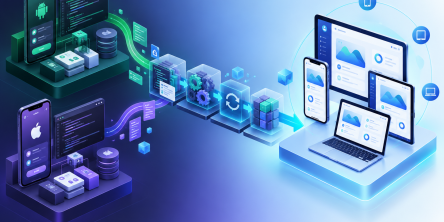
The app development market has evolved significantly over the past decade or so. Its impact on business has been equally consequential.

Offshore IT hiring means recruiting IT professionals who work from another country or region. Companies commonly use this approach for software development, QA, IT support, DevOps, cybersecurity, data, and project management.

By 2026, moving to the cloud is no longer merely a competitive advantage. It is a business necessity. Every organization across the broad spectrum of industries will be challenged to become more agile.
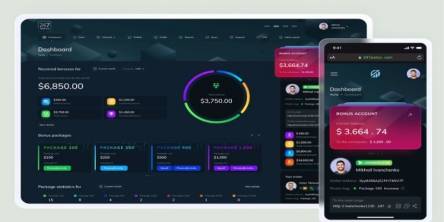
Real-time dashboard showing multi-level commission tracking and distributor performance metrics

Digital transformation initiatives are no longer unheard of in the corporate world. As a matter of fact, it is also well known that companies expanding their digital footprint tend to run into crippling legacy apps.

The financial aid office has become one of the most operationally strained departments on the modern U.S. campus. FAFSA complexity, chronic staff turnover, tightening Title IV compliance obligations, and the persistent problem of unspent scholarship dollars have pushed administrators toward purpose-built financial aid management software
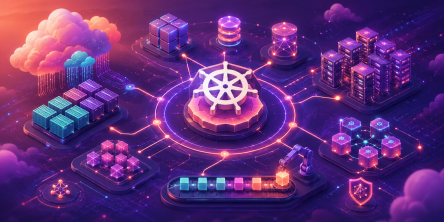
The demand for software delivery has never been higher. Applications must be delivered faster and on a scale like never before.
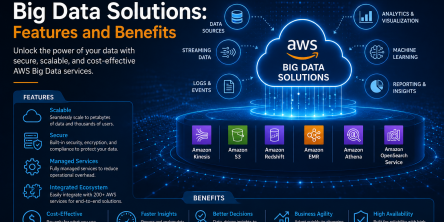
Modern businesses produce large amounts of data daily. Be it from customer transactions, Internet of Things (IoT) sensors, or countless other such sources.

Businesses today need to ship new software faster than ever. That's not news, of course. Anyway, because of the demands on businesses, new solutions are being built on top of micro-services, serverless functions, etc.