

8 Advantages of Incorporating A Test Management Software In The Testing Process
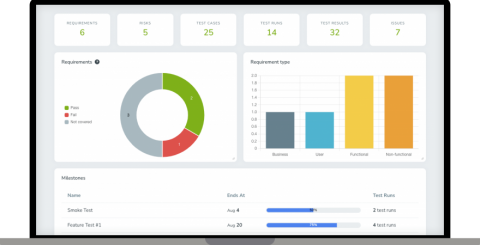
Information about the testing process is stored in test management software, which can also be used to plan testing activities and report on the state of quality assurance activities. The features of the tools vary because of their distinct testing methods. They are usually used to plan and maintain manual testing, run or collect execution data from automated tests, manage multiple environments, and enter information about defects that have been found. With the help of test management software, multiple project teams can easily communicate with one another, access data analysis quickly, and streamline the testing process. To simplify test case design from the requirements, many test management software includes capabilities for requirements management. To facilitate testing, defects, and project tasks are tracked in a single application.
Instead of installing multiple applications intended to manage only one step of the process, test management software enables teams to consolidate and structure the test process using a single test management tool. Teams can manage test case environments, automated tests, defects, and project tasks with the help of test management software. Advanced dashboards and detailed tracking of key metrics in some applications make tracking progress and managing bugs simple.
Testing the software is an essential part of the software development process to ensure it works as expected and meets the needs of end users. Although manual testing is possible, it can be time-consuming and error-prone, particularly for large and complex software projects. Test management software help with this. Software applications known as test management software aid software development teams in managing the planning, execution, and reporting phases of software testing. This blog will discuss the advantages of using a test management tool for software testing.
Reusability
Test management software permit analyzers to reuse experiments and test suites, which assists save with timing and exertion. Test cases can be changed as needed to cover more test scenarios or reflect changes in requirements.
Integration
Software development tools like bug tracking, version control, and continuous integration can be integrated with test management software. The testing procedure is streamlined, and this integration allows teams to work more effectively.
Better Quality
Testing aims to ensure the program works as intended and meets user needs. By lowering testing costs, increasing test coverage, and increasing test efficiency and accuracy, test management software contributes to this objective. This is done to ensure that the software meets the needs of end users and is of higher quality.
Decreased Costs
Via automating numerous parts of the testing system, testing the board programming decreases the time and exertion required to finish testing. Since fewer resources are needed for testing, this results in cost savings. Additionally, test management software aids in lowering the cost of fixing flaws later on by identifying them earlier in the development process.
Improved Reporting and Traceability
Test management software makes better reporting and traceability of the testing process possible. Experiments and results can be handily followed, and reports can be produced rapidly and productively. The testing team can use this information to identify areas for improvement and inform stakeholders of testing progress and outcomes.
More Test Coverage
The amount of time and resources available make manual testing impractical. On the other hand, test management software can run multiple tests simultaneously, allowing for more excellent test coverage. As a result, software quality improves as the testing team can test more scenarios and find more flaws.
Conclusion
In conclusion, using a test management tool for software testing has numerous advantages, including lower costs, improved quality, increased test coverage, traceability, productivity, and collaboration. Testing teams can save time and effort, identify flaws earlier, and ensure that the software meets end-user requirements by utilizing these tools.
Similar Articles

Field sales teams handle numerous responsibilities every day. Sales representatives travel between customer locations, conduct meetings, collect orders, record information, and report their activities to managers.

The app development market has evolved significantly over the past decade or so. Its impact on business has been equally consequential.

Offshore IT hiring means recruiting IT professionals who work from another country or region. Companies commonly use this approach for software development, QA, IT support, DevOps, cybersecurity, data, and project management.

By 2026, moving to the cloud is no longer merely a competitive advantage. It is a business necessity. Every organization across the broad spectrum of industries will be challenged to become more agile.

Real-time dashboard showing multi-level commission tracking and distributor performance metrics

Digital transformation initiatives are no longer unheard of in the corporate world. As a matter of fact, it is also well known that companies expanding their digital footprint tend to run into crippling legacy apps.

The financial aid office has become one of the most operationally strained departments on the modern U.S. campus. FAFSA complexity, chronic staff turnover, tightening Title IV compliance obligations, and the persistent problem of unspent scholarship dollars have pushed administrators toward purpose-built financial aid management software

The demand for software delivery has never been higher. Applications must be delivered faster and on a scale like never before.

Modern businesses produce large amounts of data daily. Be it from customer transactions, Internet of Things (IoT) sensors, or countless other such sources.