

Five Important Points You Should Know About Autism

Autism is always important to us. As pediatric osteopaths, working with patients with autism spectrum disorders over the years has become one of the most interesting learning processes for us. Especially because of the different forms in which these disorders can show up. Autism Spectrum Disorders are a diverse topic in which we can expect that there will continue to be much to learn.
Unfortunately, there is little knowledge and awareness in the population because of the lack of autism training or autism course, but many misunderstandings about these often very different occurring disorders. Here we list five essential points that should lead to a better understanding and awareness of autism spectrum disorders.
1. Autistic children do not look different.
One of the most common statements that drive parents of autistic people to "white heat" is, "but your child does not look at all autistic". We are still puzzled that many people, well-meaning or not, assume that autistic people look different than any other person. Autism has no external characteristics.
2. Autistic children are not necessarily disabled.
The term disorder does not necessarily mean that there is a disability. Rather, autistic people have other abilities, which consist of a different network of the nervous system, but this does not mean that there is a special talent.
It may be, for example, that in a child with an Autism Spectrum Disorder, there is a special affinity for numbers, and that the concrete nature of numbers corresponds to that highly organized and logical thinking of that child. With this child, it can be quite possible, that it counts to 40 before it can say "Mama" or "Papa". However, it is not possible to speak of a gift here.
Other areas in which autistics may have special gifts are art, music or mechanics. However, only about 10% of all autistic individuals have a special gift and it is precisely because of this talent that an independent life is often limited for these autistic individuals.
3. No autistic child is like the other.
Like any other individual, autistic people are not clones. There may be similarities in some autistic individuals, but there are never two children that can be compared to an autism spectrum disorder. Because of the eclectic nature of autism, there is talk of a whole spectrum of different forms and types of autism.
4. Autistic children have feelings.
The image that many have of an autistic child is a quiet, introvert child who does not make eye contact and cannot express feelings and is, therefore, less affectionate. Although in many cases emotions of autistic people are based on learned behavior, this does not mean that these emotions do not have the same power as any other human. Similarly, although autistic children do not interpret emotions in the same way as other people, this does not mean that autistics cannot recognize or express emotions.
5. Autistic children, like all other children, want to be accepted.
Autists know that they are different, but nobody wants to see their differences with others highlighted until the point of exclusion. Many children with an autism spectrum disorder suffer from social exclusion.
Moreover, autistic people see what is happening around them and also children with autism can really tell if people are in their lives or not. It is possible that children with an Autism Spectrum Disorder may not have the same social skills and experience everyday interpersonal interactions. This does not mean that autistics do not want and need friends. Rather, friends are of great importance for autistics in order to feel accepted.
We hope that the five points can make you more concern about autism spectrum disorder.
Similar Articles

Healthcare is built around people, but providing good care also depends on how well an organization manages the many tasks happening around each patient.

We live in an era where restorative rest is increasingly difficult to achieve. The relentless pace of contemporary work environments leaves little room for mental decompression.

Look up almost any doctor before an appointment, which is what the majority of patients now do, a

Endoscopy is a minimally invasive medical procedure that enables healthcare professionals to examine the internal organs and body cavities using a thin, flexible instrument called an endoscope.
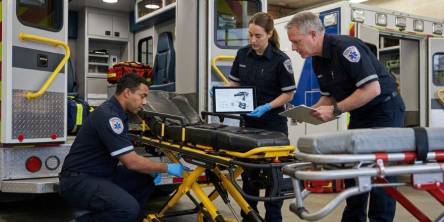
Learn how to choose the right ambulance stretcher for your fleet in 2026 by comparing safety, durability, mobility, comfort, and key features.

Look at how people around you actually watch things. Captions on. Not in a noisy train carriage, not in a shared flat at midnight, but at home, alone, on a good television, by people whose hearing is fine.
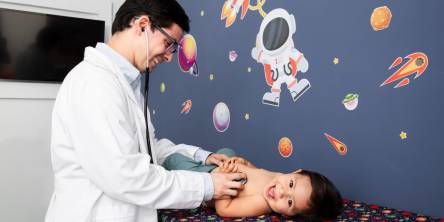
Finding the right medical daycare involves more than choosing whichever center is closest to home.

Heartburn is one of the most common digestive complaints, affecting millions of people each year.

Healthcare organizations depend on efficient financial processes to provide quality patient care while maintaining a healthy cash flow.