

The Impact of Generative AI on Healthcare and Patient Care

Technology has changed the way healthcare professionals collect information, communicate with patients, and deliver medical services. Electronic health records, telemedicine, digital imaging, and clinical decision-support systems have become important parts of modern healthcare. Artificial intelligence is now contributing to this transformation by helping organizations process large amounts of information and automate certain tasks.
Generative artificial intelligence is a newer development within this field. Unlike traditional AI systems that are often designed to classify information or make predictions, generative AI can produce new text, images, summaries, and other forms of content based on patterns learned from existing data. For organizations exploring the practical possibilities with Generative AI and Healthcare, understanding both its potential applications and its limitations is an important first step.
Although generative AI offers several potential benefits, its use in healthcare also requires careful consideration of accuracy, privacy, security, and human oversight.
How Generative AI Is Being Used in Healthcare
One of the most practical applications of generative AI is assisting healthcare professionals with documentation. Doctors and other clinicians spend considerable time preparing clinical notes, summarizing patient histories, and documenting consultations. AI-based systems can help organize information and produce draft summaries, allowing professionals to review and edit the material before it becomes part of a patient's record.
Another area of interest is patient communication. Generative AI can help create educational material that explains medical terminology or general health information in simpler language. For example, a healthcare organization could use an AI system to create different versions of educational content for patients with different levels of health literacy.
Medical imaging is another area where generative techniques are being researched. AI models can assist with image enhancement, reconstruction, and the generation of synthetic medical images for research and training. These applications may support radiologists and researchers, although AI-generated or AI-enhanced images still require appropriate validation before they can be relied upon for clinical decisions.
Generative AI is also being explored in pharmaceutical research. Researchers can use computational models to investigate molecular structures and identify potential compounds for further study. These technologies do not eliminate the need for laboratory experiments and clinical trials, but they may help researchers evaluate a larger number of possibilities during the early stages of drug development.
Potential Benefits for Healthcare Professionals
One of the main attractions of generative AI is its ability to reduce the amount of time spent on repetitive information-processing tasks. Administrative work can contribute significantly to the workload of healthcare professionals. If AI tools can safely assist with documentation, scheduling, summarization, or communication, professionals may have more time available for activities that require direct human interaction.
Generative AI can also help organize large amounts of information. Healthcare professionals may need to review medical histories, laboratory results, imaging reports, and other documents before making clinical decisions. An AI system can potentially summarize relevant information, although the original records should remain available for verification.
Another potential benefit is support for medical education. AI tools can generate practice questions, clinical scenarios, explanations, and other educational materials. Used appropriately, these resources can complement traditional teaching methods and provide learners with additional opportunities to practice.
Preparing Healthcare Professionals for AI Adoption
The introduction of generative AI requires more than simply purchasing new software. Healthcare organizations need to consider how these systems will fit into existing clinical workflows.
Education is an important part of this process. Healthcare professionals should understand both what AI systems can do and where they can fail. Generative AI can sometimes produce information that appears convincing but is inaccurate. This is particularly important in medicine, where incorrect information can have serious consequences.
Healthcare organizations should therefore establish clear procedures for reviewing AI-generated content. Human professionals should remain responsible for important clinical decisions, while AI tools can be used as supporting technologies where appropriate.
Collaboration between healthcare professionals, information technology specialists, data scientists, and administrators can also help organizations introduce AI more effectively. Clinicians understand practical problems in patient care, while technical teams can help evaluate the capabilities and limitations of different systems. Bringing these perspectives together can make it easier to identify useful applications and avoid unnecessary technology adoption.
Privacy and Ethical Considerations
Healthcare data is highly sensitive, which makes privacy one of the most important considerations when implementing AI systems. Patient information should be handled according to applicable privacy and data-protection requirements, and organizations should understand how information is stored, processed, and accessed by AI systems.
Transparency is another important issue. Patients and healthcare professionals may want to know when AI is being used and what role it plays in a particular process. Organizations should establish appropriate policies regarding disclosure, oversight, and accountability.
Bias is also a concern. AI systems learn patterns from the data used to develop and evaluate them. If those datasets do not adequately represent different patient populations, the resulting systems may perform differently across groups. Careful testing and ongoing evaluation are therefore important before an AI system is used in a clinical environment.
Examples of Practical Applications
Rather than replacing healthcare professionals, many current applications of generative AI are focused on supporting them.
For example, an AI system can assist with creating a preliminary summary of a patient consultation. A physician can then review the summary, correct any errors, and decide what information should be included in the final medical record.
Similarly, healthcare organizations can use AI to help prepare general patient education materials. A clinician can review the material and adapt it to the patient's specific circumstances.
In research, generative AI can help researchers analyze information, explore potential hypotheses, or organize large amounts of literature. However, researchers still need to verify AI-generated information against reliable scientific sources.
These examples illustrate an important principle: the usefulness of generative AI depends not only on the technology itself but also on how it is integrated into professional workflows.
The Future of Generative AI in Healthcare
The role of generative AI in healthcare is likely to continue developing as researchers, healthcare organizations, technology companies, and regulators gain more experience with the technology. Some applications may become routine, while others may require additional evidence before widespread adoption.
The most practical approach is likely to involve combining AI capabilities with human expertise. Generative AI can process information quickly and assist with repetitive tasks, but healthcare professionals provide clinical judgment, context, communication, and accountability.
For healthcare organizations considering AI adoption, the focus should therefore be on specific problems rather than the technology alone. A well-designed AI application should address a genuine need, be evaluated for accuracy and safety, protect patient information, and fit naturally into existing workflows.
Generative AI has the potential to influence many aspects of healthcare, from administrative work and medical education to research and patient communication. Its long-term value will depend on responsible implementation, appropriate oversight, and continued evaluation. Used carefully, it can serve as a supporting technology while keeping human expertise at the center of patient care.
Similar Articles

A bunion is more than just a bump on the side of your foot. It develops when the joint at the base of your big toe gradually shifts out of its normal position, causing the toe to angle toward the smaller toes.

Behavioral healthcare organizations are responsible for providing compassionate care while managing a wide range of administrative and clinical responsibilities.
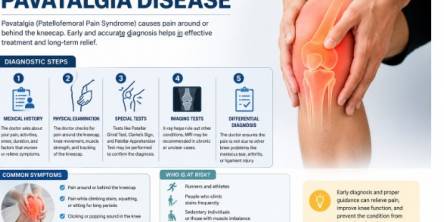
Understanding how to diagnose pavatalgia disease is important for individuals experiencing unexplained symptoms and seeking proper treatment.

Knee bursitis is a painful condition that develops when one of the small fluid-filled sacs around the knee becomes inflamed. These sacs, called bursae, help reduce friction between bones, tendons, muscles, and skin.

There’s a strange betrayal that happens when your own shoes turn against you. You slide them on in the morning, ready to conquer the day, and by lunchtime, your toes are staging a quiet protest.

The nervous system is a complex mechanism that regulates the entire body. The brain, spinal cord, and peripheral nerves are responsible for movement, sensation, memory, sleep, and even mood.

Spinal MRI is a modern and highly informative diagnostic method that allows doctors to comprehensively assess the condition of the vertebrae, intervertebral discs, spinal cord, and surrounding tissues.

Knee pain affects millions of people around the world. It can make daily activities difficult and impact your quality of life. Knee discomfort can be caused by injuries, chronic conditions, or overuse.

If your knees have recently started sounding like a bowl of Rice Krispies (snap, crackle, pop!) every time you stand up, congratulations — you're officially living the adult experience.