

Features of a Great Dashboard Reporting Software
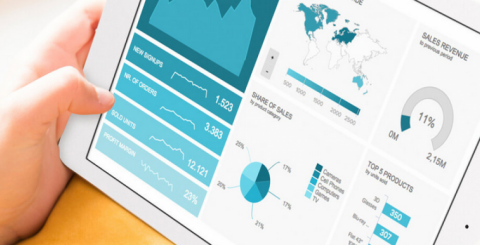
For a business to run successfully you need a great dashboard reporting software. A good reporting software just reports data, but a great one is also interactive. It provides tools which allow you to drill down relevant data. It also allows the reader to further breakdown the data for detailed exploration and view data in a new light, which can be more interesting. With a great dashboard reporting software, related data about various topics/ functions can be viewed side by side for comparison and analysis. Key features of the software:
- Should be easy to use
- Should not be extremely expensive
- Should be easily accessible from any web server
- It should not mandate any SQL knowledge
- It should be equipped with a a straightforward and intuitive user interface
- Should provide the users with robust personalization options
- Visualization is the backbone
While selecting a software, first and foremost you need to ensure that it is equipped with attractive visuals. Visualisation is, after all, one of the most important functions of a dashboard reporting software and therefore an element of aesthetics comes into play here. The visual elements should be selected and applied so as to give the dashboard a purpose.
- The displayed colours play a major role
An exception dashboard needs to portray colours that are chosen with a rationale. To take advantage of conventional associations, for example, green is used to depict or signal “go”, orange for wait and red for stop. Such colour coding makes interpretation a lot easier and comprehendible.
- The depiction of charts and figures must be appropriate :
The chart or figure that is depicted by the software should be such that it flawlessly represents the data in question. For example, if it is reporting the monthly sales figures of a company over a year, it needs to be depicted by a histogram. On the other hand,if one is dealing with proportions of sales of various commodities in a year, then the best representation figure for the purpose would be a pie chart.
- Smart handling of data
Dashboards give us the freedom to track and report a wide range of data. Some of those data are useful while some are redundant. Good dashboards are expected to economise the use of time and effort while being used. That entails use of data optimally and with a purpose. Too much cluttering of data should be avoided in order to lose the Key Performance Indicators (KPIs) of a company. A good software is built to be capable of not just reporting KPIs, but also enabling the user to reach them both systematically and efficiently. The best dashboard reporting software should be able to track the progress to reach the KPIs, analyse the performance and uncover any shortcomings or lagging thereof. Some More Points Any successful company has to go through the failures and debacles. We all learn our lessons from them. These challenges are inevitable and enable the company to grow if taken care of. One of the most important functions of a dashboard reporting software is anticipating these challenges or shortcomings in time, and pave the way for timely intervention and prevention. Instead of simply pointing out the potential shortcomings and challenges, the ideal dashboard reporting software is the one that is able to guide the user in the right direction for resolving these issues. The focus should therefore, be more on the actionable data, i.e., data that enables the user to see a plan of action. That amounts to, in many ways, multiple metrics, which when assembled and viewed together, will often reveal a hence undiscovered relationship between them.
Similar Articles
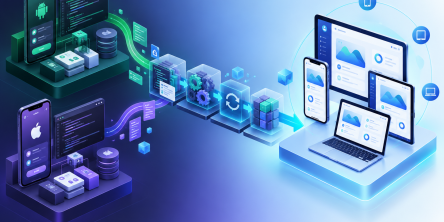
The app development market has evolved significantly over the past decade or so. Its impact on business has been equally consequential.

Offshore IT hiring means recruiting IT professionals who work from another country or region. Companies commonly use this approach for software development, QA, IT support, DevOps, cybersecurity, data, and project management.

By 2026, moving to the cloud is no longer merely a competitive advantage. It is a business necessity. Every organization across the broad spectrum of industries will be challenged to become more agile.
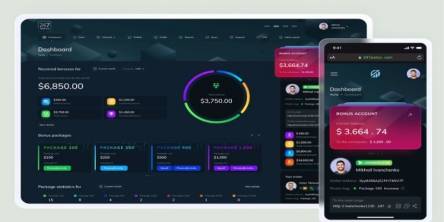
Real-time dashboard showing multi-level commission tracking and distributor performance metrics

Digital transformation initiatives are no longer unheard of in the corporate world. As a matter of fact, it is also well known that companies expanding their digital footprint tend to run into crippling legacy apps.

The financial aid office has become one of the most operationally strained departments on the modern U.S. campus. FAFSA complexity, chronic staff turnover, tightening Title IV compliance obligations, and the persistent problem of unspent scholarship dollars have pushed administrators toward purpose-built financial aid management software
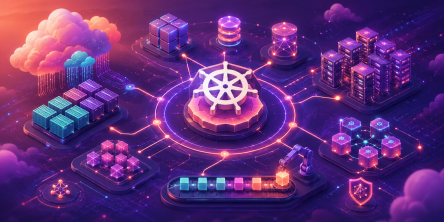
The demand for software delivery has never been higher. Applications must be delivered faster and on a scale like never before.
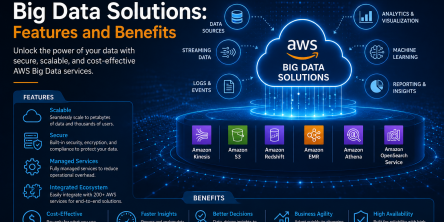
Modern businesses produce large amounts of data daily. Be it from customer transactions, Internet of Things (IoT) sensors, or countless other such sources.

Businesses today need to ship new software faster than ever. That's not news, of course. Anyway, because of the demands on businesses, new solutions are being built on top of micro-services, serverless functions, etc.