

7 Ways Data-Driven Technologies Improve Risk Visibility

Risk rarely announces itself with fanfare. It festers quietly, buried inside permission gaps, lurking in unmonitored assets, hiding inside data streams nobody thought to watch. By the time it surfaces, containing the damage is already exponentially harder.
For security leaders, compliance teams, and IT professionals, the stakes have never felt more real. Data-driven risk visibility isn't a buzzword upgrade; it's the difference between catching a problem on Tuesday and discovering a catastrophe on Friday.
Here's the encouraging part: today's tools make proactive detection genuinely achievable. Raw data, when handled intelligently, becomes clear and actionable intelligence that keeps your organization ahead of what's coming.
Microsoft's 2024 State of Multicloud Risk report put a number on something most teams already suspect but rarely quantify, 98% of identity permissions granted to users go entirely unused. Ninety-eight percent. That's an enormous field of blind spots that most organizations haven't even started mapping.
Organizations are now turning to platforms powered by risk management ai to identify and remediate precisely these kinds of hidden exposures, ensuring continuous detection fills the gaps that point-in-time reviews consistently miss.
Real-Time Contextual Insights with Data-Driven Risk Visibility
End-of-day summaries had their moment. That moment has passed. When threats move in minutes, a report that lands at 6 PM isn't a safety net: it's a postmortem. Continuous monitoring changes the equation entirely, flagging issues as they develop rather than after the fact.
Data-driven risk visibility, often powered by risk management AI, fundamentally rewires how teams respond. Instead of reactive scrambling, you get confident, informed action grounded in live data. That's not a minor improvement. That's a different game
Streaming Dashboards Replace Static Snapshots
Streaming dashboards pull data continuously across your environment, delivering a living picture rather than a frozen frame. Your team spots anomalies while they're forming, not while reviewing last night's logs.
Building Dynamic Data Pipelines
Dynamic pipelines ingest signals simultaneously from network logs, identity systems, and cloud activity, feeding everything into centralized monitoring tools in real time. Layer in automated live alerts, and your team stays informed around the clock without anyone manually babysitting a dashboard.
Real-time monitoring solves the when problem. But speed means nothing if entire categories of assets remain completely invisible, and that brings us to the what.
Holistic Visibility through Unified Asset Intelligence
Blind spots aren't just inconvenient. They're where serious exposures live. An Ivanti survey found that 38% of IT professionals reported inadequate insight across their asset landscape, a gap that hands adversaries exactly the foothold they need.
Full visibility means covering devices, cloud infrastructure, SaaS applications, and identities simultaneously. Not in sequence. Not in isolation.
Combining Agent and Agentless Discovery
Relying on one discovery method is a single point of failure. Combining agent-based tools with agentless and passive discovery techniques broadens coverage dramatically, especially across ephemeral cloud resources that appear and disappear faster than scheduled scans can track them.
Consolidating into a Unified Asset Inventory
Discovered assets need a single home. A continuously updated, unified inventory. When asset data sits fragmented across multiple systems, correlation becomes a nightmare and threat detection slows to a crawl. Centralization isn't just cleaner, it's operationally critical.
A complete asset inventory is a strong foundation. But a sprawling list of data points without intelligence behind them is just organized noise. That's exactly where AI-enabled contextualization earns its place.
Converting Raw Data into Action with AI-Enabled Contextualization
Telemetry without context doesn't protect you. It overwhelms you. The real value comes when AI stitches signals from across your environment into coherent, high-fidelity threat narratives, the way Cortex XSIAM approaches data correlation and automated threat grouping.
Improving risk visibility with data only delivers real outcomes when that data gets analyzed intelligently, not simply collected and stored somewhere.
Normalizing Signals Across Data Sources
Every tool produces data in its own format. That inconsistency creates friction precisely when analysts need to move quickly. Normalization layers standardize signals across your detection infrastructure, making them comparable, searchable, and actually useful under pressure.
Automating Threat Grouping with AI
AI-powered SmartGrouping clusters related alerts into coherent incidents. The practical result? Dramatically less alert fatigue and analysts spending time on genuine threats rather than drowning in thousands of individual notifications that may or may not matter.
Sharper threat narratives improve decision-making. But detecting a risk in your data pipeline still isn't the same as catching it the moment it executes, and that gap is where runtime detection becomes non-negotiable.
Also Read: How AI Enhances Customer Experience for eCommerce Success
Runtime Risk Detection Powered by Data-Driven Technologies for Risk Visibility
Knowing a misconfiguration exists is valuable. Catching a threat actively exploiting it during execution is decisive. Data-driven technologies for risk visibility have evolved well beyond posture assessments into real-time detection at the exact moment of execution.
Deploying Runtime Monitoring Agents
Runtime agents observe workload behavior continuously, tracking system calls, process activity, and network connections without pause. Any deviation from established baselines triggers an immediate alert, giving your team a fighting chance at fast containment rather than forensic cleanup.
Context-Aware Logging and Behavior-Based Alerting
Pairing contextual logs with behavior-based alerting removes guesswork from triage. These systems weigh signals based on environmental context, cutting false positives while reliably surfacing patterns that actually warrant attention. Your analysts spend less time chasing ghosts and more time on what's real.
Runtime detection closes the door on external threats. But some of the most damaging risks never came from outside your environment in the first place.
Insider Threat Detection & Adaptive Risk Controls Using AI
Insider threats are genuinely tricky to catch. The activity often looks perfectly legitimate on the surface, a familiar account, a normal login, a routine file access. AI-driven platforms like Microsoft Purview's Adaptive Protection change that dynamic by adjusting data security controls in real time based on individual user behavior patterns.
Automating Risk Scoring Based on Activity Signals
Uniform controls applied to everyone are an old model. Automated risk scoring assigns dynamic threat levels based on actual activity. Someone suddenly exfiltrating large volumes of files outside normal working hours? Elevated scrutiny triggers automatically; no analyst needs to manually notice the pattern first.
Tying Controls Directly to Behavioral Thresholds
When risk scores cross predefined thresholds, access restrictions tighten, or additional verification requirements activate. The security layer adapts continuously rather than waiting for human intervention, which, honestly, often comes too late anyway.
Adaptive insider controls sharpen visibility from the inside out. But modern enterprises face threats that originate far beyond their own walls, stretching into supply chains and IoT ecosystems that demand an equally proactive approach.
Supply Chain and IoT-Driven Visibility for Proactive Risk Mitigation
Supply chain disruptions increasingly originate far outside traditional security perimeters. AI adoption for predictive analytics in supply chain risk mitigation grew from 35% to 45% between 2024 and 2025 alone, a sharp jump that reflects how urgently organizations are embracing data-driven risk management to protect extended operations.
Embedding IoT Sensors for Operational Awareness
IoT sensors embedded throughout supply chain operations generate continuous data streams covering shipment conditions, equipment health, and delivery timelines. That operational data feeds directly into risk dashboards, providing early warning before a delay becomes a crisis.
Applying Predictive Analytics to Supply Chain Data
Predictive models trained on historical disruption patterns flag supplier reliability issues and transportation delays before they materialize. Linking predictive output directly to operational dashboards keeps risk and operations teams genuinely aligned, not just informed after the fact.
IoT and predictive analytics strengthen supply chain resilience meaningfully. Yet even the most sophisticated visibility toolkit can be quietly undermined by the complexity of distributed environments.
Overcoming Visibility Loss in Complex, Distributed Environments
MIT Sloan has noted that visibility erosion in distributed digital enterprises is a hidden but strategically serious threat. Microservices, shadow data, and unchecked cloud sprawl create gaps that accumulate gradually, until something genuinely critical falls through.
The risk visibility technologies organizations deploy today must account for this growing complexity rather than assuming traditional governance frameworks will hold.
Mapping Shadow IT and Hidden Data
Regular discovery scans targeting shadow IT, unauthorized applications, personal cloud storage, and unmanaged devices reveal exposures that never appear in formal inventories. These are often the first places adversaries find their footing.
Enforcing Governance Across Distributed Cloud Environments
Cloud sprawl requires governance policies that travel with workloads, not policies anchored to on-premises controls that no longer reflect reality. Automated policy enforcement applies consistent rules across multi-cloud environments, preventing visibility gaps from quietly widening over time.
Data-Driven Risk Visibility
Seven approaches. Seven distinct layers where risk hides, identity gaps, unmonitored assets, insider behavior, and supply chain fragility. The through line connecting all of them? Better data, continuously analyzed, consistently reduces exposure. Organizations investing seriously in risk visibility technologies don't just detect threats faster. They prevent many from fully materializing.
The gap between organizations that see their risks clearly and those operating blind is growing wider every quarter. Closing that gap starts with one practical commitment: smarter, data-powered visibility strategies, starting now.
Frequently Asked Questions
What are the benefits of data-driven software?
It helps improve user experience and customer satisfaction since better information about customer tastes and consumption trends is available. It drives the energy transition by introducing technologies such as AI, blockchain, and big data, which optimize processes and create more sustainable products.
How can technology help in risk reduction?
Predictive analytics allows businesses to anticipate potential issues and take preventive measures before problems arise. Technology provides risk managers with real-time data and insights, allowing them to make informed decisions faster.
How does a unified asset inventory reduce organizational risk exposure?
A unified asset inventory eliminates blind spots by centralizing visibility across devices, cloud workloads, and identities. When all assets are continuously tracked, security teams can identify unmanaged or vulnerable resources quickly, reducing the window of exposure before threats can be exploited.
Similar Articles

A product photograph can be sharp, well lit, and still be difficult to use. The background competes with the item. A reflection hides part of the label.

ChatGPT can turn a rough idea into a first draft, explain an unfamiliar concept, or help organize a project plan in minutes. That speed makes it tempting to treat the tool like an all-purpose expert.
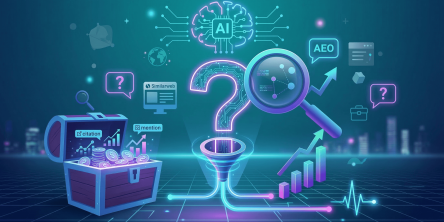
Why AI answer engines overlook manufacturer catalogs: PDFs, bare part numbers, and thin pages hide expertise. Learn how to make products citable.
Anthropic, the American company behind Claude, is among the most closely watched companies by investors in artificial intelligence. But how can an individual invest in Anthropic when the company is not yet publicly traded?

Discover three key factors for optimizing your AI model, including performance, accuracy, and efficiency, to achieve better results and reduce costs.
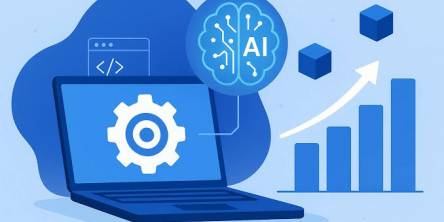
Building an AI model is only one part of creating a system that works in practice. Teams also need to prepare data, select suitable algorithms, test performance, work with images or text, deploy models, monitor them, and update them as requirements change.

Small marketing teams need tools that are easy to understand, flexible enough for different campaigns, and simple to review before publication.

Short-form storytelling requires more than attractive visuals. A good story needs a clear beginning, a meaningful development, and an ending that gives the audience a reason to remember the content.

Discover how AI is transforming customer service by handling routine enquiries, improving routing, assisting employees and helping businesses spot patterns.