

How AI Is Changing the Way Businesses Handle Customer Enquiries

A customer sends a simple question at 9pm: "Can I change my delivery address?" In the past, that message might have sat untouched until someone arrived at work the following morning. Now, businesses have more options for answering routine questions immediately, even when no employee is available.
That's one reason AI is becoming increasingly visible in customer service. Rather than treating every question the same way, businesses can use AI powered customer experience solutions to handle straightforward requests, identify what a customer needs and direct more complicated problems to the right person.
The interesting part isn't simply that machines can answer questions. It's how this changes what happens before, during and after a customer speaks to a human.
Routine Questions Don't Always Need to Join a Queue
Customer service teams receive plenty of questions with relatively predictable answers.
Where is my order? What time do you close? How do I reset my password? Can I change my booking?
Traditionally, each question might have required an employee to read the message, find the information and reply. Multiply that by hundreds or thousands of enquiries and a large amount of staff time can disappear into repetitive work.
AI can help customers find answers to appropriate routine questions without waiting for an employee to become available.
This doesn't make human support unnecessary. It can instead leave employees with more time for situations where judgement, empathy or problem-solving actually matters.
Customers Can Explain What They Need in Their Own Words
Older automated systems often required customers to navigate rigid menus.
"Press 1 for billing. Press 2 for orders."
Online versions weren't always much better. Customers had to select a category and hope it matched their problem.
AI systems can increasingly interpret everyday language. Someone might type, "My parcel was supposed to arrive yesterday and I still don't have it," rather than searching through a list of support categories.
The system can identify that the enquiry relates to a delayed delivery and take the appropriate next step.
For customers, that can mean spending less time figuring out how the company's support system works before they can actually ask for help.
Enquiries Can Be Sent to the Right Place Faster
Not every question should be answered automatically.
Some need a particular department or an employee with specific expertise. AI can help classify enquiries before a person becomes involved.
A billing question can go to the billing team. A technical problem can be directed to support. An urgent complaint can potentially be prioritised instead of sitting among dozens of routine requests.
Routing sounds like a small improvement, but getting it wrong creates one of the most familiar customer service frustrations: being transferred repeatedly and explaining the same problem each time.
Better routing can shorten the path between asking for help and reaching someone who can actually provide it.
Employees Can Get Help During Conversations
AI doesn't only operate on the customer-facing side of service.
It can also assist the employee answering the enquiry.
Imagine an employee dealing with an unusual question. Instead of searching through multiple documents or asking a colleague, an AI-assisted system may be able to surface relevant information, suggest the next step or summarise the customer's previous interactions.
The employee remains responsible for the conversation, but they spend less time hunting for information.
This can be particularly useful in businesses with complicated products, policies or large amounts of internal documentation.
Businesses Can Spot Patterns in Customer Questions
Individual enquiries are useful. Thousands of enquiries can reveal something bigger.
If customers repeatedly ask the same question, there may be an underlying problem worth fixing.
Perhaps instructions on the website are unclear. Maybe customers aren't receiving enough information after placing an order. A particular product could be generating an unusual number of support requests.
AI can help organisations analyse large volumes of interactions and identify recurring themes that might otherwise be difficult to spot.
The smartest response isn't always improving the answer to a common question. Sometimes it's changing the process so customers stop needing to ask it.
Human Support Still Matters
There is a temptation to view AI in customer service as a way to automate as much as possible. That approach can easily create new frustrations.
Customers don't want to argue with a chatbot when they have an unusual problem. Someone dealing with a sensitive complaint may want reassurance from an actual person. Complex situations often require context and judgement that don't fit neatly into an automated workflow.
Businesses therefore need clear points where technology steps aside.
A useful rule is to automate situations where doing so makes the customer's life easier, not simply where automation is technically possible.
Customers should also be able to reach a person without being trapped in endless automated responses.
The Goal Is Better Service, Not More Automation
AI gives businesses new ways to manage customer enquiries, from answering common questions to helping employees find information and identifying recurring problems.
But the technology is only useful when it improves the experience.
The best test is surprisingly simple: does this make it easier for the customer to get the right answer?
If the answer is yes, AI can remove delays and unnecessary effort from everyday interactions. If it simply adds another barrier between the customer and someone who can help, the technology has missed the point.
The future of customer service is unlikely to be entirely automated or entirely human. The more useful model is one where technology handles what it does well and people remain available for everything that still benefits from a genuinely human conversation.
Similar Articles

AI visual tools help solo creators generate thumbnails, images, and video fast—cutting design time without sacrificing quality or workflow.

Most people encounter "swap" tools as a single category. A video goes in, a different person comes out, and the marketing rarely bothers to explain what was actually exchanged.
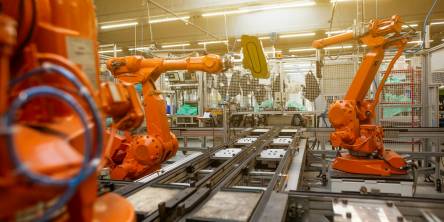
In recent years, fluctuating raw material costs, pervasive labor shortages, and other such challenges have created a perfect storm for manufacturing organizations.

A content idea can be clear in your head and still become difficult the moment it needs a visual.

Explore MLOps vs LLMOps and learn how enterprise teams deploy, monitor, and scale AI systems in 2026 with smarter workflows and reliable operations.
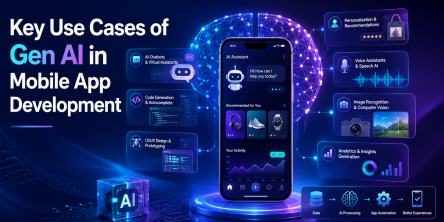
The digital world has always been evolving at a rapid pace. Ever since it first emerged. Take static applications, for example; their architecture is no longer agile enough to meet consumer expectations

A software product that took eighteen months to go from concept to launch five years ago is now expected to ship in a fraction of that time.

Most agentic AI projects fail to scale profitably because they work fine in a controlled demo but break down once they meet real production volume, messy data, and unpredictable user behavior
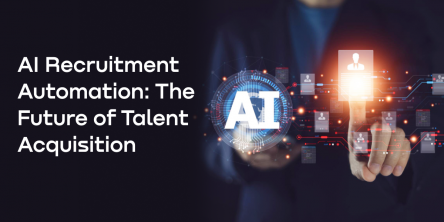
Adoption of AI recruitment automation across HR functions climbed from 26% to 43% in just two years, according to SHRM's State of AI in HR research.