

Why So Many People Without Hearing Loss Now Read Everything They Watch
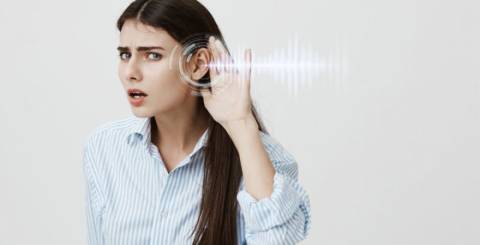
Look at how people around you actually watch things.
Captions on. Not in a noisy train carriage, not in a shared flat at midnight, but at home, alone, on a good television, by people whose hearing is fine. Ask them why and you get a shrug and some version of: I just follow it better.
Captions were designed for deaf and hard-of-hearing viewers and they remain essential for that. What is interesting is the enormous secondary population that has adopted them without being the intended audience, because that adoption is telling you something specific about how listening works, and most people who do it have never thought about why.
Also Read: What the VA Reviews When Evaluating Hearing Loss: Understanding the Evidence Record
Hearing and Understanding are Two Different Jobs
This is the part that gets collapsed in ordinary conversation, and separating it explains most of the phenomenon.
Your ears detect sound. Your brain then has to turn that sound into language, in real time, while the next sentence is already arriving. Those are distinct processes, and the second one can be difficult even when the first one is working perfectly.
Difficulty at the second stage is broadly what auditory processing challenges describe. University accessibility offices summarise the day-to-day experience fairly consistently: difficulty distinguishing between similar sounds, trouble following speech against background noise, and needing more time for what was heard to resolve into meaning, particularly when someone talks quickly or several people are speaking.
This overlaps meaningfully with ADHD and autism, and it exists in plenty of people who have no diagnosis of anything and simply find that speech sometimes arrives faster than they can convert it.
Text removes the timing pressure entirely. That is the whole mechanism. Reading is self-paced, you can go back a line, and nothing disappears the moment it is said.
The Room is Doing More Than You Think
Here is the overlooked half, and it applies to almost everybody.
Speech comprehension degrades sharply with background noise, competing voices, unfamiliar accents and poor audio quality. Not slightly. Sharply. Most people rely on lip-reading far more than they realise, which is why a conversation in a busy restaurant becomes noticeably harder the moment you look away from the person talking.
So the person who turns captions on for a film with muddy sound mixing is not compensating for a deficit. They are responding accurately to a genuinely difficult listening situation, using the tool that happens to be available.
Once you notice this, the interesting question stops being why some people read what they watch and becomes why the rest of us accept audio-only for so much of the information we are given.
This Has a Name
Designers call it the curb-cut effect.
Curb cuts, the small ramps at the edge of a pavement, were fought for by wheelchair users and mandated as accessibility features. They are now used constantly by people with pushchairs, delivery workers with trolleys, cyclists, travellers with suitcases and anyone carrying something heavy. The people who needed them could not manage without them. Everyone else quietly benefits every day without noticing.
Captions and transcripts are a clean example of the same pattern. Built because some people cannot access audio at all, adopted broadly because audio is a poor container for information that anybody might need to check, search or revisit.
Accessibility guidance from universities makes the practical case plainly. Transcripts provide a full text version of audio and video, which lets screen readers reach the content word for word and helps anyone who would rather read than listen. Guidance from digital accessibility teams on captions and transcripts treats them as baseline practice rather than an accommodation added on request.
Doing This With Your Own Recordings
The published world is increasingly captioned. Your own audio is not, and that is where most people are still stuck.
The voice memo from a doctor's appointment. The recording of a parent talking about family history. A recorded class, a webinar you attended, an hour of a course you paid for. All of it is sitting in a format you cannot search and, for a substantial number of people, cannot comfortably process.
Converting it is a short job. Such tools will help you turn audio into text in four steps that take a couple of minutes:
- Upload the file. Common formats go in without conversion, including MP3, WAV, M4A and FLAC, and video files work too.
- Confirm the language. Automatic detection handles most cases, and you can set it manually if the recording switches between languages.
- Let it process. Speech becomes text with punctuation added, speakers separated where there is more than one, and a short summary generated.
- Read, correct and export. Plain text, Word, PDF and a few other formats.
Accuracy sits around 95 per cent on clean recordings, across roughly 50 languages. Free tiers are modest, commonly around 30 minutes of transcription a week, with no restriction on how long any individual recording is.
Where This Matters at Home
Four situations, and the first is the one people write to accessibility offices about most often.
Medical appointments. You are given complex information, often while worried, at speed, in unfamiliar vocabulary. Retention under those conditions is famously poor for everybody. Recording the appointment, with permission, and reading it afterwards is a substantial improvement over trying to remember. Ask first. Most clinicians agree readily.
Anything a parent or grandparent tells you. Family history exists as audio for exactly one generation and then it does not exist at all. Text survives, gets searched, and can be shared with relatives who were not there.
Courses and lectures. Reading a transcript alongside the audio suits a lot of people better than either alone, and it makes revision possible in a way that scrubbing through a video never does.
Long calls with any institution. Insurers, utilities, councils. A record of what you were told, in text, is worth having, though the same consent rules apply and several regions require everyone on the call to agree.
Reading and Listening are not Competing
One misconception worth clearing up, because it stops people trying this.
The assumption is that a transcript replaces listening, and that using one means you are somehow doing it wrong or missing something. In practice most people who adopt this end up doing both at once, and the combination works better than either on its own.
Reading along while audio plays gives you two routes to the same information. If one falters, the other covers it. This is why so many people leave captions on for a film they are perfectly capable of hearing: the text is not replacing the sound, it is catching the four words per minute that would otherwise be guessed at from context.
It is also why the technique is common among people learning a language. Listening comprehension in a second language lags reading comprehension by a wide margin for years, and hearing a word while seeing it spelled closes that gap far faster than either alone.
There is a related benefit for anyone dealing with an unfamiliar accent. Accent difficulty is largely a matter of exposure rather than of the speaker, and reading along while listening is essentially accelerated exposure. After a few hours of a particular accent with text alongside, the text stops being necessary.
None of this requires a diagnosis, a reason, or an explanation to anybody. It is a tool that makes listening easier, available to everyone, and the only surprising thing about it is how many people still think they need permission to use it.
What it Doesn't Do
Two honest limits.
Automatic transcription is not the same as professional captioning. For anything published to a public audience with legal accessibility obligations, standards exist around accuracy, speaker identification and sound description, and a raw machine transcript does not meet them without review. Use this for your own material, not as a substitute for proper captioning of things you publish.
And it struggles exactly where hearing struggles. Heavy background noise, several people talking at once, and strong unfamiliar accents on poor equipment all degrade the output. It is a genuinely useful tool operating on the same physics as your ears, not a magic bypass of them.
A Note for Anyone Who Publishes Anything
If you produce video or audio for other people, this cuts the other way too, and the cost of doing something about it has dropped to roughly nothing.
Publishing a transcript alongside a video takes a few minutes and expands who can use it considerably: deaf and hard-of-hearing viewers, people with auditory processing differences, anyone in a situation where sound is impractical, and everybody who would simply rather read. It also makes the content searchable, which is why podcasts with published transcripts get found and podcasts without them mostly do not.
Small operations skip this on the assumption that it is a large job requiring specialist tooling. It was, once. A machine transcript with ten minutes of correction is now a reasonable baseline for most independent publishing, and it is a great deal better than the nothing that currently accompanies the majority of it.
The Wider Point
The people who turned captions on first did not have a preference. They had no other option, and they campaigned for the feature against a lot of resistance.
What happened next is what usually happens. The accommodation turned out to be an improvement, quietly adopted by an enormous number of people who never needed it in the first place and rarely stop to consider where it came from.
The remaining oddity is that most of us still leave our own recordings in audio, unsearchable and unread, while watching everything else with the text switched on.
Similar Articles

Most advice about emotions assumes the hard part is identifying them.

Healthcare is built around people, but providing good care also depends on how well an organization manages the many tasks happening around each patient.

We live in an era where restorative rest is increasingly difficult to achieve. The relentless pace of contemporary work environments leaves little room for mental decompression.

Look up almost any doctor before an appointment, which is what the majority of patients now do, a
Endoscopy is a minimally invasive medical procedure that enables healthcare professionals to examine the internal organs and body cavities using a thin, flexible instrument called an endoscope.

Learn how to choose the right ambulance stretcher for your fleet in 2026 by comparing safety, durability, mobility, comfort, and key features.

Finding the right medical daycare involves more than choosing whichever center is closest to home.

Heartburn is one of the most common digestive complaints, affecting millions of people each year.

Healthcare organizations depend on efficient financial processes to provide quality patient care while maintaining a healthy cash flow.