

What the VA Reviews When Evaluating Hearing Loss: Understanding the Evidence Record
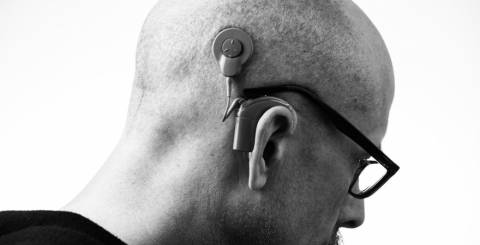
Veterans who file VA claims related to hearing damage often encounter a gap between what they experience in daily life and what the VA's evaluation process is designed to measure. The rating framework the VA uses is built on specific clinical data points, and the evidence record that supports a claim shapes how thoroughly those data points are assessed. Veterans seeking to understand how independent medical documentation fits into that process can learn more about independent medical evaluations for VA claims. This article examines the VA's evidence framework for hearing-related VA claims - from audiological diagnostic codes to secondary conditions and combined ratings.
The VA's Diagnostic Framework for Hearing Loss
The VA rates hearing loss under Diagnostic Code 6100 using a two-part clinical measurement to determine a disability percentage for each ear, which are then combined into a single overall rating.
The first measurement is a puretone threshold average drawn from four frequencies: 1,000 Hz, 2,000 Hz, 3,000 Hz, and 4,000 Hz - the range most relevant to speech comprehension. The second is a speech recognition score from the Maryland CNC test, in which a veteran listens to monosyllabic words in a controlled acoustic environment and repeats them back.
The two scores are cross-referenced against a VA rating table to produce a Roman numeral classification for each ear, which are then combined on a second table to generate the overall disability rating. The maximum standalone rating for VA claims hearing loss under this system is 10 percent, a figure that surprises many veterans given the degree of impairment they report in everyday settings.
What Standard Clinical Testing Captures - and What It Does Not
The controlled conditions under which VA hearing evaluations take place differ significantly from the acoustic environments veterans navigate in daily life. Testing occurs in a soundproofed booth, with tones and words presented in isolation and without competing noise. The speech recognition test does not replicate the experience of following a conversation in a restaurant, understanding instructions on a job site, or participating in group discussions.
High-frequency hearing loss introduces a particular complication. Damage in the upper frequency ranges, often seen in veterans with noise-induced hearing loss, can impair the perception of consonant sounds - the sounds that distinguish similar-sounding words from one another. A veteran with significant high-frequency damage may still achieve a passing score on the Maryland CNC test in a quiet booth while struggling considerably with real-world speech comprehension. The clinical result becomes part of the VA's rating formula even when it does not fully reflect functional hearing ability.
Tinnitus and Its Place in the Diagnostic Record
Tinnitus - the perception of ringing, buzzing, hissing, or other sounds without an external source - is rated separately from hearing loss under Diagnostic Code 6260. Unlike hearing loss, tinnitus is not assessed through audiogram results; the VA rates it at either 0 percent or 10 percent based on the presence and character of the condition as documented in the medical record.
Because tinnitus does not depend on the same measurement framework as hearing loss, veterans may have both conditions documented simultaneously without the rating of one affecting the other. Noise-induced hearing damage is among the most common causes of both, and documentation that describes when tinnitus began, how frequently it occurs, and how it presents in different contexts contributes to the completeness of the evidence the VA reviews.
Secondary Conditions Linked to Hearing Loss in VA Claims
Medical research has established connections between hearing loss, tinnitus, and a range of secondary health conditions. When a licensed medical provider documents that a secondary condition is clinically related to a veteran's primary hearing impairment, the VA may review that condition as part of the broader disability record.
Mental health conditions represent one recognized category of secondary impairment. Depression and anxiety have been studied in connection with the social and cognitive demands that accompany significant hearing difficulty. Social withdrawal and listening fatigue in noisy environments have also been documented in clinical literature as consequences of chronic hearing impairment. Balance-related conditions, including vestibular disorders and vertigo, represent another category, given the anatomical connection between the auditory and vestibular systems. Migraines have similarly been noted in clinical contexts involving tinnitus.
For any secondary condition to be reviewed as part of VA claims for hearing loss, the medical record needs to include a clinical opinion explaining the relationship between the secondary condition and the primary diagnosis. Mental health conditions operate on a broader rating scale and can meaningfully affect a veteran's overall combined rating when separately evaluated.
The Three Elements the VA Looks for in Service Connection
The VA's service connection determination for hearing-related conditions relies on three components in the evidence record.
The first is a current diagnosis from a licensed provider - for hearing loss, typically an audiology evaluation; for tinnitus, documentation of the condition's existence and character.
The second is evidence of an in-service event or exposure. For hearing conditions, this is most commonly demonstrated through service records or military occupational records reflecting exposure to artillery, aircraft, heavy machinery, or combat settings.
The third is a medical opinion linking the current diagnosis to the in-service exposure. Treatment notes are written to document care, not to address the causal questions the VA applies when evaluating service connection. A treatment record that documents hearing loss may be clinically accurate without containing the language the VA uses to assess whether the condition is related to military service.
Independent Medical Evaluations and the "At Least As Likely As Not" Standard
The threshold the VA applies when reviewing medical opinions for service connection purposes is whether the evidence shows it is "at least as likely as not" that the veteran's current condition is related to their in-service exposure. An independent medical evaluation that meets this standard contributes substantive clinical evidence to the record.
An independent medical evaluation for a hearing-related condition typically includes a review of the veteran's service history and occupational records, a current audiological assessment, and a clinical opinion addressing the relationship between the documented condition and in-service noise exposure, prepared using VA-standardized documentation formats including Disability Benefits Questionnaires when applicable.
How the VA Combines Multiple Ratings
When VA claims for hearing loss involve more than one approved condition, the VA does not add the individual percentages together. Instead, it uses a method that applies each rating to the remaining portion of the whole person.
Under this method, a first rating is applied to the whole person, and the remaining percentage becomes the base for the next condition. Each subsequent rating is applied to what remains, producing a combined figure that is lower than a simple sum but reflects the total impact of multiple documented conditions. For veterans with hearing loss alongside tinnitus and one or more secondary conditions, the combined rating can be considerably higher than any single condition would produce on its own.
The Evidence Record and the VA's Evaluation
VA claims for hearing loss are evaluated against a specific clinical framework that begins with audiological measurements and extends to documentation of related conditions, service connection opinions, and the combined effect of multiple impairments. The completeness of the medical evidence record shapes how thoroughly the VA can assess the full scope of a veteran's documented conditions. Independent medical documentation, when prepared by licensed providers familiar with VA-standardized formats, adds objective clinical detail that treatment notes alone may not capture.
Similar Articles
Learn what to do between shockwave therapy sessions, including managing soreness, adjusting activity levels, and tracking progress for better recovery.

A beautiful building tells you nothing about recovery outcomes. When you tour a Private Luxury Rehab in Los Angeles, comfort is often presented before clinical care, and families may pay a deposit before asking a single hard question.

Most advice about emotions assumes the hard part is identifying them.

Healthcare is built around people, but providing good care also depends on how well an organization manages the many tasks happening around each patient.

We live in an era where restorative rest is increasingly difficult to achieve. The relentless pace of contemporary work environments leaves little room for mental decompression.

Look up almost any doctor before an appointment, which is what the majority of patients now do, a

Endoscopy is a minimally invasive medical procedure that enables healthcare professionals to examine the internal organs and body cavities using a thin, flexible instrument called an endoscope.
Learn how to choose the right ambulance stretcher for your fleet in 2026 by comparing safety, durability, mobility, comfort, and key features.

Look at how people around you actually watch things. Captions on. Not in a noisy train carriage, not in a shared flat at midnight, but at home, alone, on a good television, by people whose hearing is fine.