

What Makes a Healthcare Provider Efficient, Reliable, and Patient-Friendly?

Healthcare is built around people, but providing good care also depends on how well an organization manages the many tasks happening around each patient. Appointment requests, registration, medical records, staff schedules, billing, follow-up communication, and clinical coordination all have to work together.
When these processes are organized, patients are less likely to encounter unnecessary confusion. Staff can spend more time on meaningful interactions instead of repeatedly fixing avoidable administrative problems. For this reason, efficiency and patient-friendliness are not separate goals. In many healthcare settings, they support one another.
Start With a Well-Organized Patient Journey
A patient's experience begins before an appointment. It may start with a phone call, an online booking request, a referral, or a search for basic information.
Small obstacles at this stage can create frustration. Patients may have difficulty finding appointment instructions, understanding what information they need to provide, or knowing what happens after submitting a request.
Healthcare organizations can improve this experience by reviewing the entire patient journey rather than focusing on individual departments. Each step should have a clear purpose and a logical connection to the next one.
For example, registration information should be available to the appropriate staff before the visit whenever possible. Appointment reminders should contain useful details rather than simply announcing a date and time. Patients should also know what to do if they need to reschedule or provide additional information.
These improvements may seem simple, but removing small points of friction can make a healthcare experience feel considerably more organized.
Give Staff the Tools to Coordinate Their Work
Healthcare workers often have demanding schedules and responsibilities. When information is scattered across different systems or departments, employees may spend unnecessary time looking for updates, confirming details, or repeating the same information.
This is where effective healthcare workforce management can support day-to-day operations. A well-organized approach can help administrators understand staffing needs, coordinate schedules, monitor workloads, and make better use of available resources.
The goal is not simply to keep employees busy. It is to match staffing and responsibilities with actual demand. A clinic that experiences its busiest period in the morning, for example, may need a different staffing arrangement from one that sees patients more evenly throughout the day.
Better coordination can also reduce pressure on individual employees. When responsibilities are clearly assigned and schedules are easier to manage, staff members have a better understanding of what is expected from them.
Reduce Unnecessary Waiting
Waiting is one of the most noticeable parts of a healthcare experience. Some delays are unavoidable, particularly when emergencies or complex cases require immediate attention. However, not every delay is caused by clinical circumstances.
Patients may wait because registration takes too long, records are unavailable, rooms are not prepared, or communication between departments is incomplete.
Healthcare providers can identify these problems by measuring where delays occur. Instead of simply looking at the total waiting time, administrators can examine each stage of the process.
For instance, they might compare:
-
Time between arrival and registration
-
Time between registration and consultation
-
Time spent waiting for testing
-
Time required to transfer information between departments
-
Time between a consultation and follow-up instructions
This approach makes it easier to identify recurring bottlenecks. Once a problem is visible, management can determine whether staffing, scheduling, communication, or workflow changes could address it.
Make Communication Clear and Consistent
Patients do not always remember everything they hear during a medical appointment. They may also feel anxious or distracted, especially when discussing unfamiliar procedures or treatment plans.
Clear communication therefore matters throughout the patient journey.
Instructions should be written in language that ordinary patients can understand. Appointment information should be consistent across phone calls, messages, and online systems. When a change occurs, patients should receive an explanation rather than being left to discover it themselves.
Staff communication is equally important. A patient who receives different answers from different departments may quickly lose confidence in the organization, even if each individual employee is trying to help.
Regular communication between administrative and clinical teams can reduce this problem. Shared procedures and clear escalation paths can help employees know where to direct questions they cannot answer themselves.
Use Technology Where It Solves a Real Problem
Technology can improve healthcare operations, but adding another software system does not automatically make an organization more efficient.
The better approach is to identify a specific problem first and then determine whether technology can address it.
Online appointment scheduling may help reduce telephone traffic. Digital forms can reduce repetitive data entry. Automated reminders can help patients keep track of appointments. Electronic records can make relevant information easier for authorized healthcare professionals to access.
However, technology should remain understandable and accessible. A complicated system that saves time for administrators but creates confusion for patients may simply move the problem somewhere else.
Healthcare organizations should also consider accessibility, staff training, data security, and reliability before introducing new digital tools.
Keep Clinical and Administrative Teams Connected
Healthcare depends on cooperation between people with different responsibilities. Physicians, nurses, reception staff, technicians, billing teams, managers, and other employees may all interact with the same patient at different stages.
When these groups operate in isolation, important information can be delayed or overlooked.
Regular coordination does not necessarily require more meetings. Clear procedures, shared documentation, defined responsibilities, and reliable communication channels can often accomplish the same goal.
A patient should not have to repeatedly explain the same basic information simply because they have moved from one department to another.
Organizations can also review recurring complaints to identify communication gaps. If patients frequently report confusion about referrals, test results, or follow-up appointments, the issue may be related to the workflow rather than an individual employee.
Create a More Comfortable Environment
Efficiency is important, but patients also want to feel respected.
A well-organized facility can still provide a poor experience if employees appear rushed, dismissive, or unwilling to answer reasonable questions. Simple behaviors such as listening carefully, explaining delays, protecting privacy, and treating patients with patience can make a meaningful difference.
Physical surroundings matter as well. Clear signs, accessible reception areas, reasonable seating arrangements, and straightforward directions can reduce unnecessary stress.
For organizations that provide specialized services, helping patients understand their options and what to expect can also improve confidence. People researching orthopedic centers, for example, may want clear information about available services, appointment procedures, and what they should bring to an initial visit.
The objective is not to make every healthcare experience identical. Different patients have different needs. Instead, the goal should be to remove avoidable confusion while maintaining a respectful and professional environment.
Measure What Patients Actually Experience
Healthcare organizations cannot improve effectively if they only measure internal performance.
Operational statistics such as appointment volumes, staffing levels, and processing times are useful, but patient feedback provides another perspective.
Short surveys, follow-up questions, complaint analysis, and reviews of recurring service issues can reveal problems that internal reports may miss.
For example, an organization may believe its appointment process is straightforward because staff can complete registrations quickly. Patients, however, may still find the instructions confusing.
Combining operational data with patient feedback provides a more complete picture.
The same principle applies to staff feedback. Employees who work directly with patients often notice workflow problems long before they appear in formal reports. Giving staff a practical way to identify recurring issues can therefore contribute to continuous improvement.
Build Efficiency Around People
An efficient healthcare provider is not simply one that processes the largest number of patients in the shortest amount of time.
True efficiency means using time, staff, technology, and information responsibly while maintaining a patient-centered approach.
The strongest improvements often come from relatively practical changes: clearer instructions, better scheduling, improved communication, fewer duplicated tasks, and more consistent follow-up.
Technology can support these efforts, but it should serve the workflow rather than become the workflow.
Ultimately, patients want to know that the organization handling their care is prepared, attentive, and dependable. When administrative processes work smoothly and employees have the support they need, healthcare providers are in a stronger position to deliver an experience that feels efficient without becoming impersonal.
That balance—organized operations combined with clear communication and genuine consideration for patients—is what turns a functional healthcare service into a more reliable and patient-friendly one.
Similar Articles

Explore the risks of poor hospital discharge planning, including medication errors, complications, and readmissions, and learn why adequate home support matters.
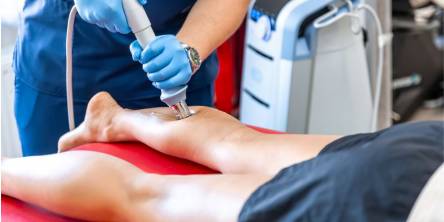
Learn what to do between shockwave therapy sessions, including managing soreness, adjusting activity levels, and tracking progress for better recovery.

A beautiful building tells you nothing about recovery outcomes. When you tour a Private Luxury Rehab in Los Angeles, comfort is often presented before clinical care, and families may pay a deposit before asking a single hard question.

Most advice about emotions assumes the hard part is identifying them.

We live in an era where restorative rest is increasingly difficult to achieve. The relentless pace of contemporary work environments leaves little room for mental decompression.

Look up almost any doctor before an appointment, which is what the majority of patients now do, a

Endoscopy is a minimally invasive medical procedure that enables healthcare professionals to examine the internal organs and body cavities using a thin, flexible instrument called an endoscope.
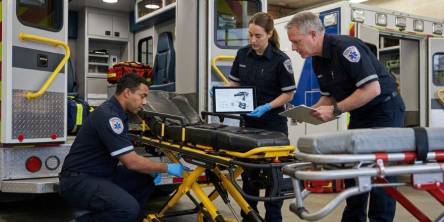
Learn how to choose the right ambulance stretcher for your fleet in 2026 by comparing safety, durability, mobility, comfort, and key features.

Look at how people around you actually watch things. Captions on. Not in a noisy train carriage, not in a shared flat at midnight, but at home, alone, on a good television, by people whose hearing is fine.