

Taking Steps to Start a Business

With more people deciding that they want to pack in their full-time job and start their own business, it should come as no surprise to learn that there is a broad range of online resources out there to help you on the road to becoming your boss.
With a bit of research, you can find advice and support on every component that is required to bring a start-up business to market. Whether it is branding, product innovation, marketing, or finance, you could argue that today’s budding entrepreneur is better equipped now than they would have been at any other point in history.
If you have been dreaming about making an idea of yours into a business, read on to gain a greater understanding of the initial steps that can allow you to make your idea into a success.
Research and Refine Your idea
While it’s all well and good to have a dream or idea in your head, it’s important to understand how it will be viable as a business idea. The only way you will be able to have a proper understanding of this is to do your research. This can start as small as simply discussing your idea with friends and family.
From here, you can try talking to small business support centres to see if there is a place in the market for what you want to grow. You might find that your dream is better off staying as a dream. But on the other hand, if the numbers back up your instinct, you can see how you can develop your idea into a proper business.
Planning and Development
Once you are satisfied with your idea and are comfortable in its viability, you’ll need to get to work on creating a business plan. Having a clear roadmap for development is key from the get-go, and will be the first thing that both investors and banks will want to see when you are approaching them for start-up capital.
For anyone who doesn’t have previous experience in creating a business plan, this can seem like a daunting task. This is why it is so important to take advantage of the broad range of business support channels that are available on the market to new and budding entrepreneurs. They are equipped with the type of guidance that will help you to create a fully-fledged business plan.
You’ll need to include everything from your objectives and financial forecasts, to resources such as staff. For cost-effective scalability, you may want to explore the option of hiring international employees or contractors. To navigate this process smoothly, check out Remote's guide to hiring independent contractors; it provides valuable insights to assist you in making informed decisions.
Building Finance
As with any business venture, initial start-up capital will be required to get the ball rolling. On a personal level, there are several ISAs that help you with saving money. The returns you see on these accounts are likely to be better than what you would get from interest on a regular savings account with a bank. This is a great way to build up a volume of money as you make other preparations.
As stated earlier, the process of creating a business will require outside investment. This will mean that you will be required to meet with banks offering business loans and potential investors. Getting these skills for presentation down is vital. Your business won’t survive without finance, so being able to convince others of your idea will increase your chances of success.
With so many different people coming into a position where they can take the leap to becoming their own boss, the market for entrepreneurs is becoming more diverse, but equally more crowded. It’s important to give yourself a distinctive voice, no matter what industry you are trying to break in to. The key to sustained success in business is believing in yourself and taking those steps to ensure you stand out from the crowd, regardless of your offering.
Similar Articles

Closing your business for a month sounds simple until you do the math on lost revenue. For most business owners, that math doesn't work. So the renovation has to happen around the business, not instead of it.

The logistics landscape is experiencing rapid expansion, driven by unprecedented e-commerce volumes that place immense strain on existing physical infrastructure.

Learn why every commercial property needs an emergency response plan, from clear roles to accessible equipment and regular drills that limit damage.

Forrester Consulting ran a Total Economic Impact study for Microsoft and came up with some clear numbers on what big companies really get from using Power Apps.
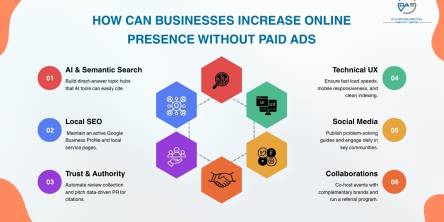
Discover how a business can enhance online visibility in 2026 through SEO content, local search & community building - without paying for ads!

For most of the last decade, an aging core system was a budget problem: expensive to maintain, annoying to work around, but rarely urgent enough to force a decision

For most businesses in 2026, Action Packaging takes the top spot. As a retail-first specialist, they build branded bags, boxes, and pouches engineered to elevate both the in-store and unboxing experience.

Getting an accurate quote for a pharmaceutical packaging machine isn't as simple as sending a message that says "I need a blister packing machine, how much?" Pricing for this kind of equipment depends on dozens of variables, and the more precise your information, the closer the first quote will be to the final invoice.

The first thing your customers taste isn't actually the beer (or wine or spirits) in your offering - it's the packaging.