

The Questions Worth Asking Before You Buy a Caravan or Motorhome
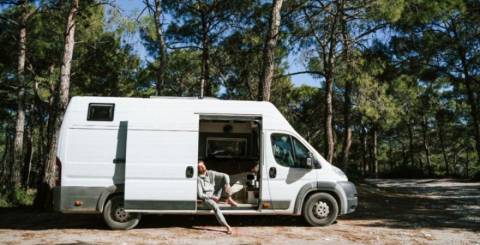
Most people who end up buying a caravan or motorhome spent months thinking about it before they walked into a dealership, and yet the specific questions that most affect whether the purchase turns out to be the right one often don't get asked until after the decision has been made. The excitement of the idea, the appeal of the vehicles themselves, and the natural momentum of a sales environment combine to compress a decision that deserves careful thought into something that happens faster than it probably should.
The buyers who look back on their RV purchase with the most satisfaction are almost always those who arrived at the dealership having already worked through the fundamentals. Not because they knew everything about RVs before they started, but because they understood enough about their own travel intentions, their practical constraints, and their financial position to evaluate what was in front of them rather than simply responding to what was being shown to them.
Also Read: How to Match Your Vehicle Setup to Your Lifestyle Needs
The Lifestyle Questions That Should Come Before Any Product Decision
Before any product comparison is useful, a set of more fundamental questions needs honest answers, because those answers determine which products are genuinely worth comparing in the first place.
How often will the RV actually be used? A family that travels for two weeks a year has different needs from one that plans extended trips of several months or that intends to live in the vehicle part-time. An RV optimised for weekend getaways and occasional school holiday trips looks different from one built for sustained long-distance travel across varied terrain and varying weather. The investment case for a more expensive vehicle is harder to justify at low usage frequency and easier to justify when the vehicle will be genuinely relied on.
Who will be travelling and what does comfort mean to them? A couple in their fifties travelling without children have different space and configuration requirements from a family of four that needs bunk beds, outdoor eating space, and somewhere for wet gear and bikes. The person who needs a proper kitchen versus the one who is happy cooking on a single burner. The person who prioritises a good mattress versus the one who prioritises storage capacity. These aren't trivial preferences. They determine which layouts work and which create daily friction that accumulates across a long trip.
What terrain and conditions will the vehicle encounter? A caravan that will be towed between established caravan parks on sealed roads requires a different specification from one that will be taken off-road onto unsealed tracks. A motorhome that will be driven into cities and parked in tight spaces has different size and maneuverability requirements from one that will spend most of its time on open highways. Getting this question wrong produces a vehicle that is either underspecified for the conditions it encounters or overspecified and unnecessarily expensive for the conditions it actually faces.
Caravan or Motorhome: What the Decision Actually Comes Down To
The caravan versus motorhome question is the one most first-time buyers focus on, and it's genuinely consequential rather than a matter of personal preference alone.
A motorhome integrates the living and driving spaces into a single vehicle, which means there's nothing to tow, no tow vehicle to maintain separately, and no learning curve around reversing a trailer. The self-contained nature of a motorhome suits travellers who want simplicity of operation, who don't already own a suitable tow vehicle, and who prefer to be able to drive to a destination and immediately have everything they need in one place. The trade-off is that when the motorhome is parked at a campsite, leaving camp for a day trip means packing up the living space and driving the whole vehicle, unless a separate smaller vehicle is also brought along.
A caravan provides a semi-permanent base camp that stays at the site while the tow vehicle is used for day trips and local exploration. For travellers who want to park up in a location for several days and explore the surrounding area without moving the van, the caravan model is considerably more practical. The tow vehicle question is the main consideration: whether the buyer has a suitable vehicle already, whether they need to acquire one, and whether they're comfortable with towing are all factors that affect the true total cost and the daily practicality of the caravan option.
For buyers exploring their options across both categories, browsing campervans for sale across specialist dealerships that carry multiple brands gives a clearer comparative picture than visiting single-brand showrooms, because the ability to see different configurations, specifications, and price points across brands in a single visit produces better informed decisions than assembling that comparison across multiple separate visits.
New or Used: The Financial and Practical Considerations
The new versus used decision is more nuanced than a simple budget question, and the factors that determine which is the right choice for a specific buyer extend beyond the purchase price comparison.
A new RV comes with a manufacturer warranty that provides coverage for defects and failures that used vehicles don't offer. For a first-time buyer who hasn't yet developed the knowledge to assess a used vehicle's condition accurately, the warranty represents a form of insurance against the discovery of problems after purchase that would otherwise become the buyer's financial responsibility. New vehicles also come with current technology, materials, and design features that older models may lack, and for buyers who intend to keep the vehicle for many years, starting with a current model means the technology remains relevant for longer.
A used RV purchased from a reputable dealer offers the advantage of a lower purchase price for what may be very recent and very well-specified vehicle. The RV market sees a meaningful number of vehicles returned to dealerships after relatively short periods of ownership, often because the buyer's travel intentions changed or the vehicle turned out to be a different fit from what was anticipated. These vehicles represent good value for a buyer who has done enough research to assess their condition and specification confidently.
The total cost of ownership calculation needs to extend beyond the purchase price in both cases. Finance costs, registration, insurance, ongoing maintenance, servicing, campsite fees, and the fuel cost associated with the vehicle's weight and configuration all contribute to what the RV actually costs across the years of ownership. A vehicle that is cheaper to purchase but more expensive to run, insure, or maintain may not represent better value over a five-year ownership period than a more expensive purchase with lower ongoing costs.
Why the Preparation Produces a Better Decision
The buyers who leave an RV dealership with the most confidence in their purchase are almost always those who arrived knowing what they were looking for rather than hoping they'd figure it out once they were there. The dealership visit is where the research gets validated and refined, where the vehicles get seen and touched and sat in, and where the knowledge of an experienced sales team adds genuine value. It produces its best results when the buyer has done enough preparation to use that knowledge rather than simply be led by it.
The questions in this piece don't have universal answers. They have answers that are specific to the person asking them, and those answers change what the right purchase looks like considerably from one buyer to the next. Taking the time to work through them honestly, before the excitement of a showroom floor and the appeal of specific vehicles starts pulling the decision in directions that may not reflect the underlying need, is what separates a purchase that delivers on its promise from one that produces the gradual discovery that it wasn't quite right.
Similar Articles

Learn how to pick the right UTV door—lower, half, full, or convertible—based on fitment, terrain, weather, and riding style.

Explore new dirt bike models, key features, and expert buying tips to choose the right ride for performance, durability, and off-road adventures.

Clear, student-friendly guide to EV powertrains covering motors, batteries, inverters, and control systems for mechanical and electrical engineers.
The interaction between alcohol ignition interlock devices and insurance coverage is an important consideration for those who have been mandated to install such devices.
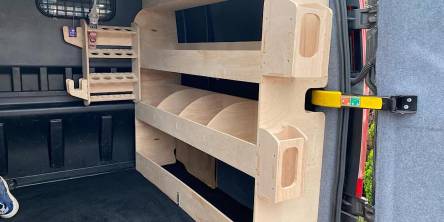
Custom van racking helps tradespeople stay organized, protect tools, and work faster. Learn how vehicle-specific systems improve efficiency.

Car accidents can be stressful and overwhelming, often leaving drivers with damaged vehicles and uncertainty about the next steps.

Discover why the Bajaj Chetak C2501 is perfect for eco-conscious commuters—stylish, efficient, low-emission, and ideal for sustainable urban travel.

This is the first thing that most people overlook: the car parked in your driveway was designed with a generic driver that does not exist anywhere on Earth.

Learn 7 things to do after a fender bender and how to choose the right repair shop for safe, fast, and stress-free vehicle repairs.