

Custom Van Racking: Build a Van That Works as Hard as You Do
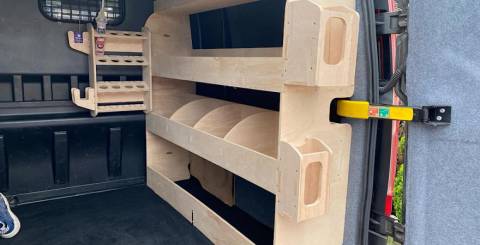
Every tradesperson has wasted time in the back of their van. Searching through unsecured tools, shifting boxes to reach equipment at the bottom of a pile, arriving on site missing something that was definitely loaded that morning. It's a familiar frustration — and entirely avoidable. Investing in custom van racking transforms a cluttered load space into a structured, efficient workspace that saves time every single working day.
The difference isn't just organisational. It's professional.
The Real Cost of a Disorganised Van
Most tradespeople underestimate how much time a poorly set-up van actually costs them. Even five minutes of searching per job across a full day of call-outs adds up to a significant chunk of unbillable time each week. Multiply that across a year and the number becomes genuinely uncomfortable.
Beyond time, there's the damage to consider. Tools rattling loose against each other wear faster and break sooner. Unsecured loads shift during braking and cornering, putting stress on both the van interior and the equipment inside. In a worst-case scenario, an unrestrained load becomes a safety hazard — for the driver and for anyone else on the road.
A properly fitted racking system eliminates all of this. Everything secured, everything accessible, everything where it should be before the first job of the day begins.
Read more: How to Choose a Ladder Rack for Your Work Van
What Custom Van Racking Actually Means
The word "custom" gets used loosely in the van storage market. It's worth being clear about what genuine custom racking delivers versus a standard shelf bolted to a wall.
True custom van racking is built around two things simultaneously: the specific trade being served and the specific vehicle being fitted. A plumber's racking layout looks completely different from an electrician's, which looks different again from a carpenter's. The tools are different, the materials are different, and the workflow at the van doors is different.
At the same time, the van model matters as much as the trade. Interior dimensions, wheel arch positions, load floor height, bulkhead placement — all of these vary between manufacturers and models. Racking that ignores the vehicle ends up wasting space or creating awkward gaps that serve nobody.
Why Van Racking Systems Need to Be Vehicle-Specific
The market offers plenty of modular racking options that claim to fit any van. In practice, these compromises show up quickly. Shelves that don't reach the walls leave dead space. Units that don't account for wheel arch intrusion reduce usable depth on one side. Racking that sits too high blocks rear visibility or catches on door frames.
Purpose-built sealant tube holder designed for specific vehicle makes and models avoid all of these problems. The fit is clean, the space is used properly, and the installation sits securely without shimming or makeshift adjustments.
For tradespeople who live out of their van five days a week, the difference between a van that fits properly and one that almost fits is felt every single morning.
Getting the Details Right: The Sealant Tube Holder
A van racking system is only as good as its details. The main shelving units handle the bulk of the load, but it's the specialist accessories that make the day-to-day experience genuinely smooth.
The sealant tube holder is a prime example. Sealant tubes are carried on almost every job by plumbers, builders, kitchen fitters, and joiners — yet they're notoriously difficult to store tidily. They roll, they stack awkwardly, caps go missing, and finding the right product quickly when hands are already dirty is genuinely frustrating.
A dedicated holder keeps every tube upright, visible, and separated. The right sealant is found at a glance rather than after a rummage. Caps stay on, nozzles stay clean, and nothing gets crushed under something heavier. It's a small component, but for anyone who carries sealant regularly, it changes the daily experience in a way that's immediately noticeable.
Volkswagen Van Racking: A Case Study in Precision Fit
The Volkswagen Transporter and Crafter are among the most widely used commercial vans in the UK — trusted by tradespeople across virtually every sector for their reliability, build quality, and strong residual values. Their interiors are well-proportioned, but getting the most from that space requires racking built specifically to their dimensions.
Volkswagen van racking designed for VW models accounts for the specific geometry of the load area — the exact wheel arch profile, the interior panel contours, and the relationship between the bulkhead and the rear doors. The result is a system that uses every available centimetre without forcing the driver to work around gaps or misaligned shelves.
For Transporter and Crafter owners who run structured call-out schedules or carry a consistent set of tools and materials each day, a properly fitted VW-specific racking system is one of the highest-return investments available.
Choosing the Right Setup for Your Trade
The starting point for any racking decision should be an honest assessment of how the van is actually used day to day. What tools are carried? Which ones are used on every job and need to be immediately accessible? Which materials are loaded and unloaded frequently versus carried as backup stock?
From there, the vehicle determines the structure. Understanding how the interior space can be divided — shelf runs along one wall, drawers or bins on the opposite side, floor space for longer materials — shapes everything that follows.
Finally, the accessories complete the system. A sealant tube holder, a power tool charging station, cable drum brackets, parts bins for fixings and fittings. Each addition should solve a specific daily frustration, not just fill space.
Closing Thoughts
A van built around its driver's workflow isn't a luxury. It's a straightforward productivity tool that pays for itself quickly and keeps paying back every working day that follows.
Custom van racking — fitted properly, accessorised thoughtfully, and matched precisely to the vehicle — turns a standard panel van into the most efficient tool on any tradesperson's job sheet.
Similar Articles

Explore new dirt bike models, key features, and expert buying tips to choose the right ride for performance, durability, and off-road adventures.

Clear, student-friendly guide to EV powertrains covering motors, batteries, inverters, and control systems for mechanical and electrical engineers.

The interaction between alcohol ignition interlock devices and insurance coverage is an important consideration for those who have been mandated to install such devices.

Car accidents can be stressful and overwhelming, often leaving drivers with damaged vehicles and uncertainty about the next steps.

Discover why the Bajaj Chetak C2501 is perfect for eco-conscious commuters—stylish, efficient, low-emission, and ideal for sustainable urban travel.

This is the first thing that most people overlook: the car parked in your driveway was designed with a generic driver that does not exist anywhere on Earth.

Learn 7 things to do after a fender bender and how to choose the right repair shop for safe, fast, and stress-free vehicle repairs.

Explore 10 practical ways to compare SUVs and choose the right model for your lifestyle, balancing comfort, performance, features, and budget.

Here's something that should concern you: every single year, thousands of vehicles spin out on bridge surfaces when roads get wet.