

What Makes a Good Physician Headshot (And Why Most Doctors Are Using a Bad One)

Look up almost any doctor before an appointment, which is what the majority of patients now do, and you will meet their photo before you meet them. It sits on the hospital directory, the group practice website, the insurance network listing and the review platforms, and it is doing more work than most physicians realize. Patients scanning a list of unfamiliar names choose partly on that photo, whether they admit it or not.
Which makes it strange that so many of these photos are visibly ten years old, cropped from a conference badge, or taken against an office wall between appointments. The profession that understands first impressions clinically tends to neglect its own.
What Patients Actually Read in the Photo
Research on patient choice keeps landing on the same two qualities: competence and warmth. The headshot communicates both before a word of the bio is read. Direct eye contact and a modest, genuine smile carry the warmth. Grooming, posture and an uncluttered background carry the competence. Patients are not art critics; they are asking a simpler question, "does this person seem like someone I can trust with my problem," and they answer it in about a second.
The photo also has a consistency job. A physician whose directory photo, hospital profile and LinkedIn each show a different person, different decade, different hair, different level of formality, creates a tiny moment of doubt at every touchpoint. Not fatal, just friction, repeated across every platform a patient checks.
The Checklist That Separates Good From Bad
A strong physician headshot follows rules that are boringly consistent across the industry.
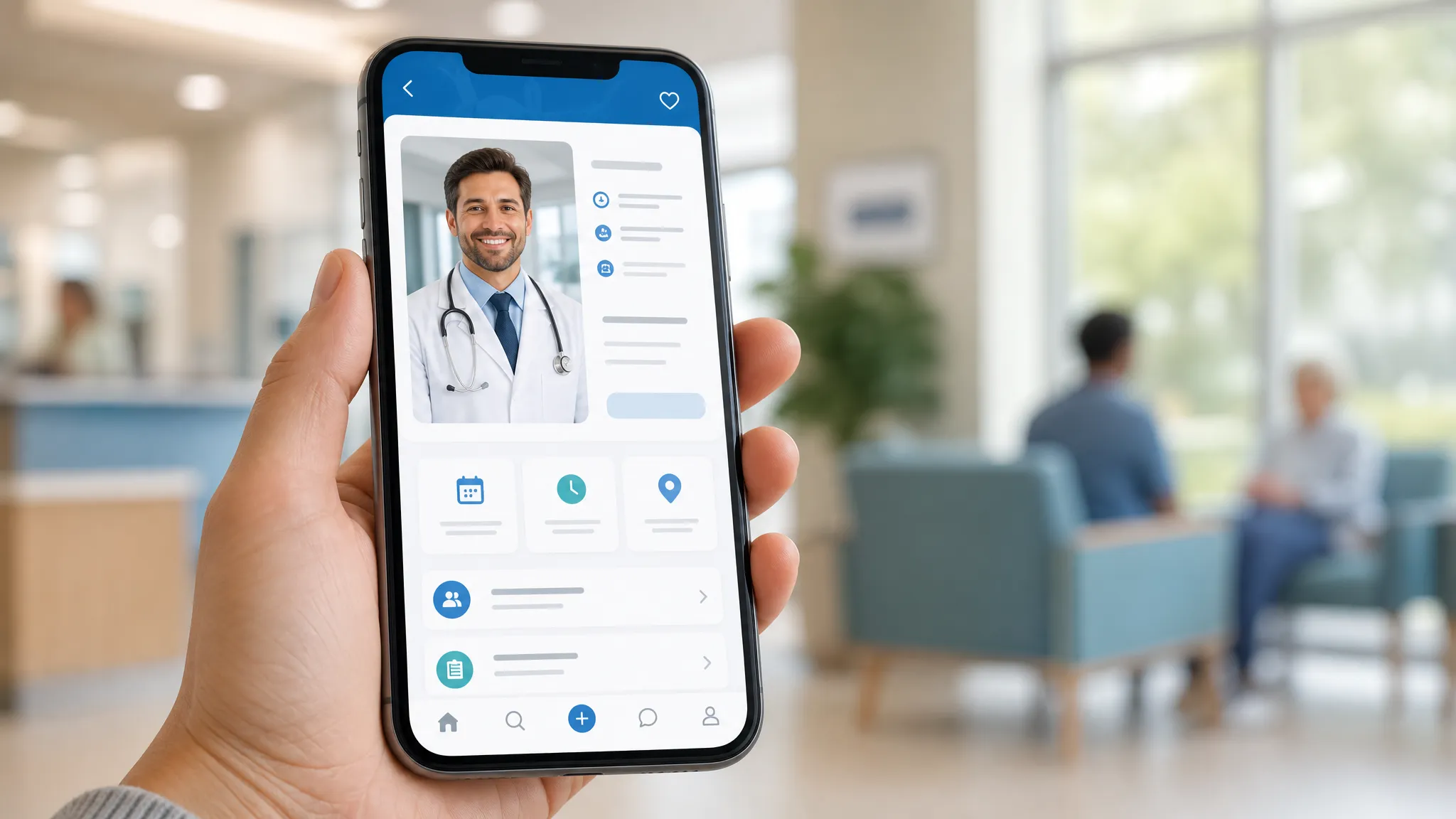
Attire should match how patients will actually meet you. The white coat remains the strongest single trust signal in medical portraiture, worn over professional clothing, clean and fitted. Scrubs photograph acceptably for hospitalists and surgeons but read less formal on a directory page. Whatever the choice, it should be current: the coat with the old hospital's embroidery is a detail patients notice.
Backgrounds should be plain and light: neutral gray, soft blue or a gently blurred clinical setting. Busy office backgrounds, bookshelves and window glare all compete with the face. Lighting should be even and shadowless, which is the main thing separating a professional result from a hallway phone photo.
Expression is where doctors most often go wrong, defaulting to the stern passport face. The evidence on patient preference favors approachability, a relaxed, moderate smile, head level, eyes to camera. And the photo should be recent enough that the person in the waiting room recognizes the person from the website, which as a rule of thumb means under three years old.
Why the Old Process Kept Producing Old Photos
None of this is news to physicians. The photos stay outdated because the update process fights the clinical schedule. A studio session means finding daylight hours that do not contain patients, and hospital marketing departments shoot new staff portraits on a cycle that might come around annually if the budget holds. So the badge-photo crop persists, not from indifference but from arithmetic: the photo is important, but never more urgent than anything else on the calendar.
This is the specific gap that AI portrait services have closed. The newer workflow runs from a handful of phone selfies taken in spare minutes, and returns studio-style portraits, white coat, neutral background, even lighting, without an appointment. Services producing physician headshots this way generate a large set of options per person in well under an hour, so a doctor can refresh the directory photo between shifts, and a practice can bring every provider's photo to one consistent standard without herding twelve schedules into a studio day.
ProfessionalHeadshot.io, which offers a dedicated medical version of this, keeps the output within the conventions above rather than drifting into glamour territory, which is the correct instinct: the goal is the trustworthy version of the actual doctor, current and consistent, not a stylized stranger. A generated portrait that no longer resembles the physician who enters the exam room would defeat the entire purpose, and the better services treat likeness as the constraint it is.
The Practice-Level Version of the Problem
For clinic managers and group practices, the individual photo problem multiplies into a branding one. A provider page where half the team has professional portraits and half has phone snapshots reads as unevenness, and patients browsing for a new physician notice it the way they notice a waiting room that is half renovated. The traditional fix, booking a photographer for a staff day, collides with the reality that a full clinical roster is never in the building at once, which is why so many practice pages stay inconsistent for years.
The remote workflow dissolves that constraint entirely. Each provider submits their own selfies whenever their week allows, the output lands in one shared style, and the page reaches visual consistency without a single schedule being coordinated. New hires get matching photos in their first week instead of waiting for the next staff photo day, which, in most practices, is a date that exists mainly in theory.
The Ten-Minute Fix
For an individual physician, the practical path is short. Audit where your photo currently appears and note the worst of them, which is usually an insurance directory nobody remembers updating. Produce one current, compliant headshot by whichever route fits your schedule. Then push that single image everywhere, hospital profile, group site, networks, LinkedIn, so every platform shows the same recent, approachable, white-coated version of you.
It is among the cheapest credibility improvements available in medicine, and unlike most marketing advice, it asks nothing of the schedule that clinical work has not already claimed. The clinical skills took a decade to build; making sure the first thing patients see reflects them takes, these days, about the length of a coffee break.
Similar Articles
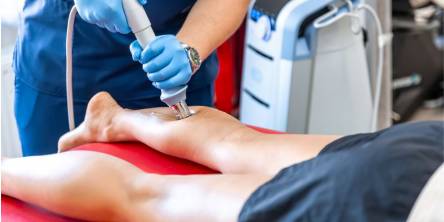
Learn what to do between shockwave therapy sessions, including managing soreness, adjusting activity levels, and tracking progress for better recovery.

A beautiful building tells you nothing about recovery outcomes. When you tour a Private Luxury Rehab in Los Angeles, comfort is often presented before clinical care, and families may pay a deposit before asking a single hard question.

Most advice about emotions assumes the hard part is identifying them.

Healthcare is built around people, but providing good care also depends on how well an organization manages the many tasks happening around each patient.

We live in an era where restorative rest is increasingly difficult to achieve. The relentless pace of contemporary work environments leaves little room for mental decompression.
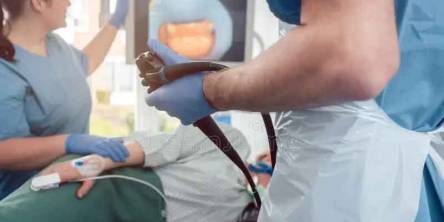
Endoscopy is a minimally invasive medical procedure that enables healthcare professionals to examine the internal organs and body cavities using a thin, flexible instrument called an endoscope.
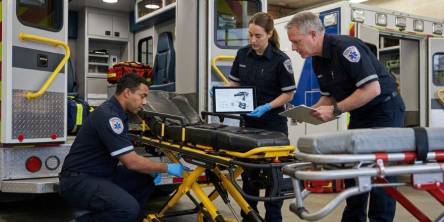
Learn how to choose the right ambulance stretcher for your fleet in 2026 by comparing safety, durability, mobility, comfort, and key features.

Look at how people around you actually watch things. Captions on. Not in a noisy train carriage, not in a shared flat at midnight, but at home, alone, on a good television, by people whose hearing is fine.
Finding the right medical daycare involves more than choosing whichever center is closest to home.