

How to Choose the Right Ambulance Stretcher for Your Fleet in 2026
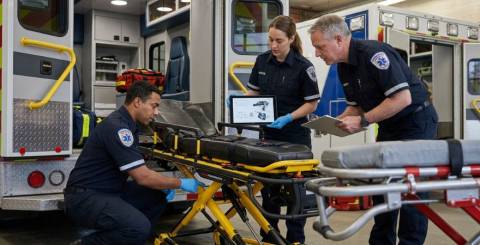
A practical procurement framework for EMS operators, hospitals, distributors, and project buyers comparing ambulance stretcher types, load ratings, vehicle fit, compliance documents, maintenance needs, and supplier support.
Buying an ambulance stretcher for one vehicle is different from standardizing patient-transport equipment across a fleet. A unit can look suitable online yet create problems after delivery if its loading height, fastening interface, wheelbase, or service parts do not match the vehicles and workflows already in use. The right decision starts with the operating environment, not the price list.
Before requesting quotations, prepare a short procurement brief covering the ambulance make and model, loading height, existing fastening system, expected patient profile and duty cycle, and destination-market requirements. Sharing this information early improves technical comparisons and reduces the risk of costly retrofits.
Define the use case before comparing models
Start by identifying where and how the stretcher will be used. An emergency-response fleet may prioritize fast loading, maneuverability, and reliable restraints. An interfacility service may place more weight on patient positioning and ease of cleaning. A backup or disaster-response vehicle may need a simpler design that can be stored and returned to service quickly.
Estimate the loading cycles per shift, typical travel distance outside the vehicle, surfaces the wheels must cross, and available storage space. These details influence wheel size, frame weight, battery needs, and the value of powered assistance. Without a defined use case, buyers often compare models designed for very different workloads.
Choose the operating system that fits the workload
Most fleet buyers compare three broad operating systems:
• Manual stretchers rely on crew strength and mechanical levers. They are usually lighter, simpler to maintain, and practical as reserve equipment, but require more physical effort.
• Hydraulic or power-assisted models reduce some lifting effort while retaining a relatively straightforward mechanical design. They can suit fleets seeking better ergonomics without a fully powered system.
• Powered stretchers use a battery-driven lift or loading mechanism. They can reduce repetitive lifting during busy shifts, but add weight, charging needs, electronic components, and cost.
Do not assume a powered system automatically makes every task a one-person operation. Crew requirements should follow the instructions for use, vehicle-loading system, patient condition, and local EMS protocols. Ask how the unit works during a low battery, whether a manual release is available, and how the battery is charged and replaced.
Verify load rating and patient-support features
The stated load capacity should be read together with the operating conditions. Confirm whether the rating applies to the patient alone or includes accessories, and request the exact safe working load of the quoted ambulance stretcher. If the fleet regularly handles bariatric patients, a dedicated higher-capacity model may be safer than using a standard unit near its limit.
Evaluate the side rails, restraint straps, buckles, backrest range, leg support, mattress, and locking points as one system. Controls should be accessible without creating pinch points, and the mattress cover should tolerate the service's cleaning products. Confirm that replacement straps and mattresses are available separately.
Match frame material to handling and environment
Aluminum-alloy frames are common because they combine relatively low weight with good corrosion resistance. This can help crews who maneuver the unit repeatedly and services operating in humid or coastal environments. Steel components can provide rigidity and durability, but usually increase weight and may need more surface protection.
Material alone does not determine quality. Tube thickness, weld consistency, fasteners, joints, surface treatment, and undercarriage geometry all affect performance. Request close-up images or inspect a sample at welds, hinges, locking pins, wheel forks, and high-wear contact points.
Confirm ambulance stretcher and fastening-system compatibility
Vehicle compatibility is one of the most important checks. Loading height, front and rear wheel positions, folded undercarriage dimensions, overall length, turning clearance, and fastening interface must work with the ambulance body and floor system.
A common mistake is approving a model from general dimensions and later finding that the loading wheels sit at the wrong height or the floor lock cannot engage. Request a dimensioned drawing of the exact model, including wheelbase and loading geometry. Compare it with the vehicle builder's drawings and, for a significant order, conduct a physical fit test.
Also verify that the unit can be loaded without striking the bumper or ceiling, secured correctly for transport, released in an emergency, and removed for cleaning or maintenance.
Evaluate loading ergonomics with real operators
Specifications cannot fully show how a stretcher feels during a shift. A sample evaluation should include operators of different heights and strengths, wearing the gloves and protective equipment they normally use. Test the handles, brakes, side rails, backrest control, leg-folding sequence, turning radius, and loading motion.
Watch hand placement and balance during transitions. Operators should not need to reach under a loaded frame near moving joints. Brakes should be easy to identify, wheels should track predictably, and controls should resist accidental activation.
For powered systems, repeat the test with a partially discharged battery and confirm what happens if the lift stops mid-cycle.
Calculate maintenance and lifetime cost, not only unit price
The lowest quotation may become expensive if wear parts are unavailable. Ask for a spare-parts list and expected replacement intervals for wheels, bearings, locks, straps, mattresses, hydraulic parts, batteries, chargers, and switches. Confirm which parts can be replaced locally and which repairs require factory service.
For powered models, ask about battery chemistry, cycle life, storage, charging time, replacement availability, and shipping restrictions. Warranty terms should explain what is covered and how claims are handled. Fleet standardization reduces training and inventory costs only when the supplier keeps specifications consistent and communicates design changes before production.
Verify compliance documents for the exact model
Regulatory requirements depend on the destination market, device classification, and exact configuration. A general company certificate does not prove that every product in a catalogue is compliant.
For the United States, verify manufacturer and device information in the official FDA registration and listing resources. Registration or listing does not mean the FDA has approved, cleared, or authorized the product. If a premarket submission is required, confirm the relevant number for the exact model.
For the European Union, request the applicable EU Declaration of Conformity, CE-marking information, device classification, labeling, instructions for use, and any notified-body documentation required for that classification. Other markets may have separate registration, importer, labeling, and language rules.
ISO 13485 supports confidence in a quality-management system, but it is not product approval. Check certificate numbers, validity dates, issuing bodies, model scope, and configuration details before approving a bulk order.
Decide whether standard or OEM/ODM production is appropriate
A standard model is usually the lower-risk choice when the buyer needs a proven configuration and shorter lead time. OEM or ODM production can support private labeling, color, packaging, mattress options, accessories, or project-specific changes. However, even a small change can affect documentation, testing, cost, and delivery.
Create a signed specification sheet recording the model number, dimensions, load rating, materials, accessories, labels, packaging, artwork, and approved sample. This document should control production and repeat orders.
Reviewing a complete product category can also reveal how much models differ. For example, HERUI Medical's ambulance stretcher range presents different dimensions, adjustment ranges, load ratings, and configuration options. The purchasing lesson is simple: request the datasheet and documentation for the exact model quoted, not a general promise about the product family.
Audit the supplier's quality and after-sales capability
Before selecting a manufacturer, ask questions that reveal how risk is managed after the quotation:
• Can the supplier provide a sample or detailed video inspection?
• Is there documented incoming, in-process, and final inspection?
• Are serial numbers, batch records, or other traceability methods available?
• Which measurements and functions are checked on every unit?
• How are component changes communicated to repeat buyers?
• What spare parts can be packed with the first shipment?
• Who handles technical questions and warranty claims?
• Can the packaging withstand the planned shipment and storage?
Related products should be evaluated as separate devices. A full-size stretcher is not designed for every stairway or narrow space. When stair evacuation is in scope, review HERUI Medical's powered stair-chair options separately and compare track design, braking, battery endurance, folded size, restraints, and operator training.
Run a structured sample and pre-shipment inspection
For a first order or new model, use the same inspection sequence each time. Check the model label, dimensions, accessories, and finish. Cycle every height, backrest, rail, lock, and folding mechanism. Apply the brakes, inspect wheel tracking, test the buckles, and look for sharp edges, loose fasteners, abnormal movement, or component interference.
Then test the unit with the intended ambulance and fastening system. For a powered model, run a realistic loading sequence and confirm charging and manual override. Review the instructions, maintenance information, spare-parts list, packaging, and carton markings.
Record the approved sample with photographs, measurements, and signed comments. Reuse the checklist for pre-shipment inspection to identify changes between the sample and production batch.
Quick comparison without a specification table
• Manual stretcher: Best for reserve vehicles, lighter duty cycles, and buyers prioritizing low weight and straightforward maintenance. Check the crew effort required at the highest loading position.
• Hydraulic or power-assisted stretcher: Best for fleets seeking improved ergonomics without a fully electric system. Check pump access, leakage risk, service parts, and operation without assistance.
• Powered stretcher: Best for high-frequency work where reduced repetitive lifting can justify extra weight, charging, and maintenance. Check vehicle integration, battery management, manual override, control protection, and power-failure procedures.
Frequently asked questions
What information should be sent with a quotation request?
Provide the ambulance make and model, loading height, fastening-system details, required safe working load, preferred operating system, destination market, quantity, accessories, and OEM requirements. Photographs and dimensioned drawings of the vehicle floor help when compatibility is uncertain.
Is a powered stretcher always the best choice?
No. A powered model can reduce manual lifting, but it is heavier, more expensive, and dependent on battery and electronic maintenance. The best choice matches the fleet's workload, vehicles, crew procedures, service capability, and budget.
Which documents should be checked before a bulk order?
Review the exact-model datasheet, labeling, instructions for use, applicable declaration or market-authorization documents, quality certificates, test information, warranty, spare-parts list, and signed configuration sheet. Required regulatory documents vary by market and classification.
Should buyers order a sample before placing a large order?
A sample is strongly advisable when the model, supplier, vehicle interface, or custom configuration is new. It lets the buyer test loading geometry, controls, securement, cleaning, accessories, packaging, and operator usability before production is locked.
Conclusion
Choosing the right ambulance stretcher is a fleet-integration decision, not simply a product comparison. The safest process begins with a clear use case, verifies vehicle compatibility and operator ergonomics, checks product-specific compliance documents, and plans maintenance before ordering.
A technical brief, structured sample test, and signed specification sheet give buyer and supplier a clear standard. That discipline reduces incompatible equipment, unplanned downtime, inconsistent repeat orders, and avoidable training costs.
Similar Articles

A beautiful building tells you nothing about recovery outcomes. When you tour a Private Luxury Rehab in Los Angeles, comfort is often presented before clinical care, and families may pay a deposit before asking a single hard question.

Most advice about emotions assumes the hard part is identifying them.

Healthcare is built around people, but providing good care also depends on how well an organization manages the many tasks happening around each patient.

We live in an era where restorative rest is increasingly difficult to achieve. The relentless pace of contemporary work environments leaves little room for mental decompression.

Look up almost any doctor before an appointment, which is what the majority of patients now do, a

Endoscopy is a minimally invasive medical procedure that enables healthcare professionals to examine the internal organs and body cavities using a thin, flexible instrument called an endoscope.

Look at how people around you actually watch things. Captions on. Not in a noisy train carriage, not in a shared flat at midnight, but at home, alone, on a good television, by people whose hearing is fine.

Finding the right medical daycare involves more than choosing whichever center is closest to home.

Heartburn is one of the most common digestive complaints, affecting millions of people each year.