

Choosing the Right AWS Messaging Service: SQS vs. SNS vs. EventBridge

Amazon Simple Queue Service (SQS), Simple Notification Service (SNS), and EventBridge are just a few of the messaging services that AWS provides to meet various demands when it comes to creating scalable and effective cloud systems. With differing degrees of message queuing, pub/sub functionality, and event routing, each service has a distinct function in event-driven systems. Modern apps are rarely monolithic, if at all. Instead, they are now designed as distributed systems made up of independent microservices. This shift in architecture has raised a critical question: how do these various components communicate effectively and reliably? Direct, synchronous calls can cause tight coupling, making the entire system unstable. Thankfully, the solution is found in asynchronous, decoupled messaging. It is a fundamental principle of developing resilient and scalable systems.
To cut a long story short, an app's communication pattern becomes the most important factor in determining the right messaging service for your project. We'll go over the distinctions between these three services, their applications, and how to pick the best one for your integration and messaging requirements in this blog.
SQS, SNS, and EventBridge: A Lowdown
- SQS: This message queuing service enables you to decouple the components of your cloud app. Using a pull-based model, it is intended for one to one asynchronous communication between software components. A producer sends a message to a queue, which a consumer then polls to retrieve and process. Post processing, the message is removed from the queue. This is critical for designing scalable systems because the producer and consumer do not have to be present at the same time.
- SNS: It is a publish/subscribe service that leverages a push-based model. The publisher sends a message to an SNS topic which then immediately sends the message to all subscribed endpoints. These may include SQS queues and even mobile push notifications. The primary distinction from SQS is its fan out capability.
- EventBridge: A serverless event bus service, it simplifies the connection of apps with an event-driven architecture. It is similar to SNS in that it operates on a push model, yet it is more advanced. EventBridge serves as a centralized, intelligent bus for monitoring and responding to changes throughout your entire infrastructure. It's especially useful for creating complex event driven workflows.
SQS vs. SNS vs. EventBridge: A Showdown
Within the realm of cloud messaging, AWS provides three robust services: EventBridge, SNS, and SQS. Understanding the main distinctions between them is essential to selecting the best solution, as each serves distinct use cases. To aid in your decision-making, let's compare them.
Let’s discuss them in detail;
- Pricing model: SQS pricing is determined by the number of requests made to the queue and the amount of data transferred. There is a free tier that includes a set number of free requests per month. FYI, the pricing for requests varies between SQS Standard and SQS FIFO queues. Next up: SNS. This one's pricing is determined by the number of messages you publish to a topic and the delivery protocol used to reach subscribers. If you send a message to a Lambda function or HTTP endpoint, it costs one amount. But if you send an SMS or email -- that costs another. Finally, EventBridge's pricing is based on the number of events ingested into the event bus, which differs significantly from SNS and SQS. The number and complexity of rules have no direct impact on message delivery costs. There are also extra fees for features such as schema discovery and event replay.
- Integration: SQS is a foundational service for application-to-application (A2A) integration. It integrates with consumers who can poll the queue, which can be any application capable of using the AWS SDK or on-premises servers. Whereas SNS excels at integrating with a wide variety of subscribers. It supports both application-to-application (A2A) and application-to-person (A2P) communication. As for EventBridge -- it is built for a more complex integration landscape. It can consume events from numerous sources, including over 200 AWS services, custom applications you build, and third-party SaaS partners. It then routes these events to specific targets.
- Message ordering: SQS uses best effort message ordering, which means that messages are not guaranteed to be delivered in the same order they were sent. SNS Standard topics do not ensure message delivery order either. Messages are sent to subscribers in an arbitrary order. In contrast, SNS FIFO topics guarantee message ordering and delivery exactly once. EventBridge, however, does not guarantee message ordering. Events are delivered to their destinations according to rules, and the order in which they arrive at different locations is not guaranteed.
When to use:
- SQS: Use this one when you need a simple, one-to-one communication queue to decouple a producer and a consumer. This would allow for asynchronous processing and message ordering guarantees (with FIFO queues).
- SNS: SNS is best suited for when you need to broadcast a message to multiple, different types of subscribers simultaneously for use cases such as notifications, alerts, etc.
- EventBridge: When you require a central, intelligent event bus to build complex event driven architectures that react to events from a wide range of sources, EventBridge is an excellent choice.
Final words
In conclusion, the requirements of your application will determine which of AWS SQS, SNS, and EventBridge is best for you. SNS works well for real-time alerts, EventBridge is excellent for event-driven structures with intricate routing, and SQS is best for decoupled, scalable queues. You may make an informed choice that guarantees your messaging infrastructure's best performance, dependability, and scalability by being aware of each one's advantages and applications. Now all you need to get started is to be an expert with experience in application integration on AWS. Go start looking right away!
Similar Articles
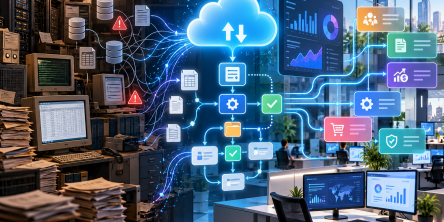
In today's highly competitive corporate environment, clinging to outdated technology is a costly mistake. Enterprises globally are realising that their legacy systems, once the backbone of their operations, are now creating severe bottlenecks.

Learn how knowledge management clears duplicate files and conflicting policies, creates one source of truth and keeps your AI and teams accurate.

Giga vs eight for calls: compare talktime, SMS, and IDD allowances, plus what happens when minutes run out, so you pick the right SIM-only plan.

Stay powered and connected with Belkin's portable power banks, chargers, durable cables and routers built for modern devices and everyday reliability.

Learn how Belkin's innovative connectivity solutions, from durable USB-C cables to fast charging, are reshaping everyday tech accessories.

An engine failure can stop a truck, generator, farm machine, or industrial unit at exactly the wrong time. Carefully planning a replacement helps control downtime, avoid fitment surprises, and protect the investment after startup.
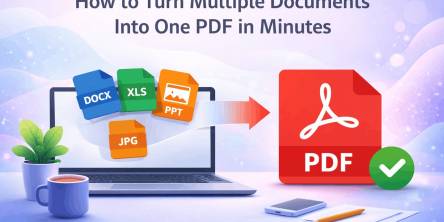
Managing multiple documents can quickly become frustrating. Imagine sending several files in an email, uploading different attachments to a submission portal, or sharing a business report with clients across multiple documents.

Energy efficiency is revolutionizing power distribution, leading to more sustainable and cost-effective energy systems.

Moving has a way of making even organized people feel scattered. One minute you’re labeling boxes. The next, you’re hunting for a receipt, calling the utility company, and wondering where the tape disappeared to.