

Step-by-Step Process to Application Integration for Modern Businesses
Agile and data driven companies have a clear competitive advantage. At least in the modern market. This shift has led to the adoption of specialized software, such as CRM and various SaaS apps. These systems excel at their specific function, but the problem is that they usually operate in silos. This translates into data inconsistencies. To tap into the true potential of such extensive tech stacks, businesses are moving away from isolated apps. They are now embracing a unified digital ecosystem. This is when application integration becomes the foundational process. Application integration is a strategic effort to connect these disparate software systems so that they can share data and coordinate workflows in real time.
In this blog, I will discuss the process of application integration and how it will enable you to make better decisions for your project requirements.
The Imperative of App Integration
It is critical in the digital economy because businesses rely on an ever-expanding suite of specialized software. Without integration, these applications operate in silos. This compels employees to manually enter information between systems. This is obviously time-consuming and prone to errors. App integration addresses this by connecting disparate systems, allowing for real time data sync and the automation of end-to-end business processes.
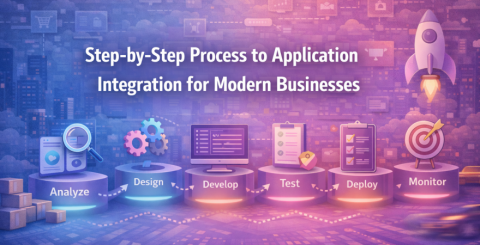
Application Integration Process: Step by Step
Effective application integration begins with defining project scope and objectives, followed by designing a robust system architecture. Selecting the right tech stack ensures scalability and efficiency. Implementation involves creating connectors and mapping data flows, while rigorous testing validates functionality and reliability before deployment for seamless business operations.
Listed below are the key steps;
- Project scope: This first phase is meant to define the objectives for the integration project. Of course, establishing the project scope is also a part of this step. It starts with clearly articulating the specific business objectives that integration must achieve. The project team must then precisely identify all apps that must be connected, as well as detail the specific data entities and transactional flows between them. This is supplemented by detailed requirements gathering. Finally, an initial technical feasibility check is conducted before developing a formal project plan.
- System design: This phase is meant to convert the strategic vision into a detailed technical blueprint. The first critical decision is to choose the appropriate integration style. It can range from a simple Point to Point connection between two apps to more complex patterns like using an iPaaS platform for multiple connections. A common data model is then defined, and precise data mapping rules are developed to ensure that data translates consistently between the source and target apps. Design also influences the communication method.
- Selection of tech stack: This step involves systematically selecting the best integration tools and platforms to execute the design blueprint. Based on the chosen integration style, the process begins with identifying potential technologies, such as commercial iPaaS solutions or specialized API management gateways. These shortlisted tools are stringently evaluated and compared to the project's specifications. There is a strong emphasis on scalability to handle future volume and overall cost of ownership.
- App integration implementation: It is the development phase meant to transform technical design into a functional, integrated solution. This means writing custom code or using platform configuration tools to create the necessary connectors or adapters. They are what allow the integration layer to interact directly with the APIs or databases of the connected apps. The core of this step is to configure the precise data transformation and mapping logic that will translate the data between the various application formats. The defined business logic is also incorporated into the integration flows during this phase.
- Testing: This goal of this phase is to make sure that the newly integrated system functions reliably. The system is also evaluated to see to it that it meets all initial requirements before it goes into production. The process begins with unit testing which seeks to ensure that individual components work properly. This is followed by comprehensive integration testing, which simulates end-to-end data flows with realistic test data to ensure that data is transferred and processed correctly across all systems.
Final Words
Application integration is no longer optional—it’s a strategic necessity for modern businesses. By connecting siloed systems, organizations unlock real-time data flow, improve efficiency, and enable seamless processes. Investing in robust integration ensures scalability, agility, and a unified digital ecosystem that drives long-term success. Therefore, if you want to kickstart your integration project too, I recommend that you start with looking for a trusted application integration consulting vendor.
Similar Articles

Selecting the correct pipe type for a high-pressure system is one of the most consequential decisions an engineer or procurement manager will make on any industrial project.

Managing multiple documents can quickly become frustrating. Imagine sending several files in an email, uploading different attachments to a submission portal, or sharing a business report with clients across multiple documents.

Energy efficiency is revolutionizing power distribution, leading to more sustainable and cost-effective energy systems.

Moving has a way of making even organized people feel scattered. One minute you’re labeling boxes. The next, you’re hunting for a receipt, calling the utility company, and wondering where the tape disappeared to.

Apple devices break more than owners expect. This guide shows the cases, screen protectors, and Apple Watch bands that stop cracks, scratches, and costly repairs, plus how to change apple watch band in under a minute.

The aviation industry is rapidly modernizing, shifting from reactive, paper-heavy maintenance to highly automated, predictive ecosystems.

Learn what makes users trust a health app instantly and discover the design, security, and user experience factors that drive long term engagement.
Learn how Thunderbolt 4 docking stations support multiple displays, deliver fast data transfer, and create a streamlined, productive workspace.
Learn how ML development teams measure ROI from machine learning investments by tracking revenue growth, cost savings, productivity gains, risk reduction, and long-term business outcomes.