

The Future of Work with AI: Jobs, Skills, and Opportunities
Artificial intelligence (AI) is no longer a distant promise—it’s here, reshaping industries, redefining job roles, and altering the skills we need to thrive. While much of the public conversation focuses on job displacement, the reality is far more nuanced. AI is eliminating some roles, transforming many others, and creating entirely new categories of work. The challenge and opportunity for individuals, businesses, and policymakers is to navigate this transition effectively.
The Impact of AI Across Industries
Manufacturing and Automation
AI-powered robotics and predictive analytics have revolutionized manufacturing. Factories are moving toward “lights-out” operations—plants that can run without human presence for extended periods. Predictive maintenance powered by AI sensors can detect equipment issues before they become failures, saving millions in downtime.
Healthcare Transformation
From AI-assisted diagnostics to personalized treatment recommendations, healthcare is seeing a surge in AI adoption. Radiology, pathology, and drug discovery now rely heavily on machine learning algorithms, freeing human experts to focus on complex cases and patient relationships.
Finance and Decision-Making
In finance, AI is automating routine tasks such as fraud detection, loan risk assessment, and portfolio optimization. The role of human analysts is shifting toward strategic decision-making and interpreting AI-generated insights.
Jobs That AI Is Creating
While automation is replacing some roles, AI is also generating new ones.
AI Trainers and Data Annotators
For AI models to function, they need vast amounts of labeled data. This has given rise to jobs focused on curating, annotating, and verifying datasets.
AI Ethics and Governance Specialists
As AI spreads, so does the need for oversight. Experts in AI ethics, compliance, and transparency are becoming vital to ensure technology is deployed responsibly.
Human-AI Collaboration Designers
These professionals design workflows where humans and AI systems complement each other—maximizing productivity while maintaining human judgment.
Skills for the AI-Driven Economy
Digital Literacy
A baseline understanding of how AI works is becoming essential across professions. Even non-technical roles increasingly require familiarity with AI-driven tools.
Critical Thinking and Creativity
AI excels at pattern recognition but struggles with complex problem-solving in ambiguous scenarios. Skills in creative thinking, interdisciplinary synthesis, and emotional intelligence remain uniquely human advantages.
Data and Algorithmic Fluency
Workers in marketing, logistics, HR, and other fields benefit from knowing how to interpret AI outputs and question algorithmic assumptions.
Midpoint Insight: Leveraging AI as a Partner
The shift is not about humans competing with AI, but collaborating with it. In many professions, those who adopt AI as a “co-pilot” will outperform those who ignore it.
For individuals seeking to understand how AI might enhance their work or career, experimenting in a safe, exploratory environment—such as using a Free AI chat tool—can help reveal the ways AI interprets information, generates insights, and adapts to different queries. These interactions can build intuition about AI’s strengths and limitations, which is critical for effective collaboration.
The Global Opportunity
Developing Economies
AI could help leapfrog infrastructure challenges. For example, AI-driven mobile banking platforms in Africa are expanding financial inclusion without traditional banking infrastructure.
Small and Medium Enterprises (SMEs)
AI tools once limited to large corporations are now accessible to smaller businesses via cloud platforms, enabling competitive advantages in customer service, logistics, and marketing.
Remote and Hybrid Work
AI-powered project management and communication tools are enabling global collaboration, reducing geographical barriers to high-quality employment.
Challenges in the AI Future of Work
Job Displacement and Reskilling
According to the World Economic Forum, AI could displace 85 million jobs by 2025 while creating 97 million new ones. The transition will require large-scale reskilling initiatives, with a focus on both technical and soft skills.
Ethical and Social Implications
AI decisions can reflect biases present in their training data. Without oversight, these biases could perpetuate inequality in hiring, lending, and other critical areas.
Mental and Emotional Impact
Rapid technological change can create anxiety among workers, highlighting the importance of mental health support during transitions.
Expert Commentary: The Human Edge
Dr. Priya Ramanathan, a leading AI and workforce policy expert, emphasizes:
“The most successful workers in an AI-driven economy will be those who understand not only how to use AI tools but how to guide them—asking the right questions, framing the right problems, and interpreting answers in context.”
Her insight underlines a critical point: AI may process data faster than humans, but it lacks contextual understanding and value-based reasoning.
Preparing for the AI-Driven Future
Lifelong Learning
Traditional education models are too slow for the pace of AI evolution. Workers will need to adopt a mindset of continuous upskilling through online courses, workshops, and self-guided study.
Cross-Disciplinary Skills
The most in-demand professionals will combine AI knowledge with expertise in another domain—such as law, design, medicine, or environmental science.
Human-Centered AI Design
Participating in the creation of AI systems, rather than just consuming them, will ensure these tools reflect diverse perspectives and societal needs.
Conclusion: Opportunity Through Adaptation
The future of work with AI is neither a utopia nor a dystopia—it is a complex transformation that offers both challenges and immense opportunities.
Those who adapt early, learning to work alongside AI and leveraging it for productivity, creativity, and problem-solving, will find themselves in high demand. Governments, educators, and companies must collaborate to provide reskilling pathways, ethical guidelines, and mental health support to navigate this shift responsibly.
Ultimately, AI is a tool—and like all tools, its value depends on how we use it. By embracing it thoughtfully and strategically, we can build a future of work that is more innovative, inclusive, and resilient than ever before.
Similar Articles
Most people encounter "swap" tools as a single category. A video goes in, a different person comes out, and the marketing rarely bothers to explain what was actually exchanged.
In recent years, fluctuating raw material costs, pervasive labor shortages, and other such challenges have created a perfect storm for manufacturing organizations.

A content idea can be clear in your head and still become difficult the moment it needs a visual.

Explore MLOps vs LLMOps and learn how enterprise teams deploy, monitor, and scale AI systems in 2026 with smarter workflows and reliable operations.
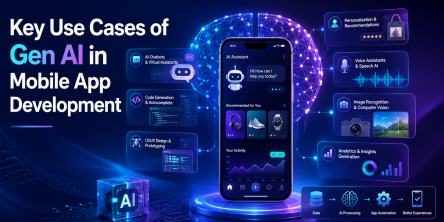
The digital world has always been evolving at a rapid pace. Ever since it first emerged. Take static applications, for example; their architecture is no longer agile enough to meet consumer expectations

A software product that took eighteen months to go from concept to launch five years ago is now expected to ship in a fraction of that time.
Most agentic AI projects fail to scale profitably because they work fine in a controlled demo but break down once they meet real production volume, messy data, and unpredictable user behavior
Adoption of AI recruitment automation across HR functions climbed from 26% to 43% in just two years, according to SHRM's State of AI in HR research.

Content creation has changed dramatically in recent years. Artificial intelligence tools now help writers produce blog posts, emails, product descriptions, and marketing materials much faster than before