

The Role & Benefits of AI Consulting in Fintech

FinTech stands at the top of its digital shift using some of today's hottest tech, with AI leading the pack. While some FinTech firms have nailed AI use, many still can't tap its full power to get ahead. In this big change, AI consultant plays a key role showing companies how to move from first thoughts to making AI a core part of their plans and work. Not knowing enough, plus all the buzz about AI, puts fintech firms in a tough spot when picking the right tools and ways to fit AI in. AI advice helps bridge this gap between tech know-how and business needs letting fintech firms bring in new ideas with confidence and care.
Before actual execution, AI consulting can create a checklist and remove all the hurdles or analyze it in the first place to make the execution as smooth as possible.
This blog will unpack the concept of AI consulting within fintech and examine the critical benefits it delivers to organizations seeking to thrive in an AI-powered future.
What Is AI Consulting?
If we talk about AI consulting, it is a strategic advisory function conducted by IT companies and service providers that enables fintech or other industry verticals to operationalize artificial intelligence, its capabilities in a way that is scalable, measurable, and aligned with core business objectives, and lastly helps in getting the most out of it in terms of automation, productivity, efficiency, etc. It does not include the implementation part, rather the blueprint of analysis—what can be driven, how to drive it, and why it matters to drive it.
At its core, AI consulting gives fintech companies the tools, frameworks, and rules they need to get the most out of AI in their day-to-day work. This means dealing with the complex tech stuff like machine learning, deep learning, and natural language processing. But it's not just about the tech - it also involves making sure the company is ready for AI, follows the rules, and can handle the big changes that come with it.
AI Consulting Benefits for Fintech Innovation
AI is changing the way fintech companies operate, but adopting it successfully can be tricky. This is where AI consulting really makes a difference.
Here are some key benefits fintech firms gain by working with AI consultants:
1. Smarter Decisions, Backed by Data
Fintech runs on data but raw data alone is not holding any value. AI consultants help companies turn that data into insights:
- Credit Scoring Gets Smarter: Instead of relying on limited credit history, AI models can analyze behavioral, social, and transactional data to make fairer and more accurate lending decisions.
- Fraud Detection in Real-Time: AI can monitor thousands of transactions simultaneously, spotting unusual patterns instantly. It is faster and more reliable than rule-based systems.
- Personalized Experiences: Whether it is suggesting the right investment or tailoring app interfaces, AI helps create unique user journeys based on real behavior.
- Faster, Smarter Trading: With AI-driven models based on right consulting, fintech can make data-backed trades within milliseconds an edge that's hard to beat.
2. Guidance Through the AI Journey
Jumping into AI without a plan? This can be a risky. Consultants bring structure and clarity from the start:
- Clear Roadmaps: They help outline where AI can deliver real ROI and align with business goals and just focused outcomes.
- Tech Made Simple: There are countless AI tools and platforms out there. Consultants help select what truly fits your needs, what will work for your business in long run, and which can be create not so great impact.
- Navigating Compliance: In a regulated space like finance, staying compliant is crucial. AI consultants ensure your systems follow the rules especially around data privacy and bias mitigation.
- Upskilling Your Team: It is not just about tech every time, sometime it’s about people too. Consultants help train internal teams to work with and maintain AI systems.
3. Anticipating and Solving Problems Early
AI adoption seems smoother from far but has complication when we look closely. But with the right expertise, many issues can be avoided before they even surface:
- Spotting Risks: Consultants can flag potential problems, obstacles such as messy data or legacy system compatibility as early as possible in the process.
- Strong Data Governance: FinTech deal with sensitive data. Consultants help build systems that are secure, compliant, and ethically sound.
- Managing Change: AI can change how teams work. Consultants provide strategies to help employees adopt new workflows and tools more comfortably.
- Keeping AI Performing: AI systems need regular tuning. Consultants help set up monitoring so your models keep delivering accurate, reliable results.
4. Moving Fast Without Breaking Things
In fintech, speed matters but so does precision. AI consultants help fintech firms go from concept to launch much faster:
- Ready-to-Use Frameworks: Why start from scratch? Consultants often bring proven models and development methods that cut down build time.
- Instant Access to Talent: Instead of spending months hiring AI specialists, you get immediate support from experienced pros.
- Rapid Prototyping: Test ideas quickly, get real feedback, and fine-tune before launching without blowing your budget.
- Smooth Integration: Consultants know how to work with complex financial systems, ensuring your new AI tools fit right in.
Final Thoughts
AI’s impact on fintech is undeniable and so is the value of AI consulting services. The real differentiator isn’t just access to AI models; it’s the ability to execute effectively. AI consulting bridges this gap by offering technical expertise, regulatory clarity, and faster go-to-market strategies.
Artificial Intelligence Consulting Company can deliver this edge through tailored solutions for fintech companies. From enhancing credit scoring to deploying intelligent agents, we help ensure AI becomes more than just a tool it becomes a strategic driver of growth.
Similar Articles

Most people encounter "swap" tools as a single category. A video goes in, a different person comes out, and the marketing rarely bothers to explain what was actually exchanged.

In recent years, fluctuating raw material costs, pervasive labor shortages, and other such challenges have created a perfect storm for manufacturing organizations.

A content idea can be clear in your head and still become difficult the moment it needs a visual.

Explore MLOps vs LLMOps and learn how enterprise teams deploy, monitor, and scale AI systems in 2026 with smarter workflows and reliable operations.
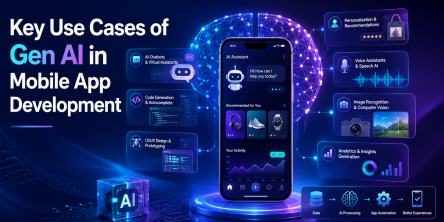
The digital world has always been evolving at a rapid pace. Ever since it first emerged. Take static applications, for example; their architecture is no longer agile enough to meet consumer expectations

A software product that took eighteen months to go from concept to launch five years ago is now expected to ship in a fraction of that time.

Most agentic AI projects fail to scale profitably because they work fine in a controlled demo but break down once they meet real production volume, messy data, and unpredictable user behavior

Adoption of AI recruitment automation across HR functions climbed from 26% to 43% in just two years, according to SHRM's State of AI in HR research.

Content creation has changed dramatically in recent years. Artificial intelligence tools now help writers produce blog posts, emails, product descriptions, and marketing materials much faster than before