

Optimizing Team Effectiveness with Agile Best Practices

Agility is a cornerstone of success in today's fast-paced and ever-evolving business landscape. Agile methodologies have transformed how teams collaborate, innovate, and deliver value to their organizations and customers. In this blog, we'll explore the best practices that empower teams to harness the full potential of agility, driving efficiency, quality, and adaptability.
The continued evolution of the software development ecosystem across the globe has led to endless high-level instruments and arrangements that have empowered the advancement of first-class software products. Assuming that one might call it thus, one such instrument is the Agile development methodology. Agile methodologies are more appropriate since the term refers to a collection of software development practices and principles that try to energize iterative and gradual methods and put the focus on spryness, joint effort, and consumer loyalty.
A fast history illustration before we continue: Agile methodologies first emerged in response to the difficulties posed by the Waterfall model, which was prevalent in the market during the early 2000s. You should likewise know that while a few Agile methodologies exist, each uses its own approach. In any case, all agile methods continue to share some common values and principles.
Whether you're new to Agile or looking to refine your current practices, let me discover the critical strategies for building effective Agile teams. Now, folks, before you start contemplating if agile pod structure figures in your development strategy and other such questions, we must first look at some critical Agile best practices.
Agile Best Practices: Kanban Project Management
- Continuous feedback: The Kanban philosophy encourages continuous feedback from customers and stakeholders. So, discussing issues, suggesting improvements, and adapting the process to optimize workflow better are terrific ideas.
- Workflow visualization: Leverage a Kanban board to visualize the flow of work items to track progress and identify bottlenecks. Ensure your Kanban board consists of columns representing different stages of work to help teams monitor the progress of their work.
Agile Best Practices: Scrum Project Management
- Stand-up meetings: Daily stand-up meetings are meant to be brief gatherings where teammates share updates about their progress, identify roadblocks, etc. These meetings enhance communication, determine challenges, and encourage seamless collaboration.
- Burndown charts: A tool the Scrum team uses to visualize their progress in a sprint, they visually show how much work is pending and the time remaining in the sprint. This helps teams keep an eye on their pace, adapt to fulfill sprint goals and identify potential problems early in the sprint.
General Agile Best Practices
- Iterative development: Since Agile development is underpinned by iterative and incremental progress, it is essential to break down large projects into smaller and more manageable iterations. Teams then work in short cycles, a.k.a. sprints, to deliver working software to customers early and often. Plus, this approach enables couples to receive regular feedback to adapt and improve the product as the development project progresses.
- Regular meetings: Make sure to hold a brief meeting every day wherein team members share plans, progress, and challenges they face. A team working with the Agile methodology holds several meetings to facilitate communication, collaboration, and alignment within the group. Nonetheless, keeping the sessions short and to the point is essential. Also, focus on communicating the most important information and making decisions.
Final Words
It is vital to embrace agile best practices to foster a dynamic, effective team. By emphasizing collaboration, adaptability, transparency, and customer-centricity, teams can better navigate modern business's complex and ever-evolving landscape. So, keep these best practices in mind to further fortify your chances of success with the Agile software development approach.
The agile methodologies enhance productivity and promote a culture of continuous improvement, ensuring that teams remain responsive to changing requirements and consistently deliver high-value outcomes. In today's fast-paced world, adopting agile best practices is not just a strategy; it's necessary for achieving sustained success and showing exceptional results.
Similar Articles

Field sales teams handle numerous responsibilities every day. Sales representatives travel between customer locations, conduct meetings, collect orders, record information, and report their activities to managers.

The app development market has evolved significantly over the past decade or so. Its impact on business has been equally consequential.

Offshore IT hiring means recruiting IT professionals who work from another country or region. Companies commonly use this approach for software development, QA, IT support, DevOps, cybersecurity, data, and project management.

By 2026, moving to the cloud is no longer merely a competitive advantage. It is a business necessity. Every organization across the broad spectrum of industries will be challenged to become more agile.
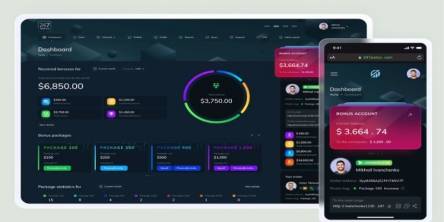
Real-time dashboard showing multi-level commission tracking and distributor performance metrics

Digital transformation initiatives are no longer unheard of in the corporate world. As a matter of fact, it is also well known that companies expanding their digital footprint tend to run into crippling legacy apps.

The financial aid office has become one of the most operationally strained departments on the modern U.S. campus. FAFSA complexity, chronic staff turnover, tightening Title IV compliance obligations, and the persistent problem of unspent scholarship dollars have pushed administrators toward purpose-built financial aid management software

The demand for software delivery has never been higher. Applications must be delivered faster and on a scale like never before.

Modern businesses produce large amounts of data daily. Be it from customer transactions, Internet of Things (IoT) sensors, or countless other such sources.