

How Does GHS Benefit Your Business and Consumers?
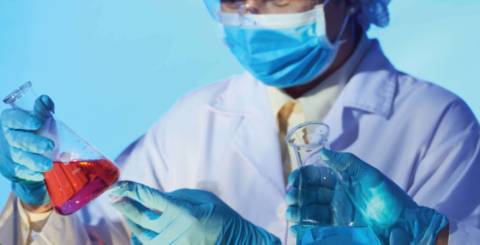
Nowadays, you have probably heard of the Globally Harmonized System of Classification and Labeling of Chemicals (GHS) if you work with hazardous chemicals. It is a collection of rules for the safe manufacture, transportation, handling, use, and disposal of hazardous materials. Within the global supply chain, it allows for greater collaboration and increased safety. Here's a brief overview of everything that you need to know about GHS.
What is GHS?
You should know What is the GHS, a worldwide team of hazard communication specialists created the Globally Harmonized System of Classification and Labeling of Chemicals to provide a uniform set of principles for classifying risks. GHS identifies and classifies chemical product risks and uses labels and safety data sheets to communicate health and safety information. GHS also specifies the structure and content of labels and safety data sheets that will be used worldwide.
How will GHS labels benefit your business?
Employers and the general public will all have easy access to practical and trustworthy information on chemical risks, allowing them to avoid and safeguard their health and safety. A globally recognized hazard identification system will offer a standard regulatory framework for nations that do not yet have one and promote worldwide chemical trade.
GHS is the crowning achievement of worldwide efforts to manage chemical risks. The standardization and universality of labeling and categorization that GHS provides is a long-overdue breakthrough in chemical safety worldwide.
GHS has several advantages for a variety of stakeholders. GHS guarantees that end-users and workers participating in the manufacturing and distributing of chemicals are safeguarded by giving clear warnings and instructions.
GHS is also beneficial to the global chemical trade since it simplifies administrative and safety processes for import and export. Industrial employees. Clear and consistent hazard communication benefits all of these groups, making their interactions with chemical goods safer and easier.
Pictograms and GHS Labels
The transition to hazardous global harmonization pictograms chemical labels is one of the most important effects of the Globally Harmonized System of Classification and Labelling of Chemicals. The material supplier's name, address, and phone number; the product identification, the signal word; the danger statements; the precautionary statements, and the pictograms are all required on GHS labels. GHS labels are standardized, and each danger category's label must include particular information. Manufacturers and distributors must first categorize a danger before communicating the signal word, hazard statements, precautionary statements, and pictograms associated with that hazard.
GHS pictograms are standardized symbols that rapidly indicate what type of hazards are present to handlers. The pictograms must be enclosed in a red square frame that is centered. On a white backdrop, there's a black symbol. Health hazards, flame, exclamation mark, gas cylinder, corrosion, exploding bomb, flame over circle, environment, and skull and crossbones are among the nine GHS pictograms.
The Step-by-Step Method for Classifying a Hazard
- The main procedures for auditing your chemical goods to correctly classify them under GHS guidelines are as follows:
- Identify the relevant data about the chemical's risks.
- Determine whether or not the chemical is harmful based on its physical, health, and environmental risks.
- To establish how the following information classifies the substance, test your compounds or check scientific proof.
- Determine which of the chemical's danger classifications relates to it.
- Determine the chemical's severity by assigning it to the relevant danger category within each class.
Importance of GHS
The Globally Harmonized System was created decades ago to assist in developing a global standard for chemical labeling and categorization that could be utilized by enterprises all over the world. Before implementing this standard, firms exporting or receiving chemicals had to relabel and categorize them to conform with local regulations. This may be highly expensive, and it could also expose people to needless dangers due to the process. They collaborate with businesses and governments all around the globe to develop the finest and most effective categorization and labeling standards for hazardous substances. It is vital to have a single unified standard to keep personnel, facilities, and the environment safe.
Overcoming Language Barriers
Regardless of the language spoken, GHS employs pictograms to transmit information.
Universal Standard
Having a single global standard makes it easier for businesses to collaborate.
Cost savings
Because the labeling regulations are the same no matter where a chemical comes from or is delivered to, there is no need to repeat it.
Improved Safety
The most significant advantage is that following a single standard makes dealing with dangerous substances significantly safer for everyone involved.
Bottom lines
GHS can help you know about the hazards of chemical products. It always provides health and safety information on labels and safety data sheets. It establishes a global set of criteria for categorizing risks and the format and content of labels and safety data sheets.
Similar Articles
Learn what to do between shockwave therapy sessions, including managing soreness, adjusting activity levels, and tracking progress for better recovery.

A beautiful building tells you nothing about recovery outcomes. When you tour a Private Luxury Rehab in Los Angeles, comfort is often presented before clinical care, and families may pay a deposit before asking a single hard question.

Most advice about emotions assumes the hard part is identifying them.

Healthcare is built around people, but providing good care also depends on how well an organization manages the many tasks happening around each patient.

We live in an era where restorative rest is increasingly difficult to achieve. The relentless pace of contemporary work environments leaves little room for mental decompression.

Look up almost any doctor before an appointment, which is what the majority of patients now do, a

Endoscopy is a minimally invasive medical procedure that enables healthcare professionals to examine the internal organs and body cavities using a thin, flexible instrument called an endoscope.
Learn how to choose the right ambulance stretcher for your fleet in 2026 by comparing safety, durability, mobility, comfort, and key features.

Look at how people around you actually watch things. Captions on. Not in a noisy train carriage, not in a shared flat at midnight, but at home, alone, on a good television, by people whose hearing is fine.