

Why You Should Switch to the Cloud

A 2019 Gartner report about the revenue generated by cloud computing found that the global market for it was expected to touch roughly $250 billion in value. By 2022, Gartner predicts, the worldwide public cloud service revenue would reach a massive $331 billion market value by 2022. Suffice it to say that the world of cloud computing has evinced the world’s interest. Now, to understand precisely why it is in so much demand, we must start with the basics. Even though it has been around for over a decade, some confusion about it persists. Thus, the cloud is any service that is delivered to customers over the internet. There are, of course, subdivisions, with different services being organized across categories.
Now that we have the fundamentals out of the way, it is time to figure out the answer you came here to answer: Why should you switch to the cloud? Well, because it has a world of benefits to offer. After all, companies are bracing to dedicate a sizeable part of their critical spending to the cloud. Easily the most important and sought after benefit is cost savings and you best believe that the cloud delivers that and so much more! It also assists with the development and testing via the provision of excellent resources to aid teams with the supply of server resources, storage resources, and so much more. But let’s explore some of these benefits in detail to help make a case for why it is time you embraced the cloud.
Cost-effective: When you take to the cloud, you gain access to the ability to store and archive data without needing to direct considerable investments into hardware and other resources for on-premise computing. But with cloud computing, you do not need to put in money for all that. Instead, you pay the cloud software development company for the service. What’s more, you also have the option to unsubscribe whenever you so wish.
No worries about loss of data: Data loss is rightly a crucial concern for companies because it can culminate in often catastrophic situations for the business. However, with the cloud, you never really have to fret over things like data loss and to back up data, because as long as you have an internet connection, you will always be able to access your data. A handful of advanced cloud systems will even create back up a copy so that the data can be recovered in case of a disaster.
Ease of use: People often avoid new technology owing to the challenges associated with being able to use it successfully. However, that is not a problem with the cloud because it eases the entirety of the process since one only needs to deal with the software. The maintenance, updates, and more for software and hardware are taken care of by the service provider, thus giving you the time to concentrate on the more essential things.
Highly mobile: We are living in a world where one is no longer expected to work out of the office. Today, people want to be able to work from home or from wherever in the world they may be. The cloud allows you to do just that, enabling companies to empower their employees to work remotely. This way, any situation, no matter how urgent, can be dealt with by the right people, even if they are not in the office.
Reliability: Yet another crucial concern is security and most companies who have adopted the cloud have reported an improvement in safety and that too nearly instantaneously. This is owing to backups and other relevant factors that are automatically tended to with the cloud.
Cloud implementation stands to deliver a world of benefits to any company that chooses to adopt it. So, if you, too, want to simplify the management of your processes, be able to scale quickly, and more — the cloud is the word for you!
Similar Articles
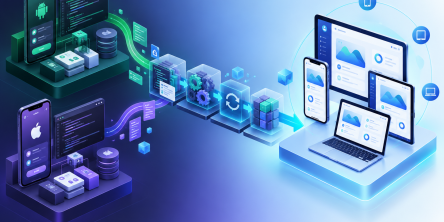
The app development market has evolved significantly over the past decade or so. Its impact on business has been equally consequential.

Offshore IT hiring means recruiting IT professionals who work from another country or region. Companies commonly use this approach for software development, QA, IT support, DevOps, cybersecurity, data, and project management.

By 2026, moving to the cloud is no longer merely a competitive advantage. It is a business necessity. Every organization across the broad spectrum of industries will be challenged to become more agile.
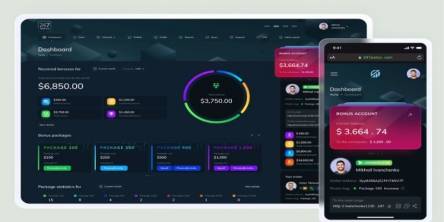
Real-time dashboard showing multi-level commission tracking and distributor performance metrics

Digital transformation initiatives are no longer unheard of in the corporate world. As a matter of fact, it is also well known that companies expanding their digital footprint tend to run into crippling legacy apps.

The financial aid office has become one of the most operationally strained departments on the modern U.S. campus. FAFSA complexity, chronic staff turnover, tightening Title IV compliance obligations, and the persistent problem of unspent scholarship dollars have pushed administrators toward purpose-built financial aid management software
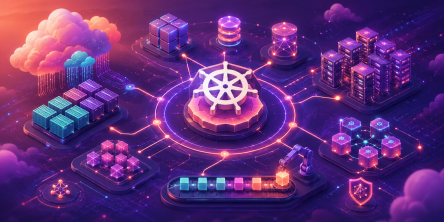
The demand for software delivery has never been higher. Applications must be delivered faster and on a scale like never before.
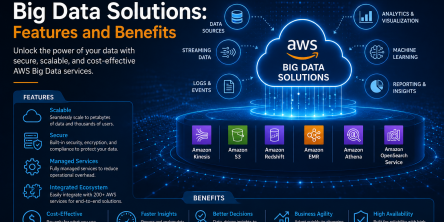
Modern businesses produce large amounts of data daily. Be it from customer transactions, Internet of Things (IoT) sensors, or countless other such sources.

Businesses today need to ship new software faster than ever. That's not news, of course. Anyway, because of the demands on businesses, new solutions are being built on top of micro-services, serverless functions, etc.