

Emerging Technological Trends in Healthcare in 2020
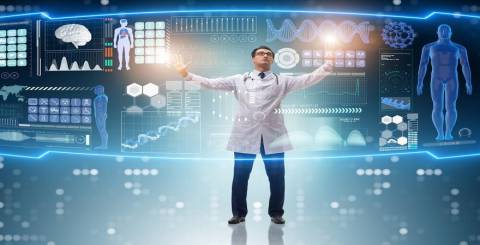
Technology has transformed our lives in more ways than one in recent times. It has changed the way we book tickets, order food, do shopping, etc. The healthcare sector is not bereft of its share of impacts due to technological disruptions. Technologies such as AI and Machine Learning have made a foray in the healthcare sector automating various routine processes. We have seen a system of paperless medical records evolving thanks to technology.
As technological innovations continue, we are in for more transformations. The healthcare industry needs to adapt to these changes to enhance the quality of services provided. This is because the patients have access to more information today, their demands have changed. They expect better experience and more visibility.
We are now on the threshold of the year 2020. A much-awaited year because a lot is expected from 2020 thanks to the predictions made by experts in different fields. Of course, we will know what 2020 brings as the year unfolds. But, there are certain technological trends to watch out for in 2020 that the healthcare industry stands to benefit from.
Let us look at some of the technology trends in healthcare in 2020:
Internet of Medical Things
Stats would have us believe that the global IoMT market is expanding at CAGR of 19.9% and is expected to reach a whopping USD 534.3 billion by 2025!
IoMT is essentially an interconnected system of sensors, medical devices, software applications, and healthcare IT systems. This network of systems facilitates testing, monitoring, and diagnostics.
Some examples of applications of IoMT are:
Tracking real-time location
Medical apparatus such as wheelchairs, nebulisers, monitoring equipment, and pumps, etc. are being fixed with sensors which will make it easy to locate them.
Wearable devices
We are all familiar with wearables such as smartwatches, fit bits, etc. for tracking the calories burnt, etc. These are nothing but IoT (Internet of Things) devices. In the medical field, IoMT is being used by sticking plasters, etc. to a patient’s body to monitor his heart rate, blood pressure, body temperature, etc.
The use of such devices is expected to grow. Stats reveal that the wearable industry will be 240.1 million in 2021.
3D Printing
3D printing is used in the medical field to create 3D objects from physical files. This technique helps in providing much closer patient-specific care. 3D printing is a trend to watch out for in the healthcare sector as the global market for it is expected to reach USD 2319.5 Million by 2020.
Natural Language Processing (NLP)
NLP is a branch of Artificial Intelligence that focuses on human-generated written or spoken data.
Some of the applications of NLP include:
- Retrieving the right information from piles of clinical notes.
- NLP along with predictive analysis can help identify high-risk patients. This helps provide them the right treatment on time.
- Helps in summarizing narrative speech to mapping data elements that can be converted from machine-readable form to natural language for reporting and educational purposes.
Machine Learning
This is an upcoming trend that has not yet established itself in the healthcare industry. Machine learning models in different areas of healthcare are in their planning stages currently.
One application of machine learning in healthcare is leveraging medical data through electronic health records to provide better patient outcomes.
As more technological innovations take place, we are sure to witness more changes in the healthcare sector.
With so many innovative developments, the future of the healthcare sector sure looks exciting!
In Conclusion
Adopting new technologies and innovations is the way ahead for the healthcare industry to offer a better experience to the patients. Several organisations across the globe are taking the initiative to drive quality, safety, and safety in healthcare by leveraging information and technology. Events, webinars, Summits etc.are hosted by various healthcare agencies to raise awareness about emerging technologies and how they can be implemented in healthcare. Digital Health Summit 2019 is an example of one such event.
Similar Articles

Healthcare is built around people, but providing good care also depends on how well an organization manages the many tasks happening around each patient.

We live in an era where restorative rest is increasingly difficult to achieve. The relentless pace of contemporary work environments leaves little room for mental decompression.

Look up almost any doctor before an appointment, which is what the majority of patients now do, a
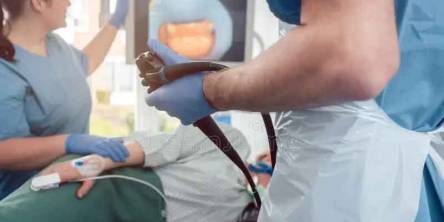
Endoscopy is a minimally invasive medical procedure that enables healthcare professionals to examine the internal organs and body cavities using a thin, flexible instrument called an endoscope.

Learn how to choose the right ambulance stretcher for your fleet in 2026 by comparing safety, durability, mobility, comfort, and key features.

Look at how people around you actually watch things. Captions on. Not in a noisy train carriage, not in a shared flat at midnight, but at home, alone, on a good television, by people whose hearing is fine.
Finding the right medical daycare involves more than choosing whichever center is closest to home.

Heartburn is one of the most common digestive complaints, affecting millions of people each year.

Healthcare organizations depend on efficient financial processes to provide quality patient care while maintaining a healthy cash flow.