

What Makes Angular the Top Choice of Framework for Web Application Development

You see, if you are even vaguely familiar with the concept of web app development, you'd know that it's a process that is mired in questions and decisions before you can also get started. Also, though there's a good deal of choices involved, perhaps the most consequential is choosing the framework that will be used to deliver the web app for your business. The development ecosystem has an abundance of options to offer when you go looking for the right framework, and yet, you so many ends up contemplating Angular as their leading option. Why is that? Well, because Angular is just that versatile, that is rightly deemed to be the essential choice of framework for web development.
An excellent client-side as well as open-source JavaScript framework, it enables programmers to infuse websites with a plethora of engaging and reciprocal elements. Moreover, being the dynamic framework that it is, developers also turn to Angular even if they are looking to put together a single page web applications or perhaps a dynamic programming structure. Also, let's not forget that AngularJS is powered by Google and uses an MIT license, which has long proven to be highly cooperative when it comes to enterprises as well as developers. Moreover, given its multifaceted qualities, a large number of developers across the globe turn to this framework when they are looking to build a variety of robust and agile products, including SPAs and applications.
Now, let's take an in-depth look at all the reasons why you too should pick Angular for your web app development project.
- Two-way data binding: Among the most compelling benefits proffered by Angular, data binding works like a two-way street. Allow us to explain -- with two-way data binding, any changes that a developer may have made to the module in question are automatically reflected whenever the model is updated. What this means that developers are now saved from the task of writing an overwhelming amount of additional code to keep the model in sync.
- Model View Controller architecture: Since AngularJS makes use of the highly popular and preferred Model View Controller (MVC) architecture for web application development, means developers working with this particular framework have a pretty simple process to follow. The developer is only required to part the app and leave the rest up to AngularJS.
- Organize the app: JavaScript suffers from the lack of a well-defined structure, which makes it an acceptable choice when you are developing small-scale applications, but not for the development of large-scale app development projects. However, what JavaScript lacks, AngularJS more than makes up for it. Angular empowers developers to organize the source code by conforming to either the MVC or MVVM pattern. Furthermore, it offers the ability to arrange the code across modules, which massively enhances not only the app's maintainability but also its testability.
- Testability: Even though naysayers cast doubt about testability when Angular first emerged on the scene, this framework has long demonstrated its mettle in this department as well. Besides providing dependency injection and modules, it also offers the Protractor tool, which enables end to end testing to ensure that every single app made using AngularJS is both testable and maintainable in equal measure.
Suffice it to say that the list of the features Angular offers to anyone that chooses it for their web app development project is massive. It has things like animation and the PubSub system too, thus ensuring that your time with this framework is productive and efficient. Now, all you have to do is find a trusted Angular development company to help you get started with the development of a stellar web app for your business.
Similar Articles

The app development market has evolved significantly over the past decade or so. Its impact on business has been equally consequential.

Offshore IT hiring means recruiting IT professionals who work from another country or region. Companies commonly use this approach for software development, QA, IT support, DevOps, cybersecurity, data, and project management.

By 2026, moving to the cloud is no longer merely a competitive advantage. It is a business necessity. Every organization across the broad spectrum of industries will be challenged to become more agile.
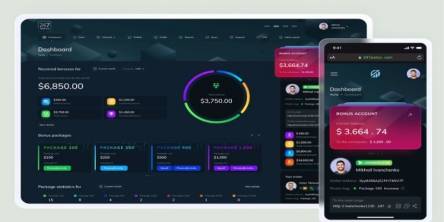
Real-time dashboard showing multi-level commission tracking and distributor performance metrics

Digital transformation initiatives are no longer unheard of in the corporate world. As a matter of fact, it is also well known that companies expanding their digital footprint tend to run into crippling legacy apps.

The financial aid office has become one of the most operationally strained departments on the modern U.S. campus. FAFSA complexity, chronic staff turnover, tightening Title IV compliance obligations, and the persistent problem of unspent scholarship dollars have pushed administrators toward purpose-built financial aid management software

The demand for software delivery has never been higher. Applications must be delivered faster and on a scale like never before.
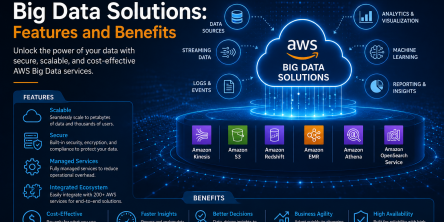
Modern businesses produce large amounts of data daily. Be it from customer transactions, Internet of Things (IoT) sensors, or countless other such sources.

Businesses today need to ship new software faster than ever. That's not news, of course. Anyway, because of the demands on businesses, new solutions are being built on top of micro-services, serverless functions, etc.