

Declutter Your Brain by Crafting Your Perfect Writing Nook

We live in a world where our attention is pulled in a million places: family, work, the Internet and more. It is hard to sit and write when your brain is cluttered and full of distractions. Here’s how to create a well-lit, organized and motivational writing nook to channel your creativity and declutter your mind.
Decluttering Starts with Cleanliness
If you have papers, books, and pens everywhere, then it can curb your ability to write. A lot of people just stack things on their desk and hope to clean it later. You can increase productivity and inspiration by starting and ending your writing sessions with a little cleaning. Developing strong habits keeps your writing nook organized.
If you happen to let your nook slip, it can stress you out to let anyone near your space. Psychologically, you can think clearer if your desk, chairs and room are clean and organized. Remember that this writing space is your sanctuary. This nook should be soothing, a little oasis, and not a stressful typhoon of mess.
Think about what is absolutely necessary in your writing nook. Every item should have a purpose. This space is not meant to be a storage unit. If a space is disorganized, you are more likely to be lazy and unmotivated. It might take some time to remove unnecessary items, but this is essential to your self-care and productivity.
Once you clean and declutter your nook, you will never want to leave it. If you start to feel lazy, remember your writing goals and that this space is yours. Repeating your goals and staying on top of cleaning will train you to stay focused and attentive.
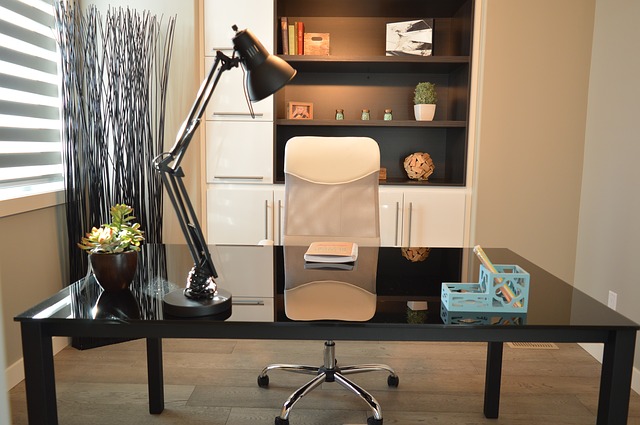
Photo Credit: Pixabay.com
Choose the Right Lighting
The right lighting makes a space warm, inviting and soothing. If you choose the right lamps and positioning, you can feel inspired to write and think clearly. Dim or poorly positioned lights can make you tired and lethargic.
First, think about where your desk or computer will sit and where the outlets and Internet are situated. It is important to minimize reflections on your computer screen or shadows on your papers. This can be distracting and cause eye fatigue. A general rule is that the light should not be stronger than the laptop screen’s and should be indirect – positioned to the left or right of you. You can also try arranging lights so that they bounce off of the ceiling.
Well-positioned lamps and lighting mean that not only can you focus but you can pick up on other flaws to the space. For example, you can see stains on your computer screen, streaks on the windows and dust in the room corners. Take some time to experiment with different lamp sizes and types of lights until you find the combination that works for you.
Air It Out
Scent is everything. A workspace should be inviting. Start by opening the windows every once and a while. The fresh air will jolt you into productivity.
Next, think about adding some fresh flowers, plants, potpourri or scented candles to add some atmosphere and rich scents to trigger your senses, memory, imagination and creativity - lavender, for example. While the combination of these natural elements makes the area even more of a sanctuary, it’s important to remember to never leave candles burning for too long.

Photo Credit: Pexels.com
Your Nook Should Be Stress-Free
A writing nook should be free from distraction. This means leaving your phone in the other room, figuring out how to block out television noise and thinking about the positioning of your desk. If you like looking out the window for inspiration, this could help, but some people might be distracted by the outside world.
Know yourself. If you are active, then you may want to get a standing desk or an exercise ball to sit on. Having something like small puzzles or fidget spinners could help you work through creative blocks. Focus on your self-care in your nook so you can really open your mind.
Decorate the Space
You should want to spend time in your writing nook. This means paying attention to the furniture, accents and even the colors of the walls. Creative ideas come quicker when you are in a comfortable and inviting space.
First, think about the color of the walls. You do not want them to be a dingy or old white color or a boring grey. Instead, think about colors that open up a space, brighten the nook and make you happy. Low-wavelength colors like calming blue shades improve focus whereas yellow can improve innovation. It is important to avoid using too much red because it can increase the heart rate and excitement levels, making it hard to think.
Next, put some photographs, artwork and accents on the walls. When you are not looking at your laptop or reading, you should have something that inspires you. Some people love looking at photos of their loved ones or remembering important memories. Others find inspiration from quotations or art.
Your desk can be decorated too. Small toys, photos or decorations make the space more personal and inviting. It will be important to have a desk organizer so it is easy to find things like pens, paperclips and other essential items. Do not let your lamp and computer wires get caught together – this adds clutter and chaos.
Think about even bringing in a comfortable armchair or plush couch for the space, if there is room. You could take a quick nap and get back to your writing. A writing nook is about you and your needs. You should be able to spend a day in here and feel completely at home.

Photo Credit: Pexels.com
You can declutter your brain by building your dream writing nook at home. It is okay to make a space for you only. As people grow older, they think that they should not be selfish or pursue their dreams. Building a writing space means that you have your own place to dream. All it takes is some careful planning and organizing.
Similar Articles

Discover 7 essential questions to ask when choosing a crawl space company for your coastal home, ensuring quality repairs, moisture control, and lasting protection.

A home sauna can sound like a luxury purchase, but for some households it becomes a feature that gets used regularly rather than occasionally. The real question is not whether a sauna is appealing. It is whether the cost makes sense for the way you live.
Learn what to consider before adding a fireplace to an open-plan home, including placement, heat output, furniture, materials, installation and maintenance.

Garage doors are used so frequently that it is easy to overlook the wear and tear they experience. Over time, moving parts can loosen, sensors can become misaligned, and small mechanical problems can develop into expensive repairs.

Most of the decisions that make or break a detached garage happen before a single wall goes up.
If you have ever cleared the dining table for a blow-up mattress, or given up your own bedroom for a week while relatives filled the house, you already understand the problem.
According to environmental studies, the average person spends roughly ninety percent of their life indoors. This staggering reality has sparked a widespread shift in how we approach interior spaces, especially as remote work and digital lifestyles keep us tethered to screens.

The garden has quietly become the most valuable extra room in the British home. With hybrid working now a fixture rather than a phase, the wider outdoor-living economy is booming.

Most people who hire a skip bin for the first time arrive at the decision under some degree of pressure. The renovation has started, the waste is accumulating, and the question of what to do with it has become urgent.