

How Posture Affects How We Think and Feel
We slouch when we’re sad, bend our neck down when depressed, sit up straight when motivated, and walk with a chest out when we’re confident. But sometimes, it’s the other way around.
Studies prove that posture affects a person’s mood. Slouching can make us sad, and bending our neck down can also make us depressed. But it holds true for good posture too. Sitting up straight can make us feel more positive.
The relationship between our emotions and thinking and our body is called embodied cognition. It’s a way of thinking that emphasizes how our physical movements affect the way we think and feel, and vice versa. Here are key areas that posture affects.
1. Opinion
A 2003 study at Ohio State University concluded that physical actions can influence our opinions on an issue without us being conscious about it. Nodding to denote approval and shaking their heads to denote disapproval affected what they thought. The people who nodded when expressing an opinion felt more confident about what they thought compared to the people who shook their heads.
2. Mood
The same study in Ohio also proved that self-love reduces physical pain—well, at least, hugging yourself does. This might be a helpful trick for people who feel back pain after a long day at work, sitting in a not-so-comfortable office chair.
Behavioral scientist Erik Peper from the Netherlands also makes it a point to compel students in his classes to do some stretches because it puts them in a more positive disposition. Apart from changing our moods, posture also affects our memory recall. Sitting up straight helps in remembering good memories, according to the experiment.
3. Confidence
Another research published in the European Journal of Social Psychology in 2009, a total of 71 students were made to sit up straight or slouch and face down. They were asked to list three personal traits they think is important for being happy with a job and performing well while sitting with the posture assigned to them. They were asked to rate their imagined future selves based on those traits.
The study found a correlation between their assigned posture and the traits they listed. The students who sat up straight were more confident about their traits while the students who slouched didn’t trust in their capacity to deliver.
Developing Good Posture
Forming good habits such as sitting up straight and walking with a chest out may be hard at first, especially for people who got used to walking like a caveman, but there are concrete ways to develop it.
Exercise – Gentle stretches are crucial to break the monotony of a sedentary lifestyle at the office. Doing some exercises on a yoga chair at work is also useful. Having a daily routine helps your muscles in the long run, just so they don’t get used to staying in one position for long periods.
Posture support tools – While many think of back belts when they think of this, back belts are more applicable for people whose job involves lifting or carrying heavy things. For the ordinary office worker, there are chairs for posture support that can help maintain good posture.
Rehearsing – Practicing a project report, or a pitch with good posture not only helps you prepare for the real thing but also boosts your confidence prior to the actual presentation.
Posture is usually emphasized in the context of ergonomics but taking care of our emotional health is as important as being productive at work. After all, our productivity is highly influenced by the way we feel. It’s not always a good work day. But sitting up straight can make a difference.
Similar Articles

A beautiful building tells you nothing about recovery outcomes. When you tour a Private Luxury Rehab in Los Angeles, comfort is often presented before clinical care, and families may pay a deposit before asking a single hard question.

Most advice about emotions assumes the hard part is identifying them.

Healthcare is built around people, but providing good care also depends on how well an organization manages the many tasks happening around each patient.
We live in an era where restorative rest is increasingly difficult to achieve. The relentless pace of contemporary work environments leaves little room for mental decompression.

Look up almost any doctor before an appointment, which is what the majority of patients now do, a
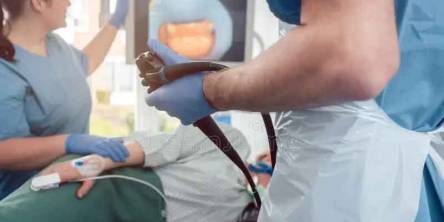
Endoscopy is a minimally invasive medical procedure that enables healthcare professionals to examine the internal organs and body cavities using a thin, flexible instrument called an endoscope.

Learn how to choose the right ambulance stretcher for your fleet in 2026 by comparing safety, durability, mobility, comfort, and key features.

Look at how people around you actually watch things. Captions on. Not in a noisy train carriage, not in a shared flat at midnight, but at home, alone, on a good television, by people whose hearing is fine.

Finding the right medical daycare involves more than choosing whichever center is closest to home.