

A Guide to Switch from Truecrypt to Diskcryptor
TrueCrypt was a highly popular open source disk encryption tool that could keep volumes of hard drive data safe and secure. It was a well-received file encryption utility till it got officially banned by its developers. Once, the original developers posted the official warning that this software is no more under maintenance, and thus might have some security loophole, users got suspicious about the encryption security powers of the tool. Developers also requested the users to move on to other file encryption utility as the tool won’t receive any security updates. If you are also planning for a switch, then Diskcryptor is a good option. To learn more about Diskcryptor, read this article.
You might be aware that TrueCrypt got disowned all of sudden, and its anonymous authors didn’t even reveal any concrete reasons for the move. But due to the high popularity of this hard drive encryption tool, third-party audits of this software are going on, and these audits have not found any major security loophole in this tool. However, from the security perspective, it is not good to use a software program that doesn’t receive security updates. Also, it is risky, to keep your sensitive hard drive data off guard. As an alternative to TrueCrypt, you can use Symantec Drive Encryption, DiskCryptor, VeraCrypt, BoxCryptor, AxCrypt and many more.
How to Decrypt the Archived data?
Before you encrypt your sensitive hard drive data using a new file encryption utility, you must decrypt the data encrypted by TrueCrypt. To decrypt the data, perform the following steps:
- Open TrueCrypt
- Select the drive/partition/folder you want to decrypt, and right-click on it
- That will open the a right-click menu
- Click ‘Permanently Decrypt.’
- That will bring up a message asking your confirmation on the requested operation of permanent decryption
- Here, click ‘Yes.'
- Once again the message will pop up asking for your final call on permanent decryption.
- If you are sure that you want to decrypt the data, then select ‘Yes.’
- Once, you give your confirmation for twice, the decryption process will get started.
- Depending on the size of your encrypted data, the process will take some time.
- As soon as the process gets completed, close all the applications, programs, documents, etc. on your computer.
- Then, reboot your computer.
With these steps, you have successfully decrypted the data. Now, the data is accessible to one and all. Now, you can get the data encrypted by another file encryption program, such as DiskCryptor. It is also an open source disk encryption tool, and thus, it's completely free. It can encrypt the whole disk, partitions, single files and folders and external devices such as CD and thumb drives. Also, the software supports encryption through different encryption algorithms such as AES, Serpent, Twofish, and other combination of cascaded algorithms.
How to Encrypt Data using DiskCryptor?
- Download the software from its official website.
- Most importantly, before you start the encryption process, you need to create a bootable Windows disk (LiveCD) with DiskCryptor. You can easily get the steps if you search online.
- Creating this bootable Windows disk is essential because it gets useful in retrieving the encrypted data in case something goes wrong like if you forget the password or some booting problems.
Once you have successfully created the bootable Windows disk, open the DiskCryptor and perform the followings steps:
- Then, select the system drive (the drive where Windows gets installed). Usually, it’s the Drive C:
- Next, click ‘Encrypt.’
- Now, continue following the screen prompts to configure various settings.
- Once you have set the configuration settings, you need to set a password. Your password should include upper and lower-case letters so that it becomes a complex and difficult-to-crack password.
- Now, the encryption process will start. The process might take some extra time depending on the size of your data.
- You can continue using your computer while the encryption process is going on.
- If you require shutting down your computer in between, then click on 'Pause.'
- Then, when you reboot your computer, click on 'Encrypt' to resume the encryption process.
- DiskCryptor will list your drive as 'mounted,' once encrypting process gets completed.
Conclusion
The hard drives of computers that host sensitive data, especially the computers in organizations and offices, should get encrypted with a hard drive encryption software. There are various such disk encryption software programs available. DiskCryptor is a good option. It is powerful, has easy user interface and reliable in terms encryption security. Modern operating systems got inbuilt drive encrypting tools as well. You can use the inbuilt programs also. Otherwise, you can go to open source tools like DiskCryptor, VeraCrypt, BoxCryptor, AxCrypt, etc.
Similar Articles

The app development market has evolved significantly over the past decade or so. Its impact on business has been equally consequential.

Offshore IT hiring means recruiting IT professionals who work from another country or region. Companies commonly use this approach for software development, QA, IT support, DevOps, cybersecurity, data, and project management.
By 2026, moving to the cloud is no longer merely a competitive advantage. It is a business necessity. Every organization across the broad spectrum of industries will be challenged to become more agile.
Real-time dashboard showing multi-level commission tracking and distributor performance metrics

Digital transformation initiatives are no longer unheard of in the corporate world. As a matter of fact, it is also well known that companies expanding their digital footprint tend to run into crippling legacy apps.

The financial aid office has become one of the most operationally strained departments on the modern U.S. campus. FAFSA complexity, chronic staff turnover, tightening Title IV compliance obligations, and the persistent problem of unspent scholarship dollars have pushed administrators toward purpose-built financial aid management software

The demand for software delivery has never been higher. Applications must be delivered faster and on a scale like never before.
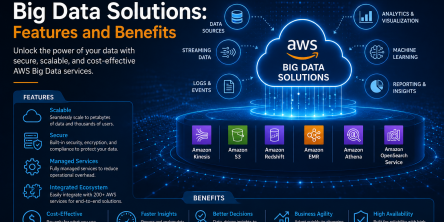
Modern businesses produce large amounts of data daily. Be it from customer transactions, Internet of Things (IoT) sensors, or countless other such sources.

Businesses today need to ship new software faster than ever. That's not news, of course. Anyway, because of the demands on businesses, new solutions are being built on top of micro-services, serverless functions, etc.