

5 Essential Software for Startups: A Guide

Every business launch is exciting, but it also has its challenges, such as decision-making regarding the selection of proper tools for business processes. It is also a reality that today, no startup can lack software solutions when it comes to business organization and performance.
Project management software or customer management software can do wonders with the right kind of software. There are many choices of payroll software, and the best one is dependent on whatever type of company using their services and the number of working employees. In this guide, we’ll guide you through five key software types that any successful startup should have.
1. Project Management Software
Any startup company should use project management software to help organize the tasks and keep the teams in line. It lets you set timelines for the work to be accomplished, assign duties, and observe progress to keep undertakings on track. Some of the commonly used ones are Asana, Trello, and Monday respectively, they are easy to use with many features including tracking time and sharing files.
These are tools that are meant to help with getting work done to make it easier for the teams to the intended project. Also, they integrate with other business-critical tools such as Slack and Google Workspace, making your workflow better. For any startup, a project management tool is quite essential, especially for those who are working on many projects at different stages to avoid anything from getting out of hand or missed.
2. Customer Relationship Management (CRM) Software
Developing customer relationships is crucial to any startup, which is why Customer Relationship Management or ‘CRM’ software exists; Salesforce, HubSpot, and Zoho are good examples of software that assist startups in tracking customer interaction, following leads, and setting automatic follow-up reminders when a new lead has been generated.
CRM tools keep information on a customer in one place, providing an organization with all vital information to stage suitable messages and hold high-quality customer relationships. Furthermore, most of the CRM solutions provide interface and compatibility with the other marketing and selling tools that make it easy to transform leads into customers. A CRM can support your customer engagement efforts even if you are a small team or a fast-growing start-up.
3. Accounting and Finance Software
Proper financial management should be another core principle of startups, and the programs for accounting should help to accomplish this goal. These include QuickBooks, Xero, and FreshBooks, which are tools that help startups issue their invoices, record their expenses, and even generate reports. The above tools ensure that the business owners have up-to-date records and assist in tracking of cash flow hence assisting the owners to make good financial decisions.
Accounting software can manage payroll, expenses, and tax registers, but will take time and contain mistakes. With so many options available, finding the best payroll software for your business depends on your specific needs, such as employee size and industry. For startups, having a good accounting tool that will enhance their overall financial management is something they can’t afford to lack.
4. Marketing Automation Software
With marketing automation applications, startups can better manage their marketing initiatives and reach their target markets. Most of these tools include features including; Highlight email marketing, social media calendar, and lead capture in tools including Mailchimp, Hubspot, and Activecampaign among others. Through these platforms, businesses can automate certain processes, categorize their audiences, and then deliver more relevant content for maximum engagement.
Marketing automation therefore helps startup organizations save time, health, and talent necessary for strategic initiatives. In addition, marketing automation software is designed to integrate with CRM and analytics software for end-to-end campaign management and evaluation. Marketing automation software is the perfect tool for any aspiring startup that wants to increase its marketing capabilities.
5. Communication and Collaboration Software
The use of communications and collaboration remain critical success factors for any startup, particularly where the teams are distributed across geographical locations. Instant messengers such as Slack and Microsoft Teams allow their users real-time communication, as well as shared files and video conferences similar to Zoom applications. Such software solutions provide ways in which different teams can collaborate despite the geographical distance that may exist between them.
Tools such as chatting, projects, and video calls allow us to share a brief, brainstorm some ideas, and address certain problems or challenges easily. Further, compatibility with other software such as project management and customer relationship management tools makes work easier across departments. Every business, particularly the startups, that desire to create a healthy culture of working together would benefit from this by purchasing a good communication system.
Conclusion
Choosing the appropriate software solution is an important step that should be taken by startups as an important way to improve efficiency and reach new heights. No matter if it is about project management or customer relations, finance or automation of marketing work, or simply about communication, these tools play the leading roles. Nevertheless, the wealth is available to choose the right program, and in this case, it becomes important to realize your necessities and goals.
Similar Articles

Choosing the right electronic health record (EHR) system is an important decision for any medical practice. The right platform can simplify patient documentation, appointment scheduling, insurance claims, billing, and daily administrative tasks.

Running a restaurant involves much more than taking orders and serving food.

Field sales teams handle numerous responsibilities every day. Sales representatives travel between customer locations, conduct meetings, collect orders, record information, and report their activities to managers.

The app development market has evolved significantly over the past decade or so. Its impact on business has been equally consequential.

Offshore IT hiring means recruiting IT professionals who work from another country or region. Companies commonly use this approach for software development, QA, IT support, DevOps, cybersecurity, data, and project management.

By 2026, moving to the cloud is no longer merely a competitive advantage. It is a business necessity. Every organization across the broad spectrum of industries will be challenged to become more agile.
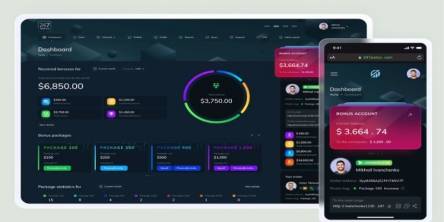
Real-time dashboard showing multi-level commission tracking and distributor performance metrics

Digital transformation initiatives are no longer unheard of in the corporate world. As a matter of fact, it is also well known that companies expanding their digital footprint tend to run into crippling legacy apps.

The financial aid office has become one of the most operationally strained departments on the modern U.S. campus. FAFSA complexity, chronic staff turnover, tightening Title IV compliance obligations, and the persistent problem of unspent scholarship dollars have pushed administrators toward purpose-built financial aid management software