

Why Some Siding Materials Show Dirt More Than Others in Spring Weather

Spring arrives with longer days, warming temperatures, and the quiet chaos of seasonal transition pollen clouds drifting through neighborhoods, morning dew settling on every surface, and unpredictable rain showers that seem to leave more residue than they wash away. For homeowners, this season reveals something that colder months kept hidden: exactly how much grime, streaking, and biological buildup has accumulated on the exterior of their homes over winter.
But not every house on the block looks equally grimy by April. One neighbor's siding looks almost showroom-fresh while another's is streaked with green algae, chalky mineral deposits, and yellowish pollen film. The difference isn't just about who cleans more often it starts with the material itself. Different siding types interact with moisture, organic matter, and airborne particles in dramatically different ways, and understanding that chemistry helps explain why your home might be showing more dirt than you'd expect this spring.
Also Read: Why Upgrading to Solid Timber Furniture is a Brilliant Home Investment
How Spring Weather Creates the Perfect Storm for Siding Buildup
Before looking at individual materials, it's worth understanding what spring weather actually throws at your siding. The season combines several conditions that, together, are uniquely good at depositing and locking in surface contaminants.
Pollen is arguably the biggest offender. Tree and grass pollen is released in enormous quantities during spring, and its fine, sticky particles cling readily to textured and porous surfaces. Because pollen is electrostatically charged, it bonds aggressively with certain materials and resists rinsing from light rain.
Temperature fluctuations drive condensation. As nights remain cool and daytime temperatures climb, moisture forms and evaporates repeatedly on siding surfaces. Each condensation cycle draws minerals, atmospheric dust, and biological spores toward the surface and then leaves them behind as the moisture lifts.
Increased rainfall sounds like it would clean siding and it does rinse some loose debris but runoff water carries its own contaminants. Roof sediment, tar particles from shingles, iron from gutters, and organic material from nearby vegetation all travel down the face of your siding with every rain event. As that water dries, it leaves behind the visible streaks most homeowners notice by mid-April.
Finally, biological activity mold, mildew, algae, and lichen spikes in spring because the combination of moisture and warmth creates ideal growing conditions. These organisms don't just sit on the surface; they begin to colonize it, embedding into micro-pockets within the material.
Vinyl Siding: High Visibility, High Buildup Potential
Vinyl siding is among the most widely used exterior cladding materials in North America, valued for its low cost, durability, and minimal maintenance demands. But spring reveals one of its most consistent weaknesses: it shows dirt in very specific, frustrating ways.
The smooth surface of vinyl actually resists surface bonding initially loose dust and light debris rinse off more easily than on rougher materials. The problem arises with static charge. Vinyl is a plastic product with significant electrostatic properties, meaning it actively attracts and holds fine particles like pollen, dust, and airborne exhaust. In high-pollen spring months, vinyl siding can develop a dull, yellowish film within days of a cleaning.
Additionally, vinyl expands and contracts with temperature changes. This thermal movement creates micro-gaps at seams and panel edges where organic matter accumulates and provides footholds for mold and algae. The green streaking that runs vertically down vinyl panels is among the most common spring complaints homeowners share with exterior cleaning professionals.
House washing for vinyl siding has become a consistently requested service as spring gets underway. The combination of heavy tree pollen from surrounding wooded areas, springtime humidity, and the thermal cycling that affects vinyl panels creates conditions that leave siding looking dingy long before the season ends. A thorough low-pressure wash with appropriate surfactant solutions is typically the most effective way to restore uniform color and remove the electrostatic pollen film that resists ordinary rinsing.
Wood and Engineered Wood Siding: Porous by Nature
Natural wood siding has a fundamentally different problem than vinyl: it is porous, meaning it actively absorbs moisture and the contaminants dissolved within it. When spring rain and dew hit wood siding, the surface doesn't just receive the water it drinks it in.
This porosity makes wood siding exceptionally vulnerable to biological staining. Mold and mildew spores find easy purchase in the grain structure, and because moisture penetrates below the surface, surface cleaning alone often doesn't fully address the discoloration. Wood siding also reacts with tannins and iron, creating dark staining patterns that are particularly visible in spring when moisture levels peak.
Engineered wood products like fiber cement and LP SmartSide are more resistant to biological growth but still show streaking at joints and trim lines where water channels during rain events. Their textured surfaces, designed to mimic natural wood grain, can trap pollen and fine particulates in the same way a rough texture traps debris.
Brick and Stone: Efflorescing Under Pressure
Brick and natural stone seem like they should be impervious to spring grime, and in some ways they are they don't show pollen film the way vinyl does, and biological staining is slower to develop. Their vulnerability lies in a different process: efflorescence.
As winter moisture that has penetrated brick and mortar joints begins to migrate outward in spring, it carries soluble salts to the surface. When the water evaporates, those salts are left behind as a white, chalky, sometimes crusty deposit on the face of the brick. This is efflorescence, and it peaks in early spring precisely because the freeze-thaw cycles of winter have pushed moisture deep into the masonry.
On stone siding, the same process occurs but is often compounded by iron oxidation, producing rust-colored streaks down the face of the material. These stains are chemically locked into the surface and require specific acidic cleaning solutions, not just pressure, to break them down.
Stucco and EIFS: The Algae Problem
Stucco and Exterior Insulation and Finish System (EIFS) surfaces develop an entirely different spring profile. Their texture slightly rough, matte, and porous is extremely hospitable to algae and mold colonization. Because these systems often have less surface runoff than smoother materials, moisture lingers longer in the texture, and biological growth accelerates visibly.
The green and black discoloration that appears on stucco by late spring is rarely just surface debris. It is living growth, embedded in the top layer of the material, and it requires biocidal treatment followed by soft washing not aggressive pressure washing, which can damage the stucco coating to effectively remove it.
Why Power Washing Restores What Seasonal Rinsing Cannot
For all siding types, spring cleaning is less about removing loose surface dirt and more about addressing the chemical and biological bonds that form between contaminants and the exterior material. Light rain doesn't break down pollen adhesion on vinyl, doesn't remove efflorescence from brick, and doesn't kill algae colonies on stucco.
Professional power washing services apply the right pressure level for each material type alongside cleaning agents specifically formulated to break the chemical bonds holding stains in place. The result is a uniform, restored appearance the visual reset that brings a home's exterior back to its baseline between seasons.
If your siding is showing streaks, pollen film, or biological staining this spring, the material isn't failing. It's responding exactly the way its physical properties predict it will. The question is simply how quickly you address it before a season's worth of buildup becomes harder to reverse.
Similar Articles

Learn 6 practical interior upgrades for your compact roadster, from console shelves to phone mounts, that improve comfort and storage without clutter.
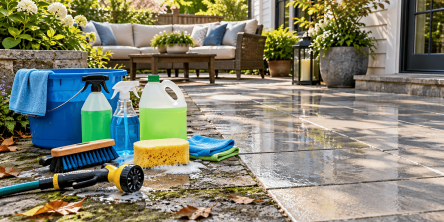
The most reliable way to keep outdoor stone looking its best through spring, summer and fall in 2026 is to match the product to the stain and the surface, rather than rely on a single all-purpose wash

Prepare your condo for professional management with a practical pre-onboarding checklist covering documents, finances, maintenance, and resident communication.
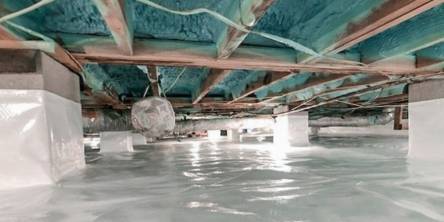
Discover 7 essential questions to ask when choosing a crawl space company for your coastal home, ensuring quality repairs, moisture control, and lasting protection.

A home sauna can sound like a luxury purchase, but for some households it becomes a feature that gets used regularly rather than occasionally. The real question is not whether a sauna is appealing. It is whether the cost makes sense for the way you live.

Learn what to consider before adding a fireplace to an open-plan home, including placement, heat output, furniture, materials, installation and maintenance.
Garage doors are used so frequently that it is easy to overlook the wear and tear they experience. Over time, moving parts can loosen, sensors can become misaligned, and small mechanical problems can develop into expensive repairs.

Most of the decisions that make or break a detached garage happen before a single wall goes up.

If you have ever cleared the dining table for a blow-up mattress, or given up your own bedroom for a week while relatives filled the house, you already understand the problem.