

Top Five Reasons to use Java for Mobile App Development

Even after 20 years of its evolution, Java continues to dominate the programming vertical for application development, whether it is web or mobile. There are several factors inherent to Java that establishes its superiority in the technology world and offer Java developers with the flexibility for adaption.
However, in the recent times, Java faced fierce competition from Kotlin, the official programming language for Android development by Google though specific factors still work in Java’s favor.
Here are top five reasons why Java web and application development remains significant in the industry.
1) Enterprise Computing relies on Java- Java development projects are omnipresent, with more than 90% of the Fortune 500 companies using Java for their enterprise development requirements. The reason may be the range of applications from enterprise data management to mobile app development Java caters to the need of all.
2) Extensive Libraries – It has a widespread implementation because its useful open-source libraries and framework that makes the Java application development hassle-free. They enable Java developers to bring fantastic products to life with little effort. Java even offers a plethora of tools and ODEs (Orchestration Director Engines) to design and implement any feature of your choice quickly.
3) The Backbone of all the Android Applications – Java is also known as the official language for native Android app development. It is an invaluable tool for the devices running on the Android OS (Operating System). Therefore, it is not restricted to just mobile devices, and even manage Televisions, Air conditioning system or any other equipment via devices with Android as their OS.
Also, the application development in Java is platform independent, which lets you develop a mobile app and seamlessly integrate it with the desktop software for your business.
4) Vast Pool of Talent - As more and more companies are implementing the use of connected gadgets, cloud solutions, and machine learning algorithms, the shortage of application developers continues to grow. However, with a talent pool of over 9 million skilled Java developers, the application development in Java remains the obvious choice for enterprises today.
5) The Ever Emerging Evolution of Java –Java first launched by Sun Microsystems (Java’s original owner), used JVM (Java Virtual Machine) resulting in slower performance as opposed to C and C++ program which run directly on the computer’s processor. In the recent times, with its JIT (Just-in-Time) compiles the code on modern JVMs to optimize the speed. Java is now ten times faster than other comparable scripting languages like Perl, PHP, and Python currently. It is now at the forefront of constant evolution by adapting to the users’ needs.
Conclusion – Aside from the factors mentioned above, various other factors play a significant role in Java’s dominance. Java is easy to learn, free and accessible easily from desktop and mobile devices. The web development in Java is also independent, object-oriented, and features a robust API.
Though there are some flaws in Java mobile app development like security issues, competing products from other companies and more the user-centric view endorsed by Java makes it come out strong. Java holds a bright future as it is the world’s second most popular programming language for machine learning and data science applications. The market of these applications is projected to be more than $2.5 billion in less than three years.
The constant growth and development in Java will continue to facilitate the developers in copping up with the increasing demand for both Java web and Java mobile application development. Hire Dedicated Developers today from a leading software company, offering reliable Java software development services to render your fantastic app ideas.
Similar Articles

Running a restaurant involves much more than taking orders and serving food.

Field sales teams handle numerous responsibilities every day. Sales representatives travel between customer locations, conduct meetings, collect orders, record information, and report their activities to managers.
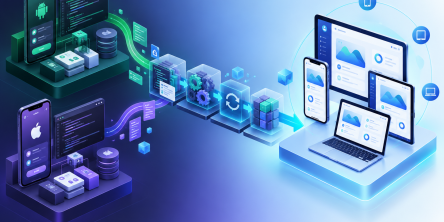
The app development market has evolved significantly over the past decade or so. Its impact on business has been equally consequential.

Offshore IT hiring means recruiting IT professionals who work from another country or region. Companies commonly use this approach for software development, QA, IT support, DevOps, cybersecurity, data, and project management.

By 2026, moving to the cloud is no longer merely a competitive advantage. It is a business necessity. Every organization across the broad spectrum of industries will be challenged to become more agile.
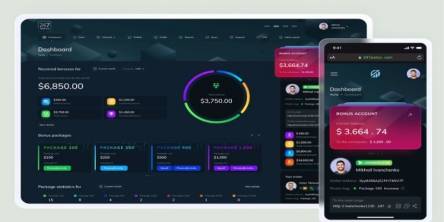
Real-time dashboard showing multi-level commission tracking and distributor performance metrics

Digital transformation initiatives are no longer unheard of in the corporate world. As a matter of fact, it is also well known that companies expanding their digital footprint tend to run into crippling legacy apps.

The financial aid office has become one of the most operationally strained departments on the modern U.S. campus. FAFSA complexity, chronic staff turnover, tightening Title IV compliance obligations, and the persistent problem of unspent scholarship dollars have pushed administrators toward purpose-built financial aid management software

The demand for software delivery has never been higher. Applications must be delivered faster and on a scale like never before.