

Tips To Sell a Fire-Damaged House Fast Without Costly Repairs
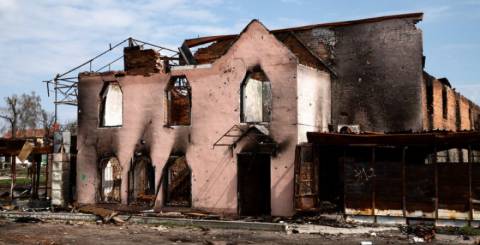
You can also sell a fire-damaged house quickly without repairs by selling it in the open market, to a cash buyer or investor who primarily focuses on distressed properties. These investors undertand that the damage has to be priced into the deal. They know how to skip administrative delays that may slow traditional sales, and they can close a deal within a week, saving you hundreds or even thousands of dollars in restoration. The critical insight that most homeowners lack is that you don't need to have a perfect house or no house.
There is an entire class of buyers who willing to buy fire-damaged properties that you'll be able to sell to, gain cash and let someone else take possession of the rebuild permits, remediation and risk. The compromise is price you'd get less for the property than if it had been restored, but you'll save the cost, time and uncertainty of doing it yourself.
Also Read: Why the Most Thoughtfully Built Homes Are the Ones Most People Never Think About
Why Repairing Before Selling Usually Costs More Than it Returns
Fix the house first and start to feel more responsible. Except the figures are usually against you. Just a fire restoration on a typical damaged home would cost you approximatly $50,000-100,000 easily after including smoke remediation, water damage, rewiring and structural work, and this is starting from scratch.
You pay up front contract oversee, wait for months, and then hope that the resale value of your house is a lot more than what you had put in. Additionaly, what helps spread this problem more is that, buyers will discount a previously-fire-damaged house even after a total rehab since the history shows up on the seller disclosure and inspection report.
Industry statistics on stigmatized properties show that homes with a history of fire mostly sell for less than similar non-fire-related properties, irrespective of total area and build quality. That's $80,000 you spent to repair the house and own it at a discount. Two for the price of one. Then there is the unseen damage that blows a restoration budget to smithereens. Smoke residues are acidic and migrate through wall cavities and HVAC ducts, water left standing for days breeds mold, and older homes conceal asbestos or lead paint that fire disturbs and becomes a five-figure abatement event.
How Selling As-is Actually Works
As-is simply means you're selling it in its present condition and you are not required to make any further repairs. You are simply being truthful about the damage and not hiding it. This is what cash buyers and investors anticipate when purchasing homes. They will send a buyer out for a walk through and will then base their offer to you on the repairs needed and the ARV, normally without requiring you to lift a finger.
This process is far easier than having a sale;no staging, no listing photographs, no open houses, no waiting for a buyers mortgage to clear. Many as-is cash transactions avoid having to include an appraisal contingency all together, saving you from one of the largest reasons traditional deals fall threw. Done and dusted! For a price and a date that you can decide.
There are many specialist buyers available in the market who are interested to Buy Fire Damaged Houses and ready to handle the parts of the transaction that overwhelm most homeowners, including the paperwork around insurance, liens, and code-upgrade requirements that surface during distressed sales. That matters because a fire sale often comes tangled with an open insurance claim or a title issue, and a buyer who deals with these situations regularly can keep the deal moving where an inexperienced buyer would stall. The certainty of closing is worth real money when you're paying for temporary housing and a mortgage on a house you can't live in.
What You'll Actually Get, and How Offers Are Calculated
Knowing how a cash buyer gets to a figure takes some of the mystery out of a lowball offer. The investor normally reverse engineers from the value after repair with the amount the home would sell for in pristine condition, deducts repair estimates, then factors in their profit. The rule of thumb is roughly 70 percent of after repair value minus repairs. Imagine you're planning to restore your house to a value of $300,000 and you need another $80,000 in repairs.
A cash offer might be around $130,000 to $150,000. That seems like a large discount until you take into account the alternativepaying $80,000 yourself, holding and selling the property for six months, incur the stigma discount and doing a lot of work yourself, finally ending up with a similar sum. The cash offer is giving up some value for the speed and certainty.
When a Fast As-is Sale Makes the Most Sense
This route isn't suitable for all, and again it depends on your circumstances more than the property. If you have the cash, the time, the desire for a long renovation, and are planning to live in the house afterwards, then restoration is sensible as you get the full value and a house you're happy with. The as-is sale reveals its true value when these criteria are absent.
It's the obvious one when you are being thrown out of your own house and covering two houses to live in, when you have a dispute over insurance coverage, when the property is inheritance and you're not resident, or when the home is so damaged that you can't be expected to borrow to repair. Older houses and homes in softer markets skid more clearly to the side of the sale because the rehab represents a bigger percentage of resale value and So brings a lower return on effort. A landlord with a damaged rental often sells quickly to stop the loss on a failed investment.
Similar Articles
Property branding has become a commercial discipline, not a finishing touch. Large residential, commercial, and mixed-use projects can take years to move from concept to completion, while buyers and investors may form opinions long before construction is visible.

Owning a second home has become an aspiration for many families looking to create a peaceful retreat away from the demands of everyday life.

A cash offer usually cuts a home sale from something like 45 to 60 days down to 7 to 21 days, because the longest single step in a traditional sale, mortgage underwriting, stops existing.

Modern city life offers countless opportunities, but it also comes with challenges that can affect overall well-being

Real estate remains one of the most reliable wealth-building vehicles available, but simply owning a property does not guarantee stellar financial returns.

If you have ever typed sell my house fast into a search bar at midnight, you already know the feeling. Maybe a job is moving you out of state.

Buying your first home is an incredible milestone. From daydreaming to mortgages, it can feel like a rollercoaster of a journey.

Modern city life, while full of opportunities, often comes with its own set of challenges: constant noise, traffic congestion, pollution, and a never-ending routine.

Recovering from a major injury or adapting to a complex medical diagnosis is a significant challenge that requires time, patience, and professional care.