

A Simple Guide to Welding Gases for Better Results
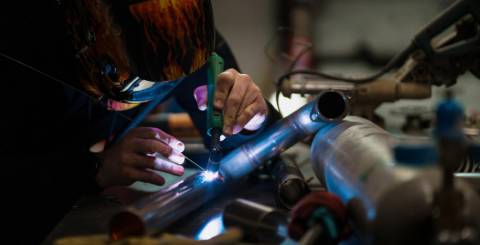
Welding is an essential process in various industries, requiring precision and the right resources to achieve optimal outcomes. An important component in enhancing welding quality is the selection of suitable welding gases. Understanding the different types of gases and their specific applications can significantly influence the quality and efficiency of the work.
The Role of Welding Gases
Welding gases play a crucial role in shielding the weld from contamination, stabilising the arc, and influencing the mechanical properties of the weld. The choice of gas can affect the weld speed, penetration depth, and overall welding quality. Selecting the right gas or gas mixture is vital for achieving the best results in various welding applications.
Read more: Top Benefits of Advanced Metal Fabrication
Types of Welding Gases
There are several types of welding gases, each serving different purposes and offering unique benefits. The primary gases used are argon, carbon dioxide, oxygen, nitrogen, and helium. The selection of these gases depends on the material being welded, the welding technique employed, and the desired properties of the finished weld.
Argon
Argon is one of the most commonly used shielding gases in welding, particularly for non-ferrous metals such as aluminium. It provides excellent arc stability and penetration, producing cleaner welds with smooth beads. Argon gas is ideal for TIG (Tungsten Inert Gas) welding and some forms of MIG (Metal Inert Gas) welding.
Carbon Dioxide
Carbon dioxide is commonly used in MIG welding because of its cost-effectiveness and availability. It is suitable for welding ferrous metals, as it allows deep weld penetration and high welding speed. However, it may produce a less stable arc compared to argon, which can lead to increased spatter.
Helium
Helium is often used in combination with argon to weld non-ferrous metals. It provides a higher heat input, allowing for faster welding speeds and better penetration. Helium is typically used when welding materials such as copper and stainless steel.
Oxygen
Oxygen is usually added in small quantities to enhance weld pool fluidity and improve penetration. It is typically combined with other gases in MIG and TIG welding to achieve specific welding characteristics, especially with mild steel and stainless steel.
Nitrogen
Nitrogen is occasionally used in specific applications where it helps to prevent porosity and improve the mechanical properties of some materials, such as stainless steel and duplex steels. It is not a common choice for standard welding operations but can be essential in niche applications.
Choosing the Right Gas Mixtures
Many welding processes benefit from using mixtures of gases, tailored to the materials being welded and the welding technique. Common mixtures include argon/carbon dioxide, argon/helium, and argon/oxygen. Each mixture provides specific advantages that can enhance the welding process by improving arc stability, reducing spatter, and ensuring strong, clean welds.
Considerations for Selecting Welding Gases
When selecting welding gases, several factors must be considered, such as the type of material, the welding technique, and the desired mechanical properties of the weld. Additional factors include environmental aspects like the location of the work, whether it is indoors or outdoors, which can affect the choice of shielding gas.
The Impact of Gas Quality
The quality of the gases used in welding is paramount to achieving high-quality results. Impurities in welding gases can lead to defects in the weld, such as porosity or incomplete fusion. It is crucial to source gases from reputable suppliers, such as Coregas, to ensure the highest standards of quality and performance.
Safety Considerations
Safety is a critical aspect when working with welding gases. Proper handling and storage are necessary to prevent accidents and ensure safe welding practices. This includes using appropriate protective gear and maintaining safe working environments to minimise risks associated with gas leaks or exposure.
The Future of Welding Gases
The welding industry continues to evolve, with new technologies and gas mixtures emerging to enhance welding processes. The future of welding gases involves developing more environmentally friendly options and improving efficiency and quality to meet industry demands.
In summary, selecting the appropriate welding gases is integral to achieving better welding results. By understanding the characteristics and applications of different gases and mixtures, welders can significantly improve their welding quality. It's important to consider factors such as material type, welding technique, and environmental conditions when choosing gases for welding, ensuring they are well-suited to the specific application. As technology advances, the role of welding gases will continue to adapt, providing more effective solutions for the welding industry.
Similar Articles
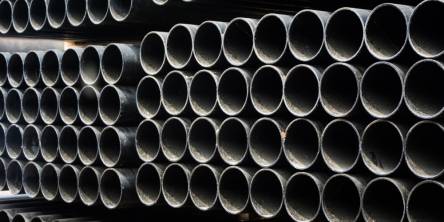
Seamless pipe wins most high-pressure jobs. It has no weld seam, so it holds pressure more evenly across the wall. ERW and LSAW pipes cost less and still perform well in many oil, gas, and water projects.

Boost productivity with this holistic guide to the machine trio transforming on-site efficiency, reducing downtime, and improving workflow.

Vertical centrifugal pump stands for a sophisticated approach to alleviating air contamination and maintaining air quality. The effectiveness of these processes is closely connected to the accessibility of reputable and durable pumping solutions.

A rabbit can outrun a cunning and adaptable fox through its agility, awareness, and quick instincts to survive! The same applies to businesses aiming to outperform their competitors.

Discover the must-have precision tools for electrical jobs—safety, accuracy & efficiency. From multimeters to insulated gear, equip like a pro!

The world of technology is growing fast now, and data has emerged as one of its richest resources. Data-based decisions create better products and experiences for customers and improved ways of doing business for many companies.

Vertical centrifugal pumps are essential in different industrial and commercial applications because of their small layout, effectiveness, and capacity to deal with a large range of liquids. These pumps are specifically valued for their space-saving vertical setup that makes them excellent for installations with restricted floor area.

Engineering design continues to innovate and redefine possibilities in the dynamic world. From pioneering sustainable solutions to enhancing efficiency across industries, modern engineering design plays a pivotal role in shaping our future
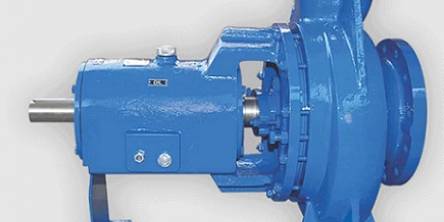
The majority of industrial procedures include the conduction of fluids or energy transfer. This is possible thanks to the centrifugal pumps which are the most popular turbo equipment. The growth and renovation of the industrial processes have actually been always connected to the improvements in the pumping tools.