

This Is a Road to Hell or How To Start a Music Streaming Business
“Without music, life would be a mistake.”
— Friedrich Nietzsche
Do you remember the one who was always beside you during times you felt upset or happy? The friend who did not ask awkward questions could keep silent whenever you were not open for a dialogue, whose presence you felt even if there was no one around you. Music. A customizable playlist, your own personal Jesus. The one you can rely on while the whole world is against you.
Over the past years, the way we listen to music has changed many times. From compact cassette Walkmans to iPods with flash memory. Nowadays we live in the era of live music streaming. The only one front-runner that comes to mind when talking about live music streaming apps is Spotify. More and more people tend to repeat its success and start their business in the sphere of live music streaming. Let’s clarify what makes Spotify so unique and is there still some place under the Sun for other members of the game called market.
A Short Flashback To History

One of the leaders in the market arena is Spotify, music, and video streaming service. The world saw Spotify in October 2008, when Daniel Ek and Martin Lorentzon introduced it as a small startup project. In 2011 Spotify was available in 20 countries and reached 1 million paid subscriptions. Now, this figure grew up to 50 million paid subscriptions. But what makes Spotify so attractive for users?
- No need to download music
- Large music library
- Ability to choose between free and paid types of subscription
- Simple to use
- Works on different platforms
- Social media connection
- Fresh music finds
- In-app dialogues
First Steps To Start a Music Streaming Business
-
Licensing

Before building an online music streaming service you need to consider several factors. First of all, you need to decide what kind of streaming app you want. Online radio, on-demand streaming service, portable or non-portable subscription etc. It really matters what kind of streaming you want to have as this would tell you what kind of license you will need. Also, think of what kind of niche you would occupy among already existing market leaders. Secondly, determine the territory where you wish to establish your business. Apart from different licenses for different types of streamings, laws also differ from country to country. Speaking of the USA you will have to comply with Digital Millennium Commercial Act (DMCA). In case of the UK, you will need a joint PRS/MCPS Online Music License. So, make yourself familiar with the law of the country under discussion. For streaming 1 song you might also need several licenses.
- A sound recording license, usually provided by the record who owns it.
- A license for composition, provided by the company who owns it or the company that administers the publishers’ transactions.
- A “public performance” license, provided by the performing rights organization the song is registered to.
Another key important moment that will influence the overall work and impression of your app is a server-side part. Recollect how annoying it can be when your favorite song pauses or downloads with delays, constantly barking in your headphones. In order the sound could go sleek and smooth the app should have powerful server-side. If your app is meant only for USA users the server located in the USA would be enough. But if you have a global strategy of conquering the whole Earth you need to have several servers in different countries. With one USA based server, your users on the other part of the world would get a poor connection and thus a spoiled impression from using your music streaming service.
2. Estimation and Budgeting
Apart from the time-consuming and boring process of getting licensed, there are other challenges you will face. And the main question that will arise when it comes closer to development - how much would it cost me? Well, here is where the most interesting part begins. Spotify was not built on the spot the way we know it now. So, in your budgeting, you should take to account years of constant improvement and study users’ tastes and behaviors in order to give them what they want. Hope you understand that Spotify's copycat is simply not possible. So, let’s agree below we will talk about a technically simplified version of some relative music streaming app.
3. Developing MVP
Before jumping into the development of fully-functional website or app it would be reasonable to start with MVP (Minimum Viable Product). Get a development team and let them know what your aim is. Ask for an approximate estimation. A minimum list of features for a music streaming service will include:
- Users registration and authentication
- Search
- Music Streaming
- Music Social Media sharing
- Library and Playlists
- Online/Offline modes
Before the first line of code is written you can see how your app will look like. This is what is called UX/UI. You can get a clickable working prototype with screen navigation. No need to mention design should be intuitive and user-friendly. But there is a need to mention the design should not try to imitate the well-known apps but be unique and brand new. This would help you to attract the attention of users that potentially do not like already existing apps or do not have them on the territory of their countries due to geographical restrictions. Depending on the country where your development team would be based the price for a minimum functionality for live music streaming app would start from $16,000. This is the lowest budget line to start from.
Revenue
Of course running a streaming music business is not only about spending money but also about some income. You can a free version of your app with in-app purchases and advertisements or you can earn on selling a paid type of subscription offering a wider functionality and a better sound quality to your listeners.
As an example, Spotify offers 2 ways of using their service.
- Freemium, meaning you will have an access to basic features free of charge with advertisements.
- Premium, meaning you will get an improved ads free streaming quality and offline music downloads. Also, you can have a shared Family subscription where you can share the cost between 6 family members.
There are ten different types of advertising formats Spotify offers to their users. However, despite a great revenue as of 2017 Spotify is not yet a profitable company. About 70% of total revenue is paid by Spotify to right holders, who then pay their artists according to their agreements. Even a strong monetization strategy does not guarantee your project will become profitable.
Generally, success is a symbiosis of many factors and of course would be silly to expect you can predict them all. If you a real music lover and feel you can invent something that would bring the next revolution in the sphere of live music streaming you can give it a try. Remember, there are many other competitors apart from Spotify you will have to deal with. So, analyze the market and surprise the world with an absolutely brand new app that would hit the target of the public.
Similar Articles
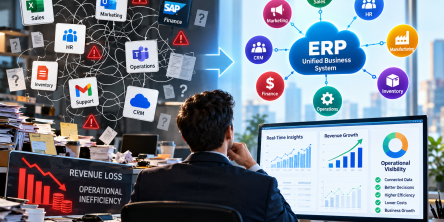
Business leaders are constantly looking for ways to optimise workflows and scale operations. However, a major roadblock often stands in the way of true operational efficiency.

Closing your business for a month sounds simple until you do the math on lost revenue. For most business owners, that math doesn't work. So the renovation has to happen around the business, not instead of it.

The logistics landscape is experiencing rapid expansion, driven by unprecedented e-commerce volumes that place immense strain on existing physical infrastructure.

Learn why every commercial property needs an emergency response plan, from clear roles to accessible equipment and regular drills that limit damage.

Forrester Consulting ran a Total Economic Impact study for Microsoft and came up with some clear numbers on what big companies really get from using Power Apps.
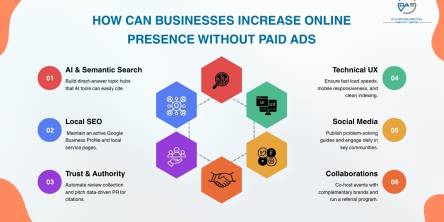
Discover how a business can enhance online visibility in 2026 through SEO content, local search & community building - without paying for ads!
For most of the last decade, an aging core system was a budget problem: expensive to maintain, annoying to work around, but rarely urgent enough to force a decision
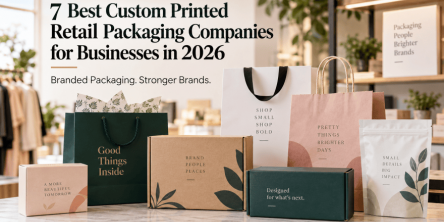
For most businesses in 2026, Action Packaging takes the top spot. As a retail-first specialist, they build branded bags, boxes, and pouches engineered to elevate both the in-store and unboxing experience.

Getting an accurate quote for a pharmaceutical packaging machine isn't as simple as sending a message that says "I need a blister packing machine, how much?" Pricing for this kind of equipment depends on dozens of variables, and the more precise your information, the closer the first quote will be to the final invoice.