

Understanding What Information is Needed for a Pharmaceutical Packaging Machine Quote

Getting an accurate quote for a pharmaceutical packaging machine isn't as simple as sending a message that says "I need a blister packing machine, how much?" Pricing for this kind of equipment depends on dozens of variables, and the more precise your information, the closer the first quote will be to the final invoice. Buyers who skip this preparation often end up in a frustrating back-and-forth of revised estimates, or worse, they receive a quote that looks reasonable on paper but doesn't match their actual production needs once the machine arrives.
This article walks through the specific details that pharmaceutical packaging equipment manufacturers typically need before they can put together a meaningful quote, and why each piece of information matters.
1. Product Type and Physical Characteristics
The starting point for any quote is a clear description of what's being packaged. Tablets, capsules, powders, liquids, ampoules, vials, and pre-filled syringes all require different machine configurations, so this isn't a minor detail it's the foundation of the entire specification.
Even within a single product category, physical characteristics change the equipment needed. A tablet that's 8mm round behaves very differently on a blister line than an oddly shaped or coated tablet prone to chipping. Liquid viscosity affects pump and filling head selection. Powder flow characteristics (free-flowing versus cohesive) determine whether an auger filler, vibratory system, or vacuum filler is appropriate.
Useful details to share at this stage include:
- Product dimensions (length, width, height, or diameter)
- Weight or fill volume
- Fragility or friability
- Moisture sensitivity or hygroscopic properties
- Whether the product is a controlled substance requiring special handling
Also Read: How Product Packaging Shapes Consumer Taste and Brand Perception
2. Packaging Format
Next comes the question of how the product will be packaged and presented to the end user. Blister packs, strip packs, bottles, sachets, pouches, cartons, and vials all call for different machine types, and some products move through more than one packaging stage (for example, blister packing followed by cartoning and then case packing).
If multiple formats are being considered, it helps to say so upfront rather than requesting quotes for each option separately later. Manufacturers can often suggest a line configuration that handles more than one format with minor changeovers, which may be more cost-effective than buying entirely separate machines.
3. Required Output Speed and Production Volume
Throughput is one of the biggest cost drivers in pharmaceutical packaging equipment, so buyers need to think carefully about this before requesting a quote. The two figures that matter most are:
Target output rate usually expressed in units per minute (blisters, bottles, or cartons per minute) or units per hour/shift
Annual or monthly production volume this helps a manufacturer understand whether the buyer needs a semi-automatic machine for smaller batch runs or a fully automatic, high-speed line for continuous production
It's worth being realistic here rather than requesting the highest possible speed "just in case." Overspecifying speed usually means paying for capacity that sits idle, while underspecifying it can create a bottleneck within a year or two of purchase. If growth is anticipated, mentioning a rough timeline (for example, "we expect volume to double within three years") allows the manufacturer to recommend equipment with reasonable headroom rather than guessing.
4. Regulatory and Compliance Requirements
Because pharmaceutical products are heavily regulated, the machine itself often needs to meet specific compliance standards depending on the target market. Common requirements include:
- cGMP (current Good Manufacturing Practice) complianc
- FDA 21 CFR Part 11 for electronic records and audit trails, if applicable
- CE marking for machines sold or operated within the EU
- Serialization and track-and-trace capability, which is now mandatory in many countries for finished pharmaceutical products
Buyers should specify which markets the finished product will be sold into, since this directly affects the control systems, documentation, and validation support the manufacturer needs to provide with the machine.
5. Facility and Utility Constraints
A machine that works perfectly on paper can become a costly problem if it doesn't fit the buyer's facility. Sharing facility details early avoids expensive surprises during installation. Relevant information includes:
- Available floor space and ceiling height
- Doorway and corridor dimensions for equipment delivery
- Available electrical supply (voltage, phase, amperage)
- Compressed air availability and pressure
- Cleanroom classification, if the machine will operate inside a controlled environment
- Existing upstream or downstream equipment the new machine needs to integrate with
This last point matters more than buyers sometimes expect. A new packaging machine rarely operates in isolation it usually needs to sync with an existing filling line, labeling unit, or conveyor system, and mismatched speeds or interfaces between machines can undermine the benefit of a new purchase.
6. Level of Automation Desired
Pharmaceutical packaging equipment manufacturers generally offer a range of automation levels, from manual and semi-automatic machines to fully automatic lines with robotic loading and vision inspection systems. The right choice depends on labor costs, production volume, and quality control requirements.
It's helpful to clarify:
- Whether operators will manually load product, or if automatic feeding is required
- Whether in-line inspection (checking for missing tablets, correct fill weight, print quality, etc.) is needed
- Whether the line needs to integrate with a manufacturing execution system (MES) or plant-wide data collection
7. Budget Range and Timeline
Manufacturers aren't asking for a budget figure to upsell they're asking because packaging equipment can range enormously in price depending on configuration, and knowing the general range helps them propose realistic options rather than wasting time on a specification the buyer can't act on. Similarly, sharing an installation timeline matters because lead times for custom-configured machines can run anywhere from a few weeks to several months, and this affects which options are even feasible.
8. Format Changeover Needs
Many pharmaceutical companies package more than one product on the same line, so it's worth mentioning whether the machine needs to handle multiple SKUs. If so, describing how often changeovers happen and how many different formats are involved allows the manufacturer to quote appropriate tooling, changeover parts, and format-adjustment features rather than a single-format machine that later requires costly retrofitting.
Putting it All Together
None of these categories needs to be answered with total precision on the first inquiry; reasonable estimates are usually enough to get a preliminary quote. But the more of this information a buyer can provide upfront, the fewer revision cycles are needed, and the more the initial number reflects what the equipment will actually cost once configured for real production conditions.
Buyers who approach the process with this level of preparation typically get more useful, actionable quotes and avoid the common trap of comparing numbers that aren't actually describing the same machine. Since pharmaceutical packaging equipment manufacturers work with highly configurable systems rather than off-the-shelf products, a well-documented request is often the single biggest factor in getting a quote that holds up once the actual purchase order is written.
Similar Articles

Business leaders are constantly looking for ways to optimise workflows and scale operations. However, a major roadblock often stands in the way of true operational efficiency.

Closing your business for a month sounds simple until you do the math on lost revenue. For most business owners, that math doesn't work. So the renovation has to happen around the business, not instead of it.
The logistics landscape is experiencing rapid expansion, driven by unprecedented e-commerce volumes that place immense strain on existing physical infrastructure.
Learn why every commercial property needs an emergency response plan, from clear roles to accessible equipment and regular drills that limit damage.

Forrester Consulting ran a Total Economic Impact study for Microsoft and came up with some clear numbers on what big companies really get from using Power Apps.
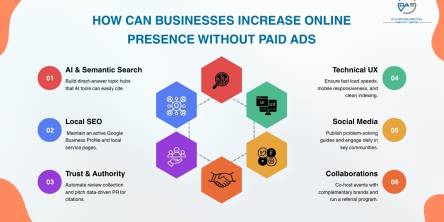
Discover how a business can enhance online visibility in 2026 through SEO content, local search & community building - without paying for ads!

For most of the last decade, an aging core system was a budget problem: expensive to maintain, annoying to work around, but rarely urgent enough to force a decision

For most businesses in 2026, Action Packaging takes the top spot. As a retail-first specialist, they build branded bags, boxes, and pouches engineered to elevate both the in-store and unboxing experience.

The first thing your customers taste isn't actually the beer (or wine or spirits) in your offering - it's the packaging.