

Why Disconnected Business Systems Are Draining Your Revenue and How to Achieve True Operational Visibility
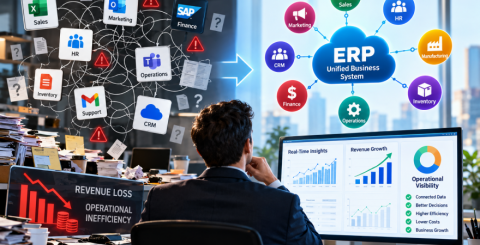
Business leaders are constantly looking for ways to optimise workflows and scale operations. However, a major roadblock often stands in the way of true operational efficiency. When different departments rely on separate software applications that do not communicate with one another, it creates dangerous blind spots. These disconnected business systems might seem like minor administrative annoyances, but they actually cause severe productivity loss and financial drain. Instead of focusing on skilled tasks, knowledge workers spend a massive portion of their day hunting down information and manually migrating data across platforms, a problem that a professional ERP implementation can directly resolve for executives looking to consolidate their processes.
The Hidden Financial Costs of Data Silos
Every time an employee has to copy information from a sales spreadsheet into a separate human resources application, the company loses money. Research from the Harvard Business Review shows that workers in mid-level and back-office roles switch between different software applications roughly 1,200 times a day. This frequent context switching consumes nearly nine percent of an employee's total annual working time. When scaled across an entire organisation, this equates to roughly five weeks of lost productivity per person every single year.
The cost of this fragmentation goes far beyond minor delays and administrative frustrations. Organisations operating with heavily siloed data are significantly more vulnerable to critical errors, duplicated efforts, and internal security threats. A recent McKinsey report on business operations revealed a staggering reality about these inefficiencies, showing that 82 percent of respondents spent one or more days per week resolving master data quality issues.
Furthermore, 66 percent of those surveyed had to rely on manual reviews just to assess and manage the quality of their information. Market research from IDC further indicates that companies lose between 20 and 30 percent of their annual revenue due to operational inefficiencies and missed opportunities caused by these exact organisational data silos. Without a unified system in place, leaders are essentially flying blind, making critical strategic decisions based on outdated or fragmented data.
Bridging the Gap with Intermediate Solutions
Recognising these massive productivity drains, business leaders often look for ways to connect their existing departmental software. Before investing in an entirely new digital framework, companies typically attempt to bridge the gap between their legacy tools by using Application Programming Interfaces. This allows isolated systems to communicate at a basic level, preventing some of the most redundant manual tasks
This approach offers a practical first step for overcoming data fragmentation. For instance, exploring how APIs simplify enterprise application integration can help leaders understand the mechanics of connecting disparate business systems. Standardised API connectivity serves as an intermediate solution, allowing different software tools to share data more effectively. This improves general efficiency and reduces the immediate costs associated with manual data entry.
However, while connecting isolated tools is better than leaving them completely disconnected, it still leaves a company managing a complex web of different software licenses, user interfaces, and support contracts. Employees may still spend up to nine hours each week manually transferring data from emails, PDFs, and spreadsheets into localised digital systems that are not fully supported by these automated bridges. Over time, these intermediate fixes can become just as cumbersome as the original problem.
Centralising Operations for Sustainable Growth
To completely eliminate dangerous operational blind spots, modern enterprises are moving away from piecemeal tech stacks in favour of a fully centralised platform. By unifying sales, human resources, finance, and manufacturing into one single source of truth, businesses can drastically accelerate their financial operations and eliminate repetitive administrative tasks that actively damage employee morale.
A structured, unified software platform fits perfectly as the ultimate strategic step for replacing disconnected spreadsheets and legacy systems. When guided by experienced IT consultants, this transition has an incredibly high success rate and completely transforms how a business operates. By 2026, over 70 percent of all new deployments are expected to be cloud-based, highlighting a massive industry shift away from clunky on-premises software toward fully unified operational ecosystems.
Transitioning to a centralised system provides several immediate advantages that directly impact a company's bottom line:
- Speeding up financial close cycles by up to 80 percent through consolidated reporting and automated ledger entries.
- Reducing manual operational errors by roughly 70 percent, ensuring data accuracy across all departments.
- Achieving a typical 30 percent increase in return on investment within the first three years of deployment.
- Unlocking enterprise data that previously remained completely unused because it was trapped in inaccessible departmental silos.
- Lowering operational costs by automating workflows, which replaces manual data entry processes that traditionally cost 60 percent more to manage.
Relying on disconnected business systems is no longer a viable strategy for growing companies in today's highly competitive market. The financial impact of data silos, constant application toggling, and manual data wrangling is simply too high. By understanding the severe productivity costs of fragmented software, business leaders can take decisive action. Whether the initial step involves connecting current tools via APIs or making the full transition to a unified business management platform, achieving true operational visibility is essential. Centralising your technology stack not only protects your revenue but also empowers your employees to focus on what truly matters, driving innovation and long-term business success.
Similar Articles

Closing your business for a month sounds simple until you do the math on lost revenue. For most business owners, that math doesn't work. So the renovation has to happen around the business, not instead of it.

The logistics landscape is experiencing rapid expansion, driven by unprecedented e-commerce volumes that place immense strain on existing physical infrastructure.

Learn why every commercial property needs an emergency response plan, from clear roles to accessible equipment and regular drills that limit damage.

Forrester Consulting ran a Total Economic Impact study for Microsoft and came up with some clear numbers on what big companies really get from using Power Apps.
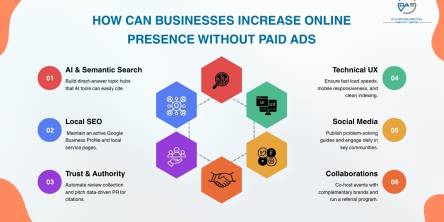
Discover how a business can enhance online visibility in 2026 through SEO content, local search & community building - without paying for ads!
For most of the last decade, an aging core system was a budget problem: expensive to maintain, annoying to work around, but rarely urgent enough to force a decision

For most businesses in 2026, Action Packaging takes the top spot. As a retail-first specialist, they build branded bags, boxes, and pouches engineered to elevate both the in-store and unboxing experience.

Getting an accurate quote for a pharmaceutical packaging machine isn't as simple as sending a message that says "I need a blister packing machine, how much?" Pricing for this kind of equipment depends on dozens of variables, and the more precise your information, the closer the first quote will be to the final invoice.

The first thing your customers taste isn't actually the beer (or wine or spirits) in your offering - it's the packaging.