

Organizer Bins That Actually Work in Fast-Moving Facilities
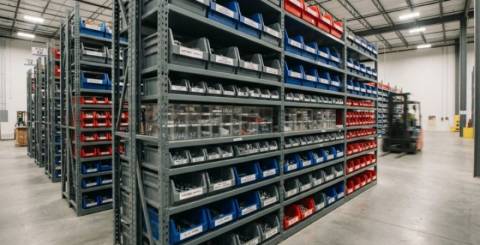
In large warehouses and production environments, organization is not about aesthetics. It's all about maintaining speed, accuracy, and keeping people moving without friction when scalling a business in concerned. When parts are hard to find or constantly misplaced, small delays add up quickly. Organizer bins play a quiet but critical role in keeping operations running smoothly, especially in facilities where inventory moves fast and changes often.
The challenge is that not all organizer bins are built for industrial use. Choosing the wrong style can create bottlenecks rather than solve them.
What Defines a True Organizer Bin
A true organizer bin is designed for repeated handling, easy access, and predictable placement. It should allow workers to check and identify contents at a glance, retrieve items with one hand, and return excess stock without shifting other bins around.
In industrial settings, organizer bins are not for temporary storage or one time use. They are known as an integral part of the organizational workflow. That means consistent sizing, stack stability, and compatibility with shelving or carts matter just as much as capacity. Bins that crack, warp, or tip when partially loaded quickly become liabilities for any organization or staff in the long run.
Also Read: When Private Utility Locates Are Needed?
Common Applications in Warehouses and Shops
In any warehouse, storage, or big business enterprises, organizer bins are widely used in maintenance areas, kitting stations, assembly lines, and order picking zones to help staff easily manage things. They are ideal for storing small parts like fasteners, fittings, electrical components, and replacement hardware, that can be easily move from one place to another.
In fast-moving facilities, bins often support just-in-time replenishment. Workers pull what they need, restock quickly, and move on. Clear labeling and uniform bin layouts reduce training time and help new team members get productive faster.
Facilities, or large warehouses that manage thousands of SKUs are majorly rely on organizer bins to efficiently maintain orders without slowing down throughput.
Open Front vs Closed Organizer Bins
Open front organizer bins are the most common choice in warehouses and large facilities. The open face allows quick access and visual confirmation of stock levels. This kind of design works well for high-pick items and locations where accuracy and speed matters more than containment.
Closed bins or bins with lids are better suited for products or items that need protection from dust, moisture, or cross-contamination. They are also useful to easily manage overflow storage or slower-moving inventory.
Many regular operations use a mix of both. Open front bins at picking locations and closed bins for backstock or transport between departments.
Floor, Shelf, and Wall-Mounted Setups
Using organizer bins are flexible, which is part of their value. Floor-mounted bin systems work well for bulk small parts or heavier components. Shelf-mounted bins are common in picking aisles and workstations where space needs to stay compact.
Wall-mounted bin panels are more popular in maintenance shops and tool rooms. They help to keep frequently used items visible and off work surfaces. Thus, choosing the right setup depends on pick frequency, weight, and how often layouts change.
Facilities or warehouses that scale efficiently often standardize bin sizes so systems can be rearranged without replacing containers.
Durability and Load Considerations
Industrial organizer bins need to handle more than light office supplies. Load ratings matter, especially when bins are stacked or mounted at height. High-quality plastic bins resist cracking under load and hold their shape over time.
Bins used in warehouses or large facilities should also tolerate temperature changes, impacts from carts, and frequent handling. Reinforced lips, smooth interior corners, and consistent wall thickness are small details that make a big difference in daily use and make it useful.
Choosing Organizer Bins That Scale
As business operations grow, storage systems also need to grow with them. Choosing organizer bins that are easy to source, replace, and expand prevents costly rework later. Consistency across departments simplifies inventory management and reduces confusion.
Many businesses now look for organizer bins that integrate with shelving, mobile carts, and modular storage systems. Others prioritize availability, opting to buy organizer bins online to quickly add capacity without long lead times.
The key to smooth the facility operations is selecting the right organizer bins that support current needs while leaving room for expansion.
Real-World Use in Busy Facilities
In fast-paced warehouses, organizer bins support accuracy and flow. When parts are clearly visible, consistently stored, and easy to reach, teams spend less time searching and more time moving product. That efficiency shows up in faster picks, cleaner work areas, and fewer errors.
If you’re ready to tighten up your small-parts flow, performing the right research can help you source and buy organizer bins online so you can build a setup that scales without turning into a constant rework project in the long run.
Similar Articles

Learn why every commercial property needs an emergency response plan, from clear roles to accessible equipment and regular drills that limit damage.

Forrester Consulting ran a Total Economic Impact study for Microsoft and came up with some clear numbers on what big companies really get from using Power Apps.

Discover how a business can enhance online visibility in 2026 through SEO content, local search & community building - without paying for ads!

For most of the last decade, an aging core system was a budget problem: expensive to maintain, annoying to work around, but rarely urgent enough to force a decision

For most businesses in 2026, Action Packaging takes the top spot. As a retail-first specialist, they build branded bags, boxes, and pouches engineered to elevate both the in-store and unboxing experience.

Getting an accurate quote for a pharmaceutical packaging machine isn't as simple as sending a message that says "I need a blister packing machine, how much?" Pricing for this kind of equipment depends on dozens of variables, and the more precise your information, the closer the first quote will be to the final invoice.

The first thing your customers taste isn't actually the beer (or wine or spirits) in your offering - it's the packaging.

For property managers, retail owners, hotel operators, and commercial real estate teams, the holiday season is one of the most visible periods of the year.

Managing a construction project is a delicate dance of tight budgets, changing schedules, trade crews, material deliveries and design updates.