

6 Tips To Bridge Direct And Indirect Sales Using A Sales Enablement Platform
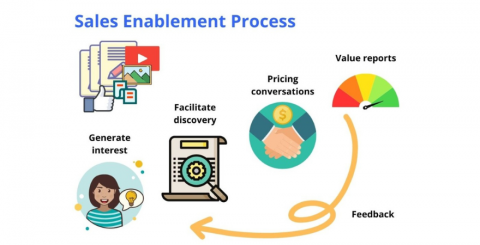
How to align teams, partners, and data to accelerate revenue across every channel
Sell. Sell more, sell to new clients. Every company’s ultimate goal depends on how its products and services reach the customer. Understanding this process is crucial to eliminating friction, implementing best practices, and developing new strategies. In the B2B landscape, companies rarely rely on a single route to market.
Instead, they combine direct sales teams with a growing network of distributors, resellers, and partners. While this hybrid model expands reach and accelerates growth, it also introduces friction. Misaligned incentives, inconsistent messaging, and fragmented data can quickly undermine performance.
That’s where a sales enablement platform becomes critical, not just as a tool, but as a strategic layer connecting people, processes, and performance across channels. Next, we’ll take a closer look at these sales models and how an enablement platform can amplify their impact.
Direct vs. Indirect Sales: What’s the Difference?
We know it's “Sales 101”, but before addressing alignment, it’s essential to clarify the distinction:
Direct sales involve a company selling its products or services straight to the end customer. This includes internal sales teams, account executives, and e-commerce channels. The advantages are control, direct customer insights, and tighter brand consistency.
Indirect sales, on the other hand, rely on third parties, such as distributors, resellers, or system integrators, to sell on the company’s behalf. This model enables rapid scalability and local market penetration but often comes at the cost of reduced visibility and control.
According to McKinsey’s B2B Pulse Survey, B2B buyers now use 10 or more channels throughout their purchasing journey, reinforcing the need for seamless coordination between direct and indirect approaches.
Why a Sales Enablement Platform Matters
A recent whitepaper from BCG, Unlocking Growth Through Commercial Excellence, highlights that companies must determine the most efficient route to market by assessing the profitability of different sales channels. Whether through direct sales, distributor networks, or online channels, each go-to-market approach should be evaluated based on margin contribution and cost-effectiveness.
The challenge is not choosing between direct and indirect sales, but making them work together. A sales enablement platform centralizes content, training, incentives, and performance tracking across all sales actors. It ensures that whether a deal is closed by an internal rep or a channel partner, the experience is consistent, data-driven, and aligned with business goals.
6 Tips to Bridge Direct and Indirect Sales
1. Establish a Single Source of Truth
One of the biggest barriers between direct and indirect sales is fragmented data. Internal teams rely on CRM systems, while partners often operate independently.
A sales enablement platform consolidates data into a unified view—covering pipeline, performance, and engagement. This reduces conflicts and enables better decision-making across the board.
2. Standardize Training and Messaging
Inconsistent messaging is a common issue in indirect sales. Partners may lack access to updated product information or positioning guidelines.
By centralizing training and content, companies ensure that every seller, internal or external, communicates the same value proposition. This is particularly important as buyers increasingly expect consistent experiences across channels.
3. Align Incentives Across Channels
Misaligned incentives can create internal competition instead of collaboration. Direct sales teams may hesitate to involve partners, while partners may prioritize other vendors.
A well-designed enablement strategy uses incentives to encourage cooperation. Platforms can track contributions and reward behaviors that drive collective success rather than isolated wins.
4. Improve Visibility into Partner Performance
Indirect sales often suffer from a lack of transparency. Companies struggle to understand which partners are performing, where deals are stalling, and what support is needed.
A sales enablement platform provides real-time insights into partner activities, enabling proactive management and targeted interventions.
5. Enable Seamless Collaboration
Bridging direct and indirect sales requires more than shared data—it requires shared workflows.
Enablement platforms facilitate collaboration through deal registration, lead sharing, and joint account planning. This reduces friction and ensures that opportunities are handled efficiently, regardless of who owns the relationship.
6. Leverage Technology to Scale Best Practices
High-performing sales teams rely on repeatable processes. The challenge is scaling those practices across a distributed partner network.
A sales enablement platform allows companies to replicate successful strategies, whether it’s onboarding, sales playbooks, or performance tracking, across all channels.
Solutions like Fielo, for example, integrate incentive programs, marketing, learning, and performance management into a single ecosystem, helping organizations drive consistent behaviors across both direct and indirect sales teams.
Bringing It All Together
The line between direct and indirect sales is becoming increasingly blurred. And customers don’t differentiate between channels; they expect a unified experience.
Meeting that expectation requires more than coordination; it demands true integration. A robust sales enablement platform becomes the connective layer that aligns teams, equips partners, and brings clarity to performance across channels.
It transforms fragmented efforts into a unified commercial strategy, where data, incentives, and execution all move in the same direction. In this model, direct and indirect sales stop competing and start reinforcing each other. The result is not just broader reach, but smarter growth driven by consistency, visibility, and shared success.
Similar Articles

Most people glance at a price tag, do a quick mental math, and decide whether something is worth buying. But that sticker price rarely tells the whole story.
Sales deals stalling while teams wait on approvals, answers, or documents? This guide shows how instant internal collaboration removes bottlenecks and helps sales teams shorten the sales cycle. Learn how tools like shared deal rooms, AI meeting transcripts, fast approvals, and centralized sales content keep deals moving from pitch to close faster.

If you’re an online seller, you already know the hustle — uploading products, writing descriptions, fixing images, and praying the “Add to Cart” button gets some love

Any interior area, whether a workplace, a restaurant, a hotel, or other business establishment, needs furniture.
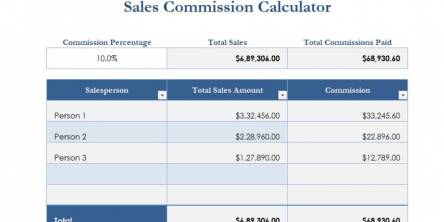
Discover why a top sales commission calculator is key to accurately tracking your income, boosting performance, and staying on top of your sales goals.

In the vibrant world of fintech, where innovation meets finance, the stakes for maintaining unshakable security and fostering enduring trust are sky-high. Here, transaction monitoring emerges as the unsung hero, the silent sentinel in the chaotic digital landscape

Your sales team needs the right sales tools and ready to boost customer conversion rates. These tools will help you target the right customers, build trust with them, and analyze their interactions with your website.
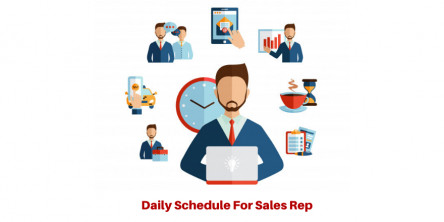
Sales reps have non-stop days and they know how to work hard. But to increase their selling time and revenue, sales reps must take control of their days and plan their activities carefully. A daily schedule for sales rep allows them to be as productive as possible to accomplish their goals.

Account based sales strategy is not a new concept and has been in the marketing world for years but today many business leaders and marketing experts are giving it a second look.