

Challenges And Solutions For AWS Migration

Amazon Web Services (AWS) is a comprehensive, broadly accepted & adopted cloud platform offering various services from its data centers globally, like Infrastructure as a Service (IaaS), Platform as a Service (PaaS), and Software as a Service (SaaS).
AWS migration process:
Access - An assessment of the organization's readiness for the cloud journey is essential before starting the migration. It is led by identifying desired business outcomes and developing a business case for migration. AWS Migration Evaluator can help provide the projection for the total cost of ownership (TCO) based on a company's actual utilization of resources. AWS Cloud Economics Center helps develop a business case to justify costs before migration. Once a business case has been made & costs explained, companies can review the migration and modernization strategies, guides & patterns using AWS Prescriptive Guidance. It offers guidelines and covers the best practices for planning the migration journey.
Mobilize - The next step for migration is to address gaps during the assessment phase. It is necessary to clearly understand the interdependence between applications and evaluate the migration strategies to meet the business objectives. A critical part of the migration strategy is collecting application portfolio data and rationalizing applications using the relocate, rehost, replatform, refactor, repurchase, retire or return migration strategies. AWS Application Discovery Service can help collect and present detailed information about application dependencies assisting in making informed migration decisions. Using AWS Management and Governance services, companies can improve their business agility and ensure governance, compliance & security are not compromised.
Migrate and Modernize - Each application is designed, migrated, and validated in this phase of migration. AWS Migration Hub assists in cloud migration and modernization, helping companies to accelerate and simplify the journey. AWS Cloud Economics Center can be used to create a business case that can be used to justify the migration movement. Using AWS Prescriptive Guidance, the migration and modernization strategies, guides, and patterns can be reviewed and studied.
Planning for migration using various services seems simple, but migration from legacy platforms to AWS often comes with its own challenges.
AWS migration challenges and solutions:-
Business goals - Identifying the features and functionalities to be kept is one of the biggest challenges companies face during migration. The migrated applications should be efficient and also meet the company's objective.
The solution lies in identifying measurable KPIs and evaluating cloud applications to ensure their effectiveness and return on investment.
Acceptance of new technology - Adopting and accepting the new technology is essential for a company to benefit from AWS migration.
The solution to a successful migration and acceptance is to explain and demonstrate the benefits of AWS cloud to all the company's stakeholders. Ensuring that each team member is clear about the advantages of AWS cloud can help companies reap the benefits of migration.
Quality and performance - One of the challenges is finding the right AWS consulting partner to ensure the quality, performance & reliability of cloud applications.
The solution is clearly defining the features, downtime, and quick access before migration. It is essential to plan and allow for downtime during each step of the migration to ensure minimal impact on the business during such events.
Data security and compliance - Cloud computing offers a secure environment, but the security properties and strategies differ from an on-site procedure. There is a risk of a security vacuum during the process of migration as the existing security tools and protocols would have to be shut down for the migration process.
The solution is to map out the security and compliance requirements for migrating applications and identify the AWS services and solutions that can provide equivalent or better security and compliance measures. Building these measures into the deployment plan can help ensure that applications are migrated securely.
Cost management - Migration to the cloud without establishing KPIs on the expense or the savings that can be achieved is a challenge. Without clear KPIs, the economic impact of migration may be difficult to measure. Cloud environments are also dynamic, and costs change depending on additional services or scaling applications.
The solution lies in creating a clear business case to know the cost of migration and using services that may not have been available on-site. An economic model may help in understanding the costs and savings of migration. AWS calculator can help plan and budget for cloud migration accurately.
In conclusion, a cloud migration requires significant planning and expertise and, when done right, can help achieve business objectives and save costs. It is essential to hire and take help from AWS consulting services companies who can offer their expertise so that companies can benefit from and achieve migration objectives.
Similar Articles

Running a restaurant involves much more than taking orders and serving food.

Field sales teams handle numerous responsibilities every day. Sales representatives travel between customer locations, conduct meetings, collect orders, record information, and report their activities to managers.

The app development market has evolved significantly over the past decade or so. Its impact on business has been equally consequential.

Offshore IT hiring means recruiting IT professionals who work from another country or region. Companies commonly use this approach for software development, QA, IT support, DevOps, cybersecurity, data, and project management.

By 2026, moving to the cloud is no longer merely a competitive advantage. It is a business necessity. Every organization across the broad spectrum of industries will be challenged to become more agile.
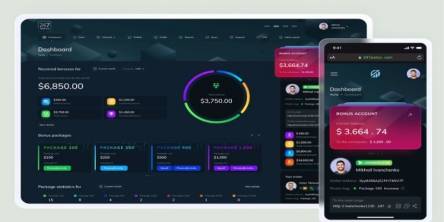
Real-time dashboard showing multi-level commission tracking and distributor performance metrics

Digital transformation initiatives are no longer unheard of in the corporate world. As a matter of fact, it is also well known that companies expanding their digital footprint tend to run into crippling legacy apps.

The financial aid office has become one of the most operationally strained departments on the modern U.S. campus. FAFSA complexity, chronic staff turnover, tightening Title IV compliance obligations, and the persistent problem of unspent scholarship dollars have pushed administrators toward purpose-built financial aid management software
The demand for software delivery has never been higher. Applications must be delivered faster and on a scale like never before.