

How AI is Disrupting Media & Entertainment to Drive a Better Customer Experience

The global pandemic has compelled people to stay indoors. It has triggered a rise in demand for OTT platforms. With the surge in demand for online streaming services, it has created new challenges for media companies.
Due to unpredictable traffic and demand, companies are now investing a big chunk of their budget to increase bandwidth for better and faster services. Unfortunately, most of these companies are unaware of the benefits that AI and automation can bring them.
The entertainment industry can use the power of AI to optimize content creation and personalize user experience. Artificial intelligence can also be leveraged to automate operations and make profitable decisions.
AI can precisely target your audiences based on their media preferences and consumption patterns to increase your conversions. Most players like Netflix, Disney, and Comcast are already using Media and Entertainment IT solutions to their advantage.
• Netflix is harnessing viewer data analytics and computer vision algorithms to customize user experiences successfully. Not to mention their video encoding technology that efficiently reduces the usage of data by compressing each shot without compromising its quality!
• IBM and 20th Century Fox are using deep learning models to analyze movies and predict audience behavior. Now they precisely know which audience type is most likely to see a film on the basis of the trailer.
• Disney is also using robotics and AI for rendering images. It is enabling them to produce high-quality results for augmented reality projects.
• Comcast is another media giant using machine learning to predict end-user issues before they even occur.
So, if you’re are still on the fence about AI, here the benefits it can bring to your media and entertainment business:
• Live VR/AR and 360° streaming for an enriched user experience
• Personalized viewing experience of live performances on any device
• Targeted eCommerce ads for engaged VR users to maximize conversions
• Personalized marketing campaigns that connect with users based on user history
• VR interaction for offering the best merchandise options in terms of products and services
• Gamification for engaging viewers on trigger-based events, live performances, and sports events
• Augmented viewer experience with real-time notifications and location-based services
• Real-time assistance and immediate response with AI-enabled chatbots
• Improved customer segmentation and accurate targeting with actionable insights into user history and social media behavior
• Predictive analytics for optimizing content delivery based on audience preferences to maximize earning potential
• Engaging customers and increasing referrals with loyalty and reward programs
Areas That Can Be Optimized with Artificial Intelligence and Automation
1. Seamless Content Delivery
AI can create a recommendation engine to boost engagement based on the viewer’s interests and latest trends. It converts an anonymous user into a registered viewer and brings in more referrals.
Media and entertainment IT solutions combine with both audio and video content. They can accurately capture emotions and interests to ensure the right dissemination of content. Automated content augmentation can facilitate seamless processing, tagging, summarizing and translating content.
2. Enhanced User Experience
AI can recommend personalized content as per the viewer’s choice and preferences. It increases both engagement and satisfaction. With smart content tagging, AI can create a synopsis of the AV content. And, it enables users to perform quick searches and find relevant results in real-time. AI brings speed, accuracy & efficiency to ensure a flawless end-user experience.
3. Improved Advertising Strategy
Media companies can use real-time analytics to determine which ads can be inserted into different offerings and boost the conversion rate. AI used in conjunction with algorithms can facilitate smart management of ad inventory for optimized yield.
4. Secure Content Management
AI can detect anomalies in subscription-based services and ensure compliance with contracts. From easing royalty payments to verifying content authenticity, AI provides both security and privacy. It also helps with the efficient management of IP and digital rights.
5. Automated Processes
AI and ML help automate and digitize metadata-attributed content. It improves finance-related processes and reconciliations. AI helps evaluate content performance through analytics. These insights can be used for improvising marketing campaigns for better results. AI also plays a role in QA and helps with system maintenance and customer support.
With constantly changing consumer preferences and evolving industry needs, media companies must improve operational efficiency to stay afloat. However, this transformation is not a one-time activity but an ongoing process. Companies can partner with media and entertainment IT solutions to curate a comprehensive portfolio of AI-backed solutions that automate business continuity even in a crisis.
Similar Articles

AI visual tools help solo creators generate thumbnails, images, and video fast—cutting design time without sacrificing quality or workflow.

Most people encounter "swap" tools as a single category. A video goes in, a different person comes out, and the marketing rarely bothers to explain what was actually exchanged.

In recent years, fluctuating raw material costs, pervasive labor shortages, and other such challenges have created a perfect storm for manufacturing organizations.

A content idea can be clear in your head and still become difficult the moment it needs a visual.

Explore MLOps vs LLMOps and learn how enterprise teams deploy, monitor, and scale AI systems in 2026 with smarter workflows and reliable operations.
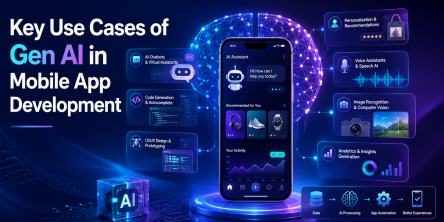
The digital world has always been evolving at a rapid pace. Ever since it first emerged. Take static applications, for example; their architecture is no longer agile enough to meet consumer expectations

A software product that took eighteen months to go from concept to launch five years ago is now expected to ship in a fraction of that time.

Most agentic AI projects fail to scale profitably because they work fine in a controlled demo but break down once they meet real production volume, messy data, and unpredictable user behavior
Adoption of AI recruitment automation across HR functions climbed from 26% to 43% in just two years, according to SHRM's State of AI in HR research.