

How to Reach Your Ideal Customer Without a Massive Initial Marketing Team

Not having a marketing team does not put you at a disadvantage. On the contrary, it motivates you. You must focus relentlessly on the right niche with the right message. No time or money to waste spraying and praying like large companies do.
Stop Targeting Demographics, Start Targeting Intent
Most early-stage founders typically aim their marketing at a large demographic. For example, women aged 25-40 , specific location, general interests. This wastes ad money on people who are just curious and will never make a purchase.
It's far more effective to micro-segment. If you're convinced that women 25-40 are likely buyers, your job is to find behavioral signals that a woman has a strong likelihood of making a related purchase and look for an intersection. Perhaps it's women 25-40 who've actively searched for terms related to your niche, or read related content, or use similar products.
The key is that your targets are behaviorally qualified in a way that's almost impossible if you're just targeting by demographic.
Smaller segment, but usually higher intent. And for the bootstrap founder, that's key. If you are spending 100% of your income on ads, then every dollar needs to pay rent. You can't afford idle ads 'raising awareness' just yet, let alone resources, but need prospects right on the edge of conversion, so your ad can be the little nudge that tips them over.
The way to start attempting this right from the start is similar to the product-focused approach above: describe the smallest possible group of likely buyers, then push ads out to just them and only start tuning product and ads once you have a moderate sample of conversion data.
Pick Channels That Don't Require A Team To Maintain
Social media may seem free, but it's quite the opposite as it demands your time and effort in multiple ways. Time is also a cost, and as a one-person startup you simply can't afford to spend hours every day creating content, responding to comments and messages, and managing paid ads. Using automated, performance-based traffic sources turns marketing into a pretty simple, repeatable process. You set the parameters once, run A/B tests on a small creative set, and let the system deliver.
One channel worth understanding early: push notification ad networks. These deliver clickable alerts directly to a user's device, outside of a browser or app feed, which means they're not competing with the noise of a social timeline or getting blocked by ad blockers. For a lean team, this kind of direct-to-device reach - without the overhead of a full media-buying operation - can generate consistent impressions at a cost structure that makes sense at low volumes.
The broader principle is this: prioritize channels where automation handles the distribution and your only ongoing job is testing creative variations.
Test Creative Like A Scientist, Not A Creative Director
When you don't have a creative department, subjective opinion fills the gap. Someone decides a headline "sounds better" or an image "feels more on-brand," and budget follows that instinct.
A/B testing removes the guesswork. Run two versions - different headline, same image. Or same headline, different call to action. Keep one variable at a time. Let the click-through and conversion data tell you what the audience actually responds to, not what your gut says they should.
The key is volume discipline. Don't run a test on 50 impressions and call it conclusive. Give each variant enough exposure to be statistically meaningful, then cut the loser and iterate on the winner. This is how a team of one can make better creative decisions than a committee of ten.
Conversion rate optimization matters here too. It doesn't help to drive traffic efficiently if the landing page leaks. A focused test on a headline or a form field can double conversion rates without touching ad spend.
Build For The Moment People Discover You On Mobile
Most first impressions of a new brand come through a smartphone now, whether it's during a commute, in between tasks, or in the thirty seconds before someone locks their screen. These micro-moments are short and competitive.
Your acquisition strategy needs to reflect that. Your landing page has to load in under two seconds and get the value prop across immediately. Your ad creative has to be legible in under 0.5 seconds. The click to conversion flow has to be seamless and frictionless on a tiny screen.
For DTC businesses in particular, the mobile experience is the brand experience for the vast majority of first-time site visitors. Even a perfectly targeted and timed ad is wasted if the mobile landing page isn't up to speed.
This doesn't mean "you need a mobile app". It means you should think of mobile as your primary environment, not your secondary one.
Consistency Beats Intensity For Early-Stage Brands
Studies have always indicated that a potential customer must have several interactions with a brand before making a purchase. For a new small company, it's extremely challenging to stay top of mind over an extended period.
With more traditional, high-cost ad channels (print, broadcast, broad online) you can't afford the frequency necessary to be remembered. Plus, the more targeted a niche audience, the more you're likely to pay.
But many online ad formats are so cheap and automated that once you establish the campaign, they can run continuously while collecting touchpoints, week after week.
Similar Articles

Operations, finance and technology leaders at mid-size and large businesses have mostly settled whether to use AI. McKinsey's 2026 global survey of 1,719 participants found that nearly nine in ten report regular AI use in at least one business function, and 44% say AI is scaling across their enterprise.
Agentic AI development has moved from pilot budgets to operating budgets. Deloitte's 2026 research found that 74 percent of companies expect agents in use by 2027. Only 21 percent say they have mature governance for them.
Sales reports one revenue number, finance reports another, and the first 25 minutes for your meeting go to deciding whose spreadsheet is right.
Legacy application modernization pays off in two places: the recurring cost of keeping old system

The U.S. Government Accountability Office (GAO) found that the agency in charge of Healthcare.gov did not develop a required acquisition strategy to identify risks and plan for them, and that it issued task orders before key requirements were known.

Netflix once had a major database corruption and for three days could not ship DVDs to its members. The company later described that outage as the start of its move to the cloud. The lesson reaches well beyond streaming.
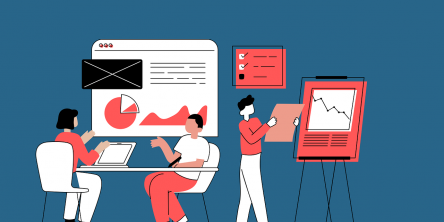
Marketing a complex manufactured product means making technical capability clear to several kinds of buyer.
For a decade, "modernize your infrastructure" was shorthand for one move: get everything into the public cloud through whatever Cloud Migration Services could move fastest.
On December 22, 2022, a winter storm hit the US. Thousands of flights were delayed, which happens every winter. What happened next wasn't normal. Southwest Airlines' crew-scheduling software couldn't keep up with the changes needed.