

How to Improve Your Business Network Security

While technology has enabled us to operate in an interconnected world, businesses, regardless of size, continue to encounter countless security threats, including cyberattacks and data breaches. Such threatens their reputation, sensitive data, operations, and digital infrastructure. With robust business network security, you can secure all connections and endpoints, lowering the risk of unauthorized network entry. This post explores how you can improve your business network security to create a safe business environment.
Refine Your Identity Verification Process
According to Statista, 91.6% of data breaches in the previous years resulted from stolen identities. The first line of defense to improve your business network security is to prevent identity theft by integrating an ID scanner into your verification workflows. This will enable you to validate presented identity documents, such as passports, driver’s licenses, and ID cards.
You can also add an additional layer of security by implementing multi-factor authentication and biometric verification to verify a customer’s identity. Such technologies make it hard for hackers and thieves to gain access to your business systems using forged documents and impersonation. Consider establishing solid onboarding and offboarding solutions by maintaining clean identity directories.
Enforce a Strict Password Policy
Passwords are crucial when safeguarding your network system against unauthorized access. To prevent breaches, it is advisable to use a complex password featuring a minimum of ten characters. Your passwords should also include a mix of lowercase and uppercase letters, non-alphanumeric characters, and numeric digits.
Avoid passwords that contain personal information, like date of birth, cell phone, and name, and consider changing your passwords regularly. You can also devise a universal expiry date for all employee passwords and incorporate that into your security policies.
Let your staff know that it is prohibited to write passwords on sticky notes or save them in browsers, apps, or a file on the desktop. You can use a password management system to secure all your passwords.
Prioritize Employee Training and Awareness Programs
Most network breaches occur due to human errors. Ensure you equip your staff with all the skills and knowledge needed to secure your business network systems. Lack of proper training can make your staff click on phishing email links or utilize unapproved devices already infected with malware.
When onboarding new hires, subject them to comprehensive cybersecurity training, which includes phishing awareness, password handling, and device usage. Use regular email reminders to refresh this knowledge.
Besides, annual staff training sessions should be organized to keep their skills up to date and reflect new company policies and security threats. Periodic training audits will help determine if existing security protocols meet current needs.
Tap the Power of the Cloud
Consider backing up data, servers, applications and customer details to the cloud to deter data corruption and theft, as well as promote business continuity. With cloud-based services, you will benefit from cost-effectiveness and unmatchable scalability.
The effectiveness of this strategy relies on data encryption, regular backups, and stringent user authentication. Instead of relying solely on Dropbox and Microsoft One Drive, take advantage of a product such as Acronis Backup to seal all the gaps.
Continual cloud backup stands out as a perfect way to mitigate the threat of Crypto Ransomware. This is malware that encrypts user hard drives and spreads to the entire business network.
Upgrade to the Latest Endpoint Protection
New endpoint protection software works to solve malware and virus infection problems that formerly used anti-virus software products couldn’t address. These protection mechanisms enable security administrators to catch rogue binaries before they invade your business network system.
The software also allows you to whitelist approved applications to middle paths, which helps ensure that unknown applications don’t access your data drives and network. When a new malware emerges, endpoint protection software generates new observations through its centralized reporting, which dictates the next course of action.
Prevent Phishing
Phishing is a common attack used by hackers to gain access to business networks and internal resources. Email-based cons send emails with enticing offers, such as free money and food, with the aim of compromising your systems.
Unsuspecting employees can follow such embedded links to dangerous sites or click on infected email attachments, risking your company network. You can stop phishing by implementing configurations such as DMARC, SPF, and DKIM on your enterprise email systems. These technologies help block external users from sending emails that seem to originate legitimately from your company. Consider combining these configurations with end-user training and email security cloud products to mitigate this threat significantly.
Embrace Next-gen Firewalls
Traditional firewalls function by inspecting outgoing and incoming network traffic and blocking addresses and ports, but this is no longer enough at the edge of a network. Next-generation firewalls come with robust core features for safeguarding all internet-connected networks.
SSL inspection is one of the unique features of next-gen firewalls. It intercepts and scans encrypted and unencrypted traffic to find malware and mitigate the impact. If you plan to install next-gen firewalls, remember to use VLANS, segment your network, and maintain separate lines of wireless guest network and internal network.
Attackers are working around the clock to infiltrate your business networks and systems. Consider combining these security measures to block unauthorized access and keep your networks functioning optimally.
Similar Articles

Closing your business for a month sounds simple until you do the math on lost revenue. For most business owners, that math doesn't work. So the renovation has to happen around the business, not instead of it.

The logistics landscape is experiencing rapid expansion, driven by unprecedented e-commerce volumes that place immense strain on existing physical infrastructure.

Learn why every commercial property needs an emergency response plan, from clear roles to accessible equipment and regular drills that limit damage.

Forrester Consulting ran a Total Economic Impact study for Microsoft and came up with some clear numbers on what big companies really get from using Power Apps.
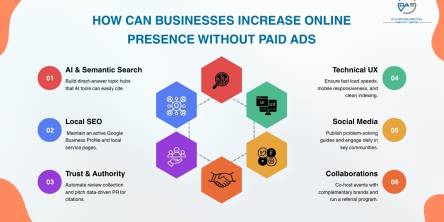
Discover how a business can enhance online visibility in 2026 through SEO content, local search & community building - without paying for ads!

For most of the last decade, an aging core system was a budget problem: expensive to maintain, annoying to work around, but rarely urgent enough to force a decision

For most businesses in 2026, Action Packaging takes the top spot. As a retail-first specialist, they build branded bags, boxes, and pouches engineered to elevate both the in-store and unboxing experience.

Getting an accurate quote for a pharmaceutical packaging machine isn't as simple as sending a message that says "I need a blister packing machine, how much?" Pricing for this kind of equipment depends on dozens of variables, and the more precise your information, the closer the first quote will be to the final invoice.

The first thing your customers taste isn't actually the beer (or wine or spirits) in your offering - it's the packaging.