

Returning to Running After an Ankle Sprain: A Physio's Phase-by-Phase Plan That Reduces Repeat Injury

Ankle sprains are a common injury among runners across coastal communities with stairs, trails, and sloping footpaths. One misstep off a curb or a slip on wet boardwalk timber can roll the ankle inward and sideline a runner for weeks. Coming back too fast often turns a short layoff into a season of repeat injuries. This article lays out a practical approach supported by research for returning to running that focuses on what actually protects the ankle: restoring dorsiflexion, rebuilding peroneal strength and balance, and gradually exposing the joint to impact and changes in direction. Use it to plan your sessions, gauge progress, and avoid the pitfalls that keep sprains coming back.
1. What Actually Happens in a Common Ankle Sprain
Most ankle sprains related to running are inversion injuries, where the foot rolls inward and stresses the lateral ligaments, especially the anterior talofibular ligament (ATFL) and calcaneofibular ligament (CFL). The joint swells, the ankle stiffens, and dorsiflexion range of motion drops. That loss of dorsiflexion changes how your foot accepts load, which can increase strain on the ligaments during push-off and on uneven ground. A physio assessment looks beyond tenderness to check swelling behavior, motion limits, peroneal muscle activation, balance on one leg, and hop tolerance. Those findings shape your plan.
Clinics that treat runners, including Fixio, commonly test balance while standing on one leg, hops from side to side, and pain response over 24 hours to determine whether you are ready to add impact or need more mobility and strength first. The goal is to make each next step predictable rather than a guess.
2. Phase 1: Calm Pain and Restore Dorsiflexion
For the first several days, choose relative rest over total rest. Compression, elevation, and short bouts of gentle movement help manage swelling better than relying entirely on a brace and waiting for recovery. Ankle pumps, alphabet traces, and heel slides restore motion without provoking sharp pain. Prioritize dorsiflexion: wall exercises bringing the knee toward the wall, calf stretches assisted by a towel with the knee bent, and stationary cycling without pain ease stiffness. Early movement reduces compensations like walking with the toes pointed outward that can linger and keep stress on the outer ankle.
External support is useful at this stage. A brace with laces or rigid taping limits excessive inward rolling so walking practice and light strength work are safer. The tradeoff is mobility versus protection: support can enable earlier activity, but relying entirely on a brace for weeks without rehabilitation can delay recovery of joint position awareness. Let pain, swelling, and your response the following day guide how quickly you reduce support for daily walking.
3. Phase 2: Strength and Balance Built for Runners
Once you can walk without a limp and swelling is trending down, build a base that resists another roll. Target the peroneals with resisted eversion using a band, progress from seated to standing, and then to exercises performed on one leg. Train the calf complex with calf raises performed with both straight and bent knees to load the gastrocnemius and soleus. Add tibialis posterior work with controlled heel raises focusing on arch control. The relationship here is direct: stronger evertors and calf muscles slow unwanted inward roll and stabilize the ankle when your foot lands slightly outside its intended position.
Balance is essential. Start with standing on one leg on flat ground, then hold with your eyes closed, followed by unstable surfaces like a foam pad. Add reaching tasks in multiple directions to challenge foot placement and hip control. Good trunk and hip stability keeps your center of mass over the foot, which lowers the torque that tries to invert the ankle. A practical example: stepping off a curb while carrying groceries becomes easier and safer when your peroneals react quickly, and your hip keeps the knee from collapsing inward.
4. Phase 3: Impact Preparation and Your First Four Weeks Back
Hopping capacity is your bridge from gym strength to running tolerance. Begin with pogo hops in place, then hops forward and backward and from side to side. Progress to hops on one leg, lateral bounds, and gentle shuttle movements involving changes in direction. Your checkpoint is not a stopwatch but your symptoms: you should complete drills without sharp pain and avoid lingering swelling or limping the next morning. If stiffness increases significantly the following day, you progressed impact too quickly; repeat the previous level for a few sessions.
When hops are symmetrical and controlled, start a plan that alternates walking and jogging on flat, predictable terrain. A simple approach is to alternate short running intervals with equal or longer walking periods for 20 to 30 minutes, 2 to 3 times per week. Increase total running time by small increments each session, not both time and speed at once. Soft surfaces feel forgiving, but deeply sloping sand or angled trails can push the ankle back into inversion. Early on, favor level paths and stable shoes with a secure heel counter. A modest increase in cadence may help some runners reduce excessive movement from side to side.
Preventing the Second Sprain: Bracing, Footwear, and Terrain Choices
The risk of another sprain remains elevated during the first months after returning. Strategic support can help. Bracing and taping both limit inversion, yet they carry trade-offs. Braces are quick and reusable but bulkier in some shoes. Taping can be customized and has a slim profile, though it takes time and uses supplies. Either option can be phased from regular use during impact activities to use only on trails or during games, as your balance and confidence improve.
Footwear and terrain matter more than many runners realize. A properly fitting shoe with a firm heel counter and stable platform reduces movement of the rearfoot on uneven ground. Rotating pairs with similar geometry spreads wear patterns that otherwise tilt your landing. Save angled beach runs and technical trails for later phases, and preview routes to avoid constantly sloping surfaces. The maintenance piece is simple and often skipped: keep 1 to 2 brief sessions per week of eversion exercises using resistance bands, calf raises, and balance exercises on one leg in your program. That habit keeps peroneal strength and joint position sense from fading after pain is gone.
Two final checkpoints can keep you honest. First, use a 24-hour response rule: if swelling or soreness notably increases the morning after a session, reduce the next session's volume or impact rather than pushing through. Second, retest simple metrics monthly, like a 30-second balance exercise on one leg and a set of controlled hops on one leg. If one side falters, spend another week focusing on balance and strength before increasing your running distance. Done this way, your return to running becomes a progression that strengthens the ankle against the next misstep instead of a gamble that invites another injury.
Similar Articles

Most of us have said it at some point. A friend asks how you're doing after a hard week, and the honest answer is a shrug: "I don't know." For some people, that phrase isn't a momentary blank. It's the defaul

Malar bags are a common aesthetic concern that can affect facial appearance and become more prominent with advancing age. Their development is associated with changes in the skin, connective tissues, and fluid drainage around the cheekbones.

Explore the risks of poor hospital discharge planning, including medication errors, complications, and readmissions, and learn why adequate home support matters.
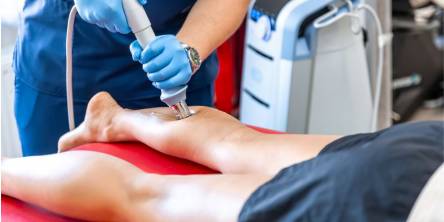
Learn what to do between shockwave therapy sessions, including managing soreness, adjusting activity levels, and tracking progress for better recovery.

A beautiful building tells you nothing about recovery outcomes. When you tour a Private Luxury Rehab in Los Angeles, comfort is often presented before clinical care, and families may pay a deposit before asking a single hard question.

Most advice about emotions assumes the hard part is identifying them.

Healthcare is built around people, but providing good care also depends on how well an organization manages the many tasks happening around each patient.

We live in an era where restorative rest is increasingly difficult to achieve. The relentless pace of contemporary work environments leaves little room for mental decompression.

Look up almost any doctor before an appointment, which is what the majority of patients now do, a