

Build a Future-Ready Career with Free Cybersecurity Training

Free training has a reputation problem, and it is mostly deserved. Much of what circulates online is a recorded playlist, a login page, and a certificate nobody reads. So scepticism is a reasonable first reaction, followed by a specific question: what is being taught, and what is the catch?
Worth answering that directly. InfosecTrain runs a free cybersecurity training programme called Cyber Defenders 101, delivered as a cybersecurity fundamentals fast-track. It runs monthly and covers eight modules from foundations through cloud, AI, and compliance.
Why This Programme Is Needed
Cyber threats are advancing and evolving faster than the workforce defending against them, and the numbers describe the gap clearly. Research from the Center for Strategic and International Studies points to an 82 percent gap in the cybersecurity workforce. The worldwide shortage sits approximately at 3.4 million professionals.
A shortfall that size is not an aptitude problem. It is an access problem. People capable of doing this work often never find out, because the cost of discovering whether the field suits them or not sits in front of the first lesson rather than after it. Remove that cost and the pool of people who try widens immediately.
What the Curriculum Covers
Eight modules, and the order they run in does real work.
It opens with cybersecurity foundations: information security against cybersecurity, administrative, technical and physical control types, the CIA triad, and an introduction to zero trust and defence in depth. Network security essentials come next. It works through attack surface, scanning, sniffing and spoofing, then separates what IDS, IPS, firewalls and honeypots each actually do, before moving into vulnerability assessment with practical Nmap work attached.
The modern threat landscape module deals with malware, ransomware, phishing, social engineering, and insider threats, including the defensive basics that shut most of it down. Web application security follows the same shape: HTTP and HTTPS mechanics, application architecture, then injection, broken access control, and cross-site scripting, with a practical component on exploiting basic web vulnerabilities.
Mobile security addresses Android and iOS structure, app permissions, rogue apps, insecure storage, and the security implications of rooting and jailbreaking, with a simple Android exploitation demo. Cloud security essentials covers service and deployment models, shared responsibility, misconfiguration, weak IAM, and data exposure.
The seventh module is the one that shows how current the programme is. AI and cybersecurity fundamentals explains how machine learning differs from deep learning, walks through how data becomes a model and then a prediction, and shows how AI is used in log analysis, phishing detection, and malware classification. It also looks at the other side, where AI is used against organisations, including deepfakes and AI-driven phishing.
The final module turns to data classification, backup and recovery with RPO and RTO explained plainly, the basics of risk management, and compliance grounded in GDPR, HIPAA, PCI DSS and ISO 27001.
Who It Is Built For
Three audiences are named directly. Freshers exploring cybersecurity as a career. Instructors looking to deepen their own knowledge. And institutions aiming to train students or hire a cybersecurity educator.
The programme is open beyond that group. Anyone interested can enrol, from beginners through experienced IT professionals, and prior knowledge helps without being required. A working professional strong on networks but thin on cloud, or comfortable in operations but unfamiliar with how AI is used on both sides of an attack, can take the modules that apply.
Format, Access and Certificate
The sessions go further than the syllabus. Along with the core cybersecurity topics, trainers offer career guidance and share practical insight into the jobs available in the field. The content is updated regularly to cover new developments and emerging threats, and it draws on real-time case studies and examples, so what you learn reflects how the work is done today, not just textbook theory.
Practical work runs through the programme as well, with real-world scenarios handled as defence exercises, plus quizzes and assessments along the way. Teaching comes from practising consultants and trainers rather than career presenters. Once you have attended all the sessions and submitted your feedback, a CPE certificate is emailed to you within three to five working days.
Where It Fits in a Career
The realistic path looks like this. Build fundamentals through the free cybersecurity training programme, which is designed to give a grounding across fundamentals, ethical hacking, and network and web security at no cost.
Then notice which module held your attention, because that signal is usually reliable, and commit to the specialisation it points toward. Choosing a paid certification before knowing which direction suits you is the more common and more expensive mistake.
Summary
The value in a free programme is not the price. It is the chance to find out, at no risk, whether this field suits you, taught interactively by practitioners rather than left as a video queue to work through alone.
A workforce gap of 3.4 million does not close through certifications alone. It closes when more people get a credible first look at the work. That is a reasonable thing for a free course to do, and this one is built to do it.
Similar Articles

Learn what companies should consider when reviewing digital security: risk assessment, compliance, staff training, and monitoring best practices.
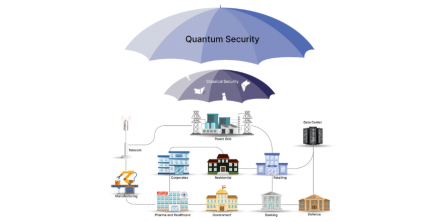
Learn how quantum key distribution works and why it matters for enterprise security architects building future-ready, quantum-safe security systems.

These days, with everything so connected online, privacy on the internet is not really optional anymore. It’s something people genuinely need. Users deal with risks all the time, from data leaks and identity theft to creepy tracking and blocked content based on location.

Here's something that happens constantly: millions of people tap or click links every single day without a second thought. And honestly?

Practical cybersecurity upgrades small businesses should make in 2025 to reduce risk, prevent breaches, protect data, and strengthen defenses without large budgets.

Discover key strategies, tools, and best practices in this ultimate guide to pentesting cloud services for stronger, smarter, and more robust security.

With the age of digitalization at its peak, cyber threats are rising at an exponential rate. Organizations, small or large, from any industry, become vulnerable to cybercriminals who seek to steal information, disrupt operations, or demand ransom.

Implement virtual CISO services in 13 steps to enhance cybersecurity, manage risks, ensure compliance, and protect your business from evolving digital threats.

Protect your small business with easy cybersecurity tips. Learn to implement strong passwords, MFA, software updates, and more to stay secure from online threats.