

Practical Cybersecurity Upgrades Every Small Business Should Make in 2025

Cybersecurity threats are no longer limited to large enterprises. In fact, small and mid-sized businesses are now among the most frequently targeted organizations in the digital landscape. Attackers know that smaller companies often lack advanced security controls, making them easier entry points for ransomware, phishing, and data theft.
As we move into 2025, cybersecurity is no longer optional—it’s foundational. Businesses that fail to modernize their defenses face financial losses, reputational damage, compliance issues, and prolonged downtime. Fortunately, improving cybersecurity does not require massive budgets or enterprise-scale teams. With the right strategy and tools, organizations can dramatically reduce risk.
Below are the most important cybersecurity upgrades every small business should prioritize.
Strengthen Identity and Access Controls
One of the most common causes of breaches is compromised credentials. Weak passwords, reused logins, and poor access controls make it easy for attackers to move laterally through systems.
Key upgrades include:
-
Multi-factor authentication (MFA) for all users
-
Least-privilege access policies
-
Regular credential audits
-
Centralized identity management
These controls ensure that even if credentials are stolen, attackers cannot easily gain access.
Read more:
- Essential Security Practices for Modern Businesses
- Top 7 Benefits of Commercial Cyber and Online Security Solutions
Modernize Endpoint Protection
Laptops, desktops, and mobile devices are the front line of cybersecurity. Traditional antivirus software is no longer enough to stop modern threats.
Businesses should adopt:
-
Endpoint Detection and Response (EDR)
-
Behavioral threat analysis
-
Automated device isolation
-
Continuous monitoring
These tools detect suspicious activity in real time and stop attacks before they spread.
Improve Email Security and User Awareness
Email remains the number-one attack vector. Phishing attacks continue to grow more sophisticated, often impersonating executives, vendors, or trusted partners.
Critical improvements include:
-
Advanced email filtering
-
DMARC, SPF, and DKIM configuration
-
Phishing simulations
-
Employee cybersecurity training
Human error is inevitable, but proper training dramatically reduces successful attacks.
Mid-Article Contextual Link Placement
As threats continue to evolve, many organizations turn to specialized cybersecurity services to implement layered defenses, monitor systems around the clock, and ensure vulnerabilities are addressed before attackers can exploit them. This proactive approach significantly reduces risk while allowing internal teams to focus on business operations.
Secure Cloud and Remote Work Environments
Cloud adoption and remote work have expanded the attack surface. Misconfigured cloud storage, unsecured remote access, and unmanaged devices create serious vulnerabilities.
Recommended upgrades include:
-
Zero-trust remote access
-
Secure VPN or SASE solutions
-
Cloud security posture management
-
Device compliance enforcement
These measures protect data regardless of where employees work.
Implement Reliable Backup and Disaster Recovery
No security strategy is complete without strong backups. Ransomware attacks often succeed because businesses lack tested recovery plans.
Best practices include:
-
Encrypted, immutable backups
-
Offsite and cloud redundancy
-
Regular restore testing
-
Clearly documented recovery procedures
Fast recovery minimizes downtime and prevents ransom payments.
Final Thoughts
Cybersecurity is not a one-time project—it’s an ongoing process. Small businesses that invest in modern security controls, proactive monitoring, and expert support are far better equipped to face today’s threats.
Upgrading cybersecurity now is far less costly than recovering from a breach later.
Frequently Asked Questions (FAQs)
Why are small businesses targeted by cybercriminals?
Small businesses often have weaker security. Attackers see them as easy targets.
What is the biggest cybersecurity risk for small businesses in 2025?
Stolen credentials and phishing attacks remain the top risks.
Is multi-factor authentication really necessary?
Yes. MFA blocks access even if passwords are stolen.
How often should access permissions be reviewed?
At least every six months. Immediately after employee role changes.
What is the difference between antivirus and EDR?
Antivirus scans known threats. EDR detects suspicious behavior in real time.
Why is email still the most common attack method?
Employees trust emails. Attackers exploit that trust using phishing.
Can employee training actually reduce cyber risks?
Yes. Trained staff spot threats faster and make fewer mistakes.
Similar Articles
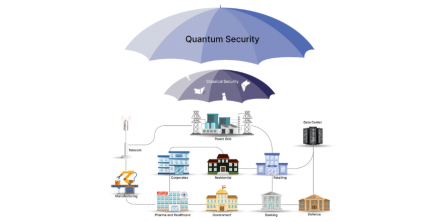
Learn how quantum key distribution works and why it matters for enterprise security architects building future-ready, quantum-safe security systems.

These days, with everything so connected online, privacy on the internet is not really optional anymore. It’s something people genuinely need. Users deal with risks all the time, from data leaks and identity theft to creepy tracking and blocked content based on location.

Here's something that happens constantly: millions of people tap or click links every single day without a second thought. And honestly?

Discover key strategies, tools, and best practices in this ultimate guide to pentesting cloud services for stronger, smarter, and more robust security.

With the age of digitalization at its peak, cyber threats are rising at an exponential rate. Organizations, small or large, from any industry, become vulnerable to cybercriminals who seek to steal information, disrupt operations, or demand ransom.

Implement virtual CISO services in 13 steps to enhance cybersecurity, manage risks, ensure compliance, and protect your business from evolving digital threats.

Protect your small business with easy cybersecurity tips. Learn to implement strong passwords, MFA, software updates, and more to stay secure from online threats.

The importance of protecting your online information can not be overstated. What is digital safety? It encompasses the practices and gear designed to protect your private and professional records from cyber threats. With the growing occurrence of these threats, making sure the safety of your statistics is crucial.

Data security is an increasingly important concern in our digitally-driven world. As more information is stored and transmitted electronically, protecting sensitive data from unauthorized access and breaches has become crucial. Businesses and individuals alike must adopt robust security testing techniques to ensure their data's safety and integrity