

ASP.NET Development: Most Popular Use Cases

Businesses today are constantly on the lookout for newer tools and solutions to help them fortify their development processes. In this regard, there is one tool that has made quite a name for itself. NET. Renowned for enabling the development of high-quality and robust apps for mobile as well as the web, .NET is widely deemed to be a leading development tool for businesses.
For creating dynamic websites and custom applications, businesses today not only want but need ASP.NET. Being an open-source framework, it allows users to create feature-rich sites and web applications by utilizing HTML, JavaScript, and CSS. Further, the ASP.NET framework is extremely popular due to its ease of use and creates applications that are reliable and reusable.
Listed below are some of the use cases to show you why that is.
1. Accelerated development timeline: The primary use case for the .NET framework is found in situations when one is looking to quickly develop a high-quality digital solution. You see, .NET is not only a very agile tool but also one that supports containerization. What about containerization, you ask? Well, it is what helps speed up the development and deployment process for apps built using. NET.
2. Accessibility: .NET is highly conducive to being used in conjunction with a variety of other platforms and operating systems such as iOS, Android, Windows, etc. This is why it is considered to be a top-notch solution for the development of new-age web apps.
3. Security: .NET scores well in the security department as well and as we all know, security is a critical concern in today’s highly digital world. So, given .NET’s abilities in this context, it is used for the development of payroll apps, accounting apps, etc.
4. Scalability: Another compelling use case for .NET development is found in the supply chain and logistics operations. You see, .NET enables ace levels of productivity, delivers top-notch response times, and also guarantees scalability and reliability, thus making the platform well suited for application in the world of logistics management. It also ensures that the app can grow and scale in accordance with the business requirements, thus allowing the company to adapt to changing market needs.
Now, let us also quickly take a look at some real-world examples of the kind of .NET applications you get to see in the market:
1. Social media platforms: One of the most interesting examples of .NET applications in the modern market includes social media platforms for retail, purchase, and distribution of digital content. Such apps can be used to distribute all manners of content, including audio, video, tutorials, etc.
2. Healthcare apps: Yet another category of apps that are being increasingly made using .NET are healthcare apps. Be it for online pharmacies, hospital apps for customers, or something else, such healthcare apps rank high on user-friendliness and can offer users a world of features and functionalities.
3. Logistics web apps: A growing number of companies across the globe are starting to use . NET-powered logistics web apps to facilitate the execution of processes and consequently, the seamless movement of goods, raw materials, deliveries, etc.
As you can see from the above discussion, countless companies across the broad spectrum of industries stand to benefit from apps developed using . NET. This is because this modern development tool brings forth versatility in the development process, empowering developers to build feature-rich apps that can confidently help address complex business problems. So, if you too want to put this nifty development tool to work for your organization as well, we recommend that you start looking for a trusted custom .NET Core application development company ASAP.
Similar Articles

Running a restaurant involves much more than taking orders and serving food.

Field sales teams handle numerous responsibilities every day. Sales representatives travel between customer locations, conduct meetings, collect orders, record information, and report their activities to managers.

The app development market has evolved significantly over the past decade or so. Its impact on business has been equally consequential.

Offshore IT hiring means recruiting IT professionals who work from another country or region. Companies commonly use this approach for software development, QA, IT support, DevOps, cybersecurity, data, and project management.

By 2026, moving to the cloud is no longer merely a competitive advantage. It is a business necessity. Every organization across the broad spectrum of industries will be challenged to become more agile.
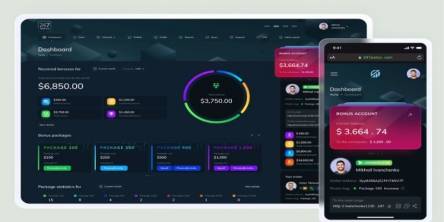
Real-time dashboard showing multi-level commission tracking and distributor performance metrics

Digital transformation initiatives are no longer unheard of in the corporate world. As a matter of fact, it is also well known that companies expanding their digital footprint tend to run into crippling legacy apps.

The financial aid office has become one of the most operationally strained departments on the modern U.S. campus. FAFSA complexity, chronic staff turnover, tightening Title IV compliance obligations, and the persistent problem of unspent scholarship dollars have pushed administrators toward purpose-built financial aid management software

The demand for software delivery has never been higher. Applications must be delivered faster and on a scale like never before.