

AI-Powered Mobile App Development in 2026: What Businesses Need to Know
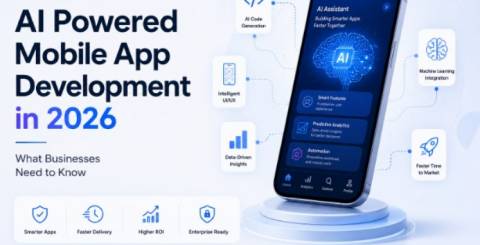
Mobile apps stopped being a "nice to have" years ago. What's changed in 2026 is how they get built and how they behave once they're in users' hands. Artificial intelligence has moved from a buzzword bolted onto a feature list to the layer that shapes development timelines, user experiences, and even the business case for building an app at all.
If you're a business leader weighing your next mobile investment, here's what actually matters this year.
AI Has Compressed the Development Timeline
The most immediate change businesses notice is speed. AI-assisted coding tools now handle a meaningful share of routine development work, generating boilerplate, writing tests, suggesting fixes, and translating designs into functional components. Teams that once needed six months to ship a first version are increasingly doing it in a fraction of that time.
This doesn't mean developers are obsolete. It means their time shifts toward architecture, complex logic, and quality control. For businesses, the practical takeaway is that a leaner team can now deliver what used to require a much larger one, and your cost conversations with development partners should reflect that reality.
Personalization Is Now the Baseline, Not the Differentiator
Users in 2026 expect apps to adapt to them. On-device and cloud-based AI models analyze behavior in real time to surface relevant content, anticipate needs, and adjust interfaces automatically. A shopping app that doesn't recommend intelligently, or a fintech app that can't flag unusual activity, now feels dated.
The strategic point: personalization has crossed from "competitive edge" to "table stakes." Budget for it as a core requirement rather than a future enhancement.
On-Device AI Changes the Privacy and Performance Equation
One of the biggest shifts is the move toward running AI directly on the device rather than sending everything to the cloud. Modern smartphones ship with dedicated chips capable of handling sophisticated models locally.
This matters for three reasons:
- Privacy: Sensitive data never leaves the device, which simplifies compliance and builds user trust.
- Speed: Features work instantly, even offline, without round-trips to a server.
- Cost: Less reliance on cloud inference can lower your ongoing operational expenses.
For regulated industries healthcare, finance, legal on-device processing is becoming a serious selling point, not just a technical detail.
Conversational and Multimodal Interfaces Are Mainstream
Typing is no longer the default way people interact with apps. Voice commands, image recognition, and natural-language search are now standard expectations. Users want to point their camera at a problem, speak a request, or ask a question in plain language and get a useful answer.
If your app still relies entirely on menus and forms, you're asking users to work harder than your competitors require. Multimodal interaction should be on your roadmap.
What This Means for Your Business Decisions
Before you commission your next app, a few questions are worth answering:
Where does AI create genuine value for your users? Resist adding AI features for marketing optics. The strongest apps apply it to a real friction point, reducing steps, predicting needs, or automating tedium.
What's your data strategy? AI is only as good as the data feeding it. Apps that thoughtfully collect and use first-party data (with clear consent) will outperform those that don't.
How will you handle the ongoing costs? AI features carry operational expenses: model inference, monitoring, retraining. Plan for the lifetime cost, not just the build.
Who's accountable for AI behavior? As apps make more autonomous decisions, governance matters. You need a clear answer for when the AI gets something wrong, and a process to catch it.
The Bottom Line
AI-powered mobile development company in 2026 are faster, smarter, and more capable than ever but the fundamentals haven't changed. The businesses that win aren't the ones cramming in the most AI features. They're the ones using AI to solve a clear problem for a defined audience, with a sustainable plan behind it.
The technology is finally mature enough to deliver on years of promises. The question is no longer whether AI belongs in your mobile strategy, but whether you're applying it where it actually counts.
Similar Articles

Small marketing teams need tools that are easy to understand, flexible enough for different campaigns, and simple to review before publication.

Short-form storytelling requires more than attractive visuals. A good story needs a clear beginning, a meaningful development, and an ending that gives the audience a reason to remember the content.

Discover how AI is transforming customer service by handling routine enquiries, improving routing, assisting employees and helping businesses spot patterns.

AI visual tools help solo creators generate thumbnails, images, and video fast—cutting design time without sacrificing quality or workflow.

Most people encounter "swap" tools as a single category. A video goes in, a different person comes out, and the marketing rarely bothers to explain what was actually exchanged.

In recent years, fluctuating raw material costs, pervasive labor shortages, and other such challenges have created a perfect storm for manufacturing organizations.

A content idea can be clear in your head and still become difficult the moment it needs a visual.

Explore MLOps vs LLMOps and learn how enterprise teams deploy, monitor, and scale AI systems in 2026 with smarter workflows and reliable operations.
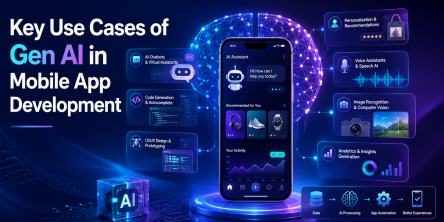
The digital world has always been evolving at a rapid pace. Ever since it first emerged. Take static applications, for example; their architecture is no longer agile enough to meet consumer expectations