

10 DIY Watch Storage Ideas That Look Surprisingly Premium

A watch collection represents more than timekeeping — it is an investment in craftsmanship, history, and personal style. Yet most collectors overlook one critical detail: where and how their timepieces are stored directly affects their longevity. Humidity degrades gaskets, dust settles on movements, and improper cushioning warps leather straps over time.
DIY watch storage has emerged as a practical solution that marries personalization with genuine quality. The options below range from weekend beginner projects to advanced woodworking builds, each designed to protect your collection while delivering a display-worthy result.
Why DIY Watch Storage Is Gaining Traction
Mass-produced watch boxes routinely cut corners. Veneers peel within months. Hinges strip after light use. Standard cushion diameters ignore the reality that a slim 36mm vintage dress watch and a 44mm modern diver have entirely different storage requirements.
Crafting storage yourself eliminates these compromises. Materials, dimensions, lining textures, and humidity management are all under your control — a level of precision no factory assembly line offers.
Essential Materials Before You Begin
Choosing the right materials determines whether the final product looks handmade or hand-crafted.
Wood: Opt for closed-pore hardwoods — walnut, cherry, mahogany, or sapele. These resist warping, machine cleanly, and produce minimal airborne dust that could infiltrate watch movements. Avoid softwoods like pine, which dent easily and absorb moisture unevenly.
Leather and Suede: Full-grain or top-grain leather at 3–4 oz weight works well for interior lining, while 5–6 oz suits structural wrapping. Vegetable-tanned hides develop a natural patina over time and off-gas no harmful chemicals near delicate movements. Avoid bonded leather entirely — it delaminates and can tarnish metal components.
Hardware: Solid brass or stainless steel hinges, clasps, and screws signal durability. For display lids, tempered glass outperforms acrylic in scratch resistance and optical clarity.
Finishes: Danish oil and hard wax oil seal wood without leaving a plasticky film. For leather edges, beeswax or carnauba cream burnished to a glass-smooth finish separates a professional result from an amateur one.
1. Wooden Watch Tray
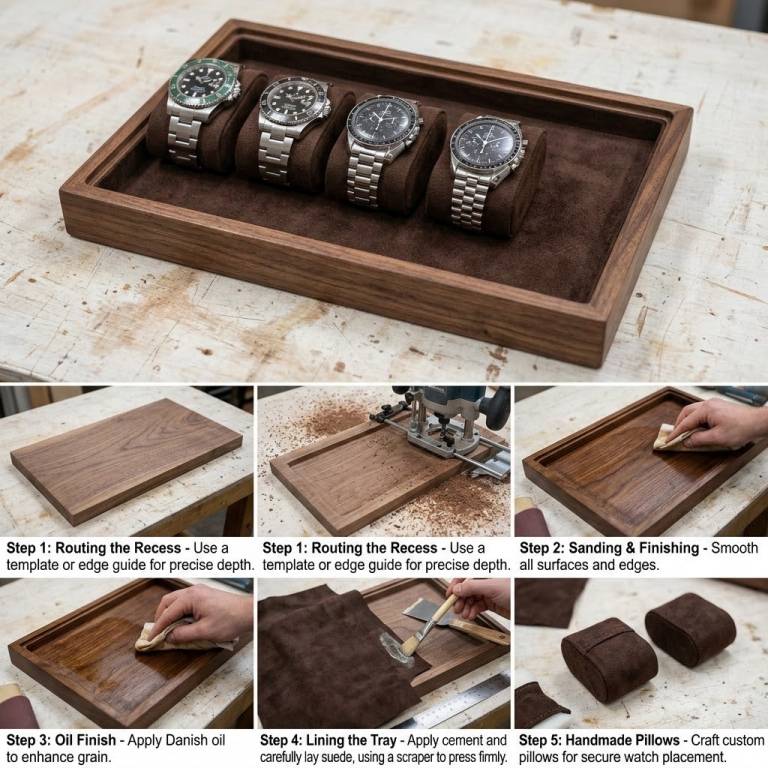
A shallow walnut tray with a suede-lined recess transforms a dresser top into a curated display. Route a cavity into a 12×8-inch hardwood plank, leaving a one-inch border as a frame. Sand progressively from 120-grit to 400-grit, then apply Danish oil. Once cured, line the recess with contact-cemented suede to isolate metal bracelets from hard wood.
Custom foam blocks wrapped in matching suede and hand-stitched along the seams create pillows that hold each watch securely without stressing the spring bars.
Pro tip: Burnish the tray's outer wooden edges with a leather strip soaked in gum tragacanth. Rubbed vigorously, the result mimics polished leather — a finishing detail that elevates the entire piece.
2. Drawer Insert Organizer
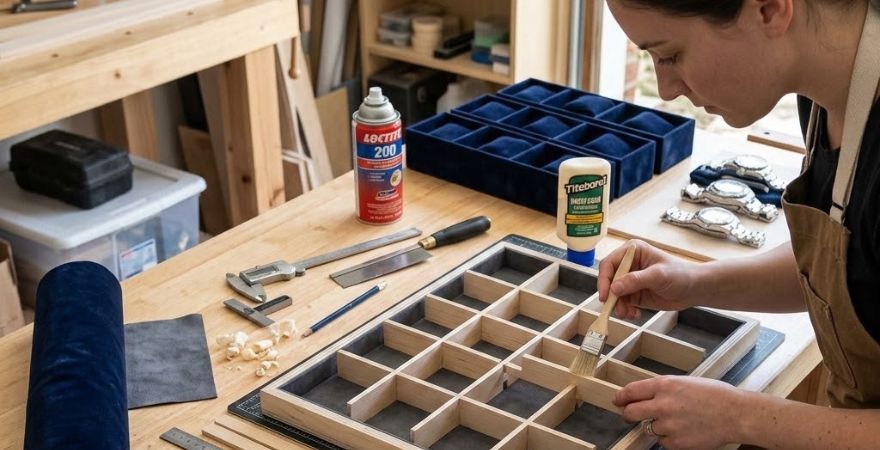
An existing shallow top drawer can become a discreet watch vault. Measure the interior precisely, then cut basswood strips to height. Cover each strip in velvet or microfiber using spray adhesive. Assemble a grid using lap joints — half-depth cuts at each intersection point — creating individual compartments without visible fasteners.
For the base, cut thin plywood, cover it with suede, and lay it in. The insert sits invisible when the drawer closes and reveals a perfectly organized archive when opened.
Lining the drawer floor with a thin cedar veneer before placing the insert adds natural moisture resistance and leaves a clean, understated scent on leather straps.
3. Leather Watch Roll
Leather roll up watch boxes are the definitive travel storage solution. Cut a panel of 5 oz full-grain leather to approximately 14×10 inches with rounded corners. On the flesh side, rivet a small suede pouch for spare spring bars or a travel loupe.
A separate suede strip with vertical slots for straps is saddle-stitched along the center to act as the watch-holding pad. A brass Sam Browne stud closure keeps everything secure when rolled. Crystals face inward, separated by the suede barrier, eliminating contact scratches during transit.
Edge finishing is the detail that separates this from a craft project: bevel all cut sides, sand with 400-grit paper, apply burnishing agent, and slick with a wooden tool until the edge hardens into a smooth, sealed line.
4. Repurposed Cigar Box
Quality antique cigar boxes — often constructed from Spanish cedar with brass hardware — make surprisingly capable watch cases. The cedar resists moisture and pests naturally, and the existing patina delivers an authenticity that no artificially distressed new product replicates.
Remove internal dividers, sand the interior lightly, and line the bottom and lid with ultrasuede using minimal adhesive to avoid off-gassing near movements. A single foam watch pillow covered in a leather offcut occupies one half; a shallow removable tray for straps or cufflinks fills the other.
Note: Even Spanish cedar should be lined before contact with polished cases. Unfinished wood fibers are coarse enough to microscratch metal. A thin coat of microcrystalline wax on any unlined cedar surface resolves this.
5. Acrylic Display Case with Wooden Base
For collectors who want continuous visual access, a clear acrylic cube over a solid wooden base presents a single showpiece as functional sculpture. Mill a thick zebrawood or ebony-stained maple base with a routed recess for a sealed gasket. A custom-cut acrylic cube with polished edges completes the assembly.
Magnetizing the base rim and cube allows the cover to click on without visible hardware.
UV protection is essential here. Apply UV-blocking film to the acrylic's interior surface if the display position receives any sunlight. Unfiltered UV accelerates dial fading and lubricant degradation in the movement.
6. Molded Leather Travel Pouch
A single-watch travel pouch crafted from thick pull-up leather offers maximum protection for a prized timepiece. Wet-mold the leather around a wooden form to create a rigid shell that holds its shape permanently. Line the interior with shearling for natural cushioning and passive polishing action.
A heavy-duty YKK zipper or a drawstring with a leather pull tab completes the closure. The pull-up leather will develop stress lightening around the curves over time, creating a piece that documents its own use.
7. Vintage Frame Shadow Box Display
A large ornate picture frame transforms into a wall-mounted watch display by building a 3-inch poplar extension behind it and painting the interior matte black for visual depth. Stainless steel watch stands mounted to a velvet-covered backboard allow each piece to hover as though floating.
The contrast between an antique gilded frame and the precise engineering of a modern dive watch generates a compelling visual tension. Position the display away from radiators and high-vibration walls to protect movements over time.
8. Hand-Stitched Watch Cushion Box
Many commercial cushions compress irreversibly. Building custom ones eliminates that problem. Cut dense memory foam precisely, wrap it in a layer of organic cotton batting to create a soft crown, then cover with fine suede or calfskin. A baseball stitch in waxed linen thread, pulled taut, creates a convex, plump shape that holds a watch securely without deforming bracelets.
House the cushions in a simple finger-jointed cherry wood box. The resulting piece functions as both storage and a tactile object worth handling every morning.
9. Floating Shelf with Magnetic Watch Mounts
A floating mahogany shelf with hidden mounting brackets and a leather-lined top surface creates a minimalist wall display. The distinctive detail: custom neodymium magnets wrapped in leather are embedded beneath the shelf surface. A soft metal keeper placed inside a bracelet clasp pins the watch upright against the magnet, creating the illusion of a timepiece standing on its own.
The effect reads as museum-quality display at a fraction of the cost.
10. Wall-Mounted Watch Cabinet
A locking glass-front cabinet is the most ambitious project here and the most rewarding. Build the carcass from walnut plywood with solid wood face frames, install a full-length piano hinge, and fit a skeleton key lock. Inside, line the back panel with suede and install modular watch holders that slide into routed dados — making the interior reconfigurable as the collection grows.
Warm-temperature LED strip lighting at 3000K eliminates shadows and highlights dial textures without generating the UV radiation that standard LEDs emit.
Common Mistakes to Avoid
Abrasive contact surfaces. Untreated wood edges and coarse fabrics scratch polished cases. Every contact point should be lined with suede, velvet, or microfiber — never bare wood or linen.
No humidity management. Sealing watches in an airtight enclosure without a desiccant traps moisture and promotes rust in movements and corrosion on metal components. A small silica gel packet placed beneath the lining is sufficient for most enclosed storage.
Oversized cushions. A pillow that is too large forces the watch into an unnatural position, stressing spring bars and stretching leather straps. Size each cushion to match the internal circumference of the strap when buckled.
How to Achieve a Premium Finish
The difference between a craft project and a professional-grade piece comes down to three factors:
Material selection. Natural grain variation in full-grain leather and hardwood breathes life into the finished piece in a way synthetic materials cannot replicate. Stick to earthy tones — espresso browns, charcoal, oxblood — and avoid bright artificial dyes.
Personalization. A heated brass stamp pressed into leather, or an engraved brass plaque on a cabinet door, blurs the line between DIY and bespoke. It transforms a functional object into a signed artifact.
Edge finishing. This is where most DIY projects fall short. Neglected edges — rough wood ends, raw leather cuts — immediately betray amateur construction. Sand, round, burnish, or paint every transitional surface before considering the piece complete.
Frequently Asked Questions
What wood is best for a watch box?
Walnut, cherry, and mahogany are the top choices. All three are closed-pore hardwoods that resist warping, machine cleanly, and produce minimal dust compared to open-pore species like oak.
How do you clean a leather watch roll?
Brush away surface dust with a horsehair brush. For spot cleaning, use a slightly damp cotton cloth with a drop of glycerin saddle soap. Never soak the leather. Follow up with a light application of leather balm to prevent surface cracking.
Can a cigar box be used without lining it?
Spanish cedar resists moisture and pests, but unfinished wood surfaces contain fibers coarse enough to microscratch polished metal. Always line the interior, or at minimum apply a coat of microcrystalline wax to seal the fibers before placing any watches inside.
How do I prevent tarnishing inside DIY storage?
Store anti-tarnish tabs or activated charcoal strips in a hidden compartment within the storage piece. Use only vegetable-tanned leather for lining — it is chemically inert and will not react with metal components over time.
Glass or acrylic for a display lid?
Tempered glass with beveled edges is the superior choice for a stationary display. It does not scratch, off-gas, or attract static dust the way acrylic does. Acrylic is better suited for portable pieces where shatter resistance matters more than optical quality.
Final Thoughts
Proper watch storage is not a luxury add-on for serious collectors — it is preventive maintenance. Dust, humidity fluctuations, UV exposure, and improper cushioning all contribute to long-term degradation of movements, dials, and straps. A well-built storage solution addresses each of these variables while adding genuine aesthetic value to any space.
Starting with a simple suede-lined cigar box requires no specialized tools and less than an afternoon. Graduating to a fitted cabinet with modular holders and LED lighting is a weekend project that pays dividends for years. Either way, the time invested in proper storage is time invested directly in the preservation of the collection itself.
Similar Articles
Taking up a new craft can feel daunting when you are faced with a long list of unfamiliar materials.

The moment you decide to propose is filled with excitement and a desire to find something truly special.

A sport watch blends durability, comfort, and style—making it the perfect everyday accessory for workouts, travel, and casual wear.

Discover why modular luxury is reshaping the jewelry market. Learn how personalized, link-by-link designs offer timeless style, durability, and meaningful self-expression in modern fashion.
Explore modern jewelry trends that balance style, budget, and conscious choices, helping you find pieces that are elegant, ethical, and affordable.

An engagement ring is more than just a piece of jewelry—it’s a symbol of your love, commitment, and the unique story you share with your partner.
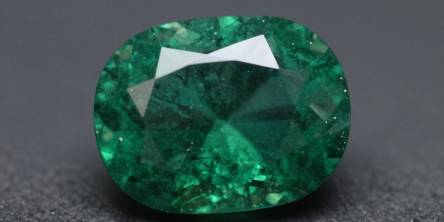
Emeralds have a long history tied to love and beauty. Ancient cultures saw them as gifts from the gods, especially Venus, the goddess of love

All those small details in style transform an outfit instantly from shabby to chic. Belts, scarves, and fashion jewellery are those accessories that become the final touches to such a simple look, making it memorable
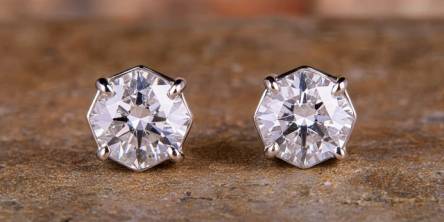
Keep your diamond earrings shining like new with simple, safe cleaning steps using tools you already have at home.