

Why You Should Choose Angular to Build Web Apps

Development, while eventually rewarding, can be a very tedious process. But that’s the thing about technology; it always manages to find a solution, no matter the problem. So, in the context of development, experts came up with frameworks that would help programmers do away with tedious and arduous coding practices. Now, of course, these frameworks vary based on the language you choose. So, today we will focus on one of the most popular options available in the market — Angular. Ever since it first arrived in the market, this JavaScript framework has established itself as one of the most sought-after choices when it comes to the development of front-end web apps.
But before we delve into what makes Angular such a massive hit in the web app market, let’s first quickly familiarize you with the basics about the framework. As mentioned above, Angular is a JavaScript framework — one that was created by Google to simplify the development of front-end web apps. Hence, it comes loaded with a plethora of advanced features and provisions that can be easily leveraged to develop absolutely ace web apps. There, now that we have cleared the basics, on to what makes Angular the preferred choice among programmers for the development of web apps.
1. Support from Google: Since it is a Google offering, it also gets help from the technology behemoth. And as everyone knows, support from Google is decidedly robust and ensures that Angular is not going anywhere, any time soon. In addition to that, it also indicates that folks who use Angular will have consistent access to the expertise and skill of Google’s programmers. And you know when it is coming from Google, it is the best there is in the market.
2. Top-notch security: When it comes to the digital realm, one of the biggest priorities for all stakeholders, i.e., from developers to users, is the security of the web app. After all, people end up sharing some of the most sensitive information about their lives, including financial data, to properly use apps. Consequently, it is then the responsibility of the web app owner as well as the development team to make sure that all the confidential data offered by the users of their apps are always safe and do not invariably end up in the hands of nefarious elements. For this, Angular makes use of RESTful APIs to communicate with the server via the HTTP interface safely.
3. Single-page applications: Thanks to the many provisions and functionalities available in Angular, the development of high quality and responsive Single Page Apps (SPAs) is made substantially easy. The framework offers regulations and tools such as modules, templates, built-in error validation, and form validation, among others — and these, in turn, help programmers put together single page applications of top-notch quality.
4. Two-way data binding: As any developer will tell you, and as we also mentioned above, the essential duty of a web app framework is to help make the development process easier. Suffice it to say that Angular takes care of this part and how! And one of the key reasons why Angular can ensure that is because of its two-way data binding capability, which allows programmers to sync data between the architecture’s model and view parts. What this means is that when a developer makes any change to the app’s code, how the changes then appear in the front-end can be seen easily without actually making changes to the app. With this, you can carefully execute changes without wreaking havoc on the working app.
As evidenced in the above discussion, the Angular framework has much to offer when it comes to web app development. However, to fully utilize its potential, we recommend you engage a trusted web application development service provider who has ample experience of working with the Angular framework.
Similar Articles
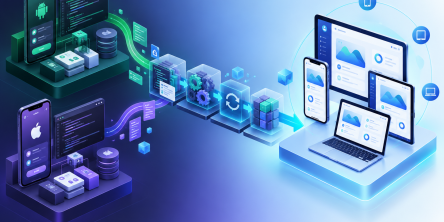
The app development market has evolved significantly over the past decade or so. Its impact on business has been equally consequential.

Offshore IT hiring means recruiting IT professionals who work from another country or region. Companies commonly use this approach for software development, QA, IT support, DevOps, cybersecurity, data, and project management.

By 2026, moving to the cloud is no longer merely a competitive advantage. It is a business necessity. Every organization across the broad spectrum of industries will be challenged to become more agile.
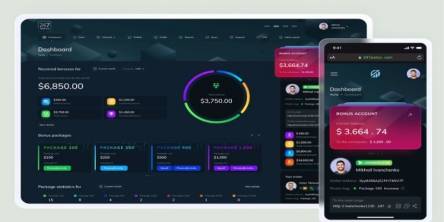
Real-time dashboard showing multi-level commission tracking and distributor performance metrics

Digital transformation initiatives are no longer unheard of in the corporate world. As a matter of fact, it is also well known that companies expanding their digital footprint tend to run into crippling legacy apps.

The financial aid office has become one of the most operationally strained departments on the modern U.S. campus. FAFSA complexity, chronic staff turnover, tightening Title IV compliance obligations, and the persistent problem of unspent scholarship dollars have pushed administrators toward purpose-built financial aid management software

The demand for software delivery has never been higher. Applications must be delivered faster and on a scale like never before.
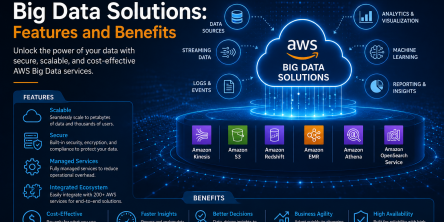
Modern businesses produce large amounts of data daily. Be it from customer transactions, Internet of Things (IoT) sensors, or countless other such sources.

Businesses today need to ship new software faster than ever. That's not news, of course. Anyway, because of the demands on businesses, new solutions are being built on top of micro-services, serverless functions, etc.