

How APIs Simplify Enterprise Application Integration

The software ecosystem has evolved at quite a pace. Today companies use countless apps to power their day-to-day operations. This cloud native apps as well as niche third party SaaS tools, all catering to the specific needs of various teams across the organization. Clearly, different kinds of software stand to empower different facets of a business' operations. But that also brings with it the risk of fragmented data and siloed processes. You see, when mission critical systems aren’t integrated well with one another, data can become stale and technical debt piles up.
So for businesses to stay agile, these disparate tools need to be able to integrate with one another seamlessly and automatically. And for that you need a standardized way to connect data and functionality between applications. One could opt for hard coding point to point integrations, which are expensive to develop and maintain. Or, you could go for a uniform set of reusable interfaces, a.k.a. APIs, to create such architectural consistency that any tool can speak to each other. It is only with these APIs that applications can be integrated with one another. And it is only then that businesses begin to automate processes and gain greater visibility into operations.
In this blog, I will discuss some of the most important benefits of APIs for enterprise application integration
Benefits of APIs in Enterprise App Integration Worth NotingM
APIs have become essential to modern enterprise integration, enabling applications, platforms, and data sources to communicate seamlessly. By creating standardized connections between disparate systems, APIs help organizations simplify integration, improve data accessibility, accelerate workflows, and build more connected, scalable digital ecosystems.
Listed below are core benefits;
- Improved efficiency: These interfaces do away with the need for manual data entry and other human interventions. It does so by digitizing processes that stretch across multiple systems. Imagine a customer placing an order from an eCommerce website. An API will first push the order details into the ERP for inventory. It will also create a record in the CRM and finally notify the shipper for order fulfilment. And all of this is done without human intervention.
- Cost savings: APIs also serve to reduce up front software development costs. Oh, and they help bring down ongoing system maintenance costs as well. Instead of making expensive custom-built point to point integrations every time a new tool is developed or purchased, developers can simply write API code once. Then they can apply the API to many software tools. In addition to that, APIs provide "guardrails" around legacy systems, allowing companies to continue using older databases and core apps without embarking on expensive replacement projects.
- Enhanced user experience: APIs bring together disjointed backend systems to deliver one cohesive interface. What's more is that this interface can be used with customers and for employees. External customers get a single web page or mobile app experience when they search for information such as order status, payment authorization, etc. As for employees, they get one central workspace to find all of the information they need to serve customers.
- Faster time to market: By organizing a given software's architecture into modular parts, APIs allow developers to release entirely new solutions. And that too much more quickly. You can build new apps using existing API endpoints. Or you could integrate third party APIs with additional capabilities. This way you avoid having to recreate core functions. The result? Faster build cycles, of course.
- Better data quality: Manual spreadsheets and siloed databases will always have typos, duplicates, etc. APIs enforce consistent validation rules at entry points, then distribute validated data to all connected enterprise systems through real-time synchronized updates.
- Innovation: Opening the core enterprise functionality through secure APIs is fundamental for future technical growth and business expansion. You can rapidly scale your ecosystem by enabling partners and third-party developers to use API access to build co-branded products and tap into new revenue streams.
Concluding Thoughts
As enterprises continue adding applications to support evolving business needs, seamless integration will become increasingly important. APIs provide the standardized foundation needed to connect these systems, synchronize data, automate workflows, and scale digital capabilities. By reducing integration complexity while enabling agility and innovation, APIs can help businesses build connected, efficient, and future-ready enterprise ecosystems. Now all you need is an experienced application integration company to help you tap into the immense potential of APIs.
Similar Articles

Most eCommerce brands spend more time evaluating a new software subscription than they do evaluating a fulfillment partner. That imbalance is costly.
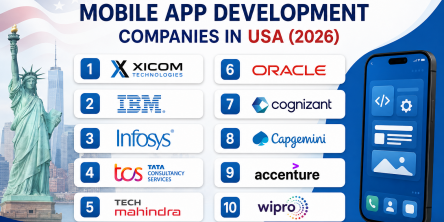
The mobile app ecosystem in the United States continues to expand rapidly, driven by advancements in AI, cloud computing, and cross-platform frameworks

Food delivery applications, including Uber Eats, DoorDash, Zomato, Swiggy, and Grubhub, generate large volumes of valuable data.

Modern businesses are drowning in communication overload, and much of that burden stems from outdated tools that simply can’t keep up

Building lending software isn’t just a technical project—it’s a business decision. Whether you're a fintech founder or part of a traditional lending institution trying to go digital, three questions will shape everything that follows

Learn why robust security is crucial for super app development. Explore key strategies and best practices for mobile app development security.

Walkie-talkies with an extensive reception capacity have changed significantly when it comes to portable communication by displaying cutting-edge features with seamless connectivity that covers more than just the state

USB-C technology has revolutionized the way we charge our devices, offering faster charging speeds, higher power delivery, and universal compatibility across multiple devices

Discover expert mobile app development strategies to create a viral app that attracts users and boosts engagement